In life, we need to breathe to take in oxygen and remove carbon dioxide from the body. The “lungs” function to exchange oxygen gas into the bloodstream, and the lungs also eliminate waste in the form of water and gas.
Lung diseases or respiratory system diseases require urgent examination and treatment
Lung diseases or respiratory system diseases are considered quite dangerous and greatly affect daily life. Early-stage lung diseases often show no symptoms. By the time patients realize they have lung disease, the symptoms are severe and difficult to cure completely. Therefore, we should regularly screen lung health even if there are no symptoms.
In cases of lung disease or chronic respiratory system disease without treatment, one day it may become necessary to use a ventilator, which can cause lung fibrosis and the lungs may never return to normal. Therefore, if there are any unusual symptoms, lung function should be tested immediately; otherwise, it may be too late.
Common lung diseases include chronic bronchitis, pneumonia, emphysema, chronic obstructive pulmonary disease (COPD), lung cancer, asthma, and tuberculosis.
Who should be screened for lung disease?
- Those who have smoked for a long time
- Those who work in places with pollution, dust, or smoke
- Those who are regularly exposed to or inhale chemicals
- Those who are close to patients with contagious tuberculosis
If you have these symptoms, you should urgently test lung function
Actually, lung function tests can be done for all ages and genders, even without symptoms. But if you have these symptoms, you should get tested immediately.
- Difficulty breathing
- Shortness of breath
- Fever with chills
- Chronic cough with phlegm or blood in phlegm
- Chest pain or rib pain when breathing or coughing
- Loss of appetite, weight loss
Early-stage lung disease screening
Using spirometry lung function testing
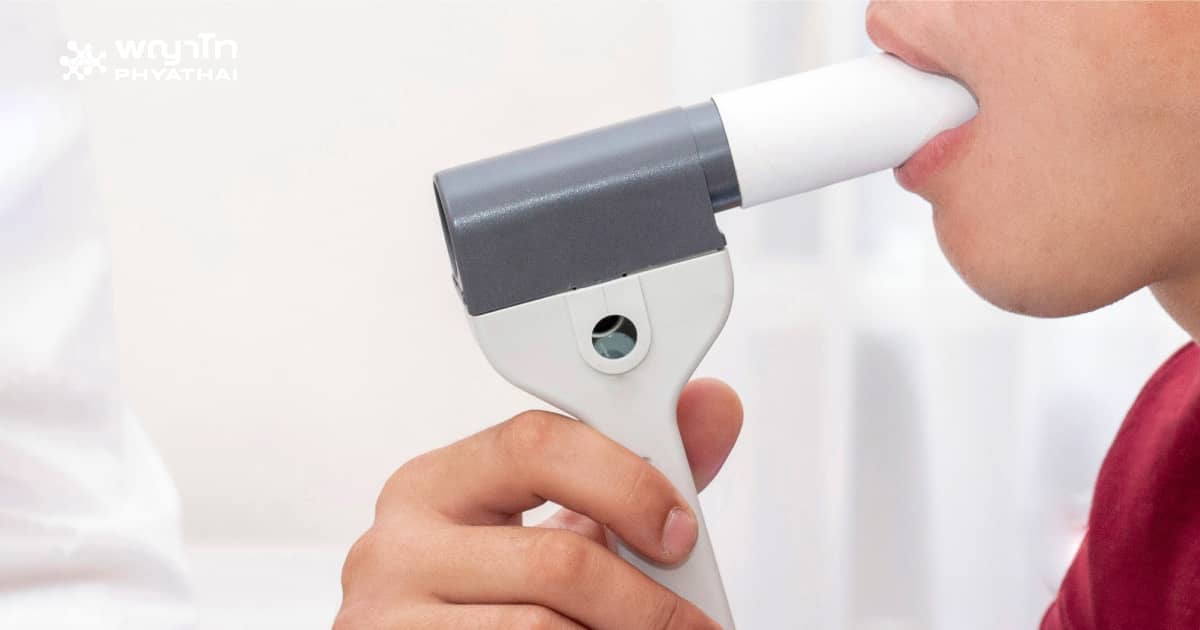
Spirometry lung function testing is a test of lung and respiratory system function in all aspects to measure lung capacity and size by breathing in and out through a spirometry machine by blowing air into the device. This helps diagnose diseases, determine disease severity, and plan appropriate treatment.
Additionally, lung function tests help diagnose and monitor emphysema, chronic obstructive pulmonary disease, asthma, or other respiratory diseases, and assess respiratory risk before surgery, which cannot be detected by X-rays.
Preparation before lung function testing
- Avoid heavy exercise at least 30 minutes before the test
- Do not drink alcohol at least 4 hours before the test
- Avoid smoking 24 hours before the test
- Wear comfortable clothing that is not too tight around the chest and abdomen
- Avoid heavy meals
- Avoid using bronchodilator medications
However, if you have symptoms such as coughing up blood, pneumothorax, high blood pressure, recent eye, chest, or abdominal surgery, or other illnesses affecting the lungs, lung function testing cannot be performed.
Lung function testing is only the starting point for screening and treatment. Early testing or testing before symptoms appear allows for better prevention or more effective treatment and increases the chance of complete recovery.
