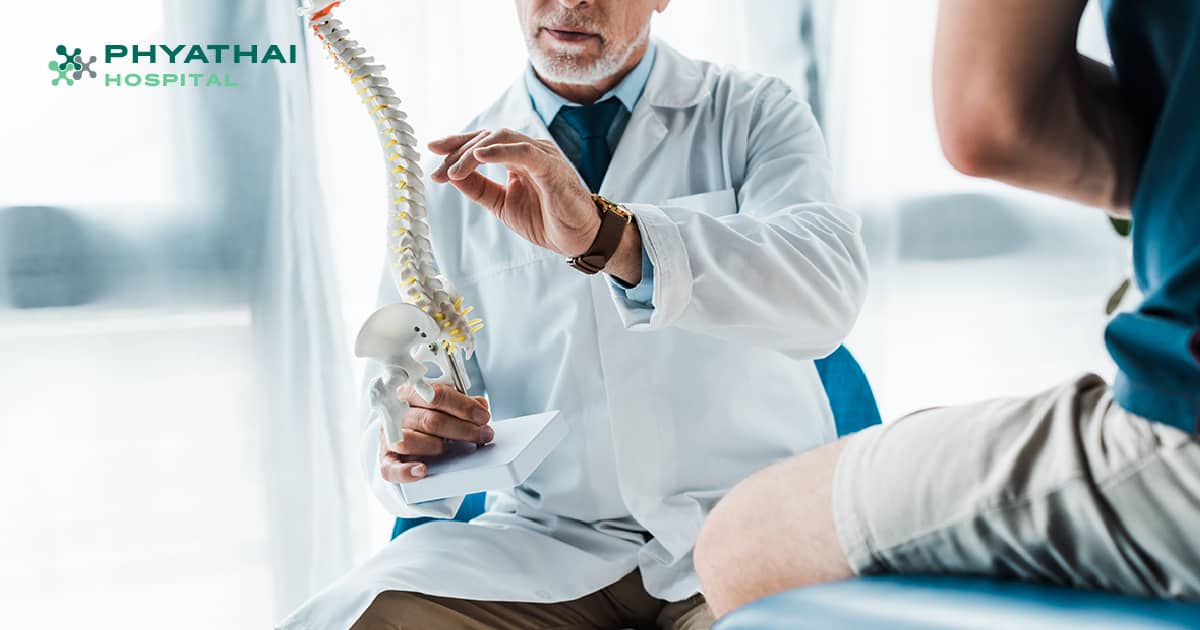
Chronic back or neck pain can significantly impact daily life, but advanced spine surgery offers a path to relief. Modern, minimally invasive techniques provide safer procedures, shorter hospital stays, and faster recovery, allowing individuals to return more quickly to an active lifestyle.
This article aims to provide clarity on spine surgery, covering its necessity, available methods, technological advancements, and comprehensive care pathways. This information will help you make an informed decision about pursuing treatment within a respected private healthcare system.
Key Takeaways
- Advanced, minimally invasive spine surgery relieves chronic back/neck pain for expats in Thailand.
- Surgery is for severe, persistent issues unresponsive to 6-8 weeks of conservative care.
- Minimally invasive techniques mean smaller incisions, less pain, and faster recovery.
- Technology like Computer-Assisted Navigation, robotics, IONM, and 3-Tesla MRI improves surgical precision and outcomes.
- Crucial aftercare and rehab are essential for long-term surgical success.
- Phyathai Hospital offers world-class spine surgery, using advanced tech and MIS expertise.
Table of Contents
- Why is it done?
- Spine Surgery Approaches
- Benefits of spine surgery
- Technologies for spine surgery
- Spine surgery aftercare
- Spine Surgery at Phyathai Hospital
Why is it done?
Spinal surgeries are considered when severe spinal issues (disk deterioration, deformity, compression) persist despite extensive conservative care (6-8 weeks of medication, physical therapy). Degeneration often begins around age 25, accelerated by obesity, strenuous work, and genetics. Spine surgery becomes the standard when symptoms prevent normal daily activities. Specialized intervention is needed for the following conditions
- Herniated Disc : Slipped discs pressing on nerves, causing chronic pain (back, neck, joint pain) radiating to the hip/leg, tingling, or muscle weakness.
- Spinal Stenosis : Narrowing of the spinal canal causing severe back pain, especially when walking or standing.
- Spinal Instability and Deformities : Conditions like scoliosis, spondylolisthesis, or fractures may require fusion for stabilization.
- Advanced Neurological Deficits : Surgery is critical for nerve damage symptoms like muscle atrophy, increasing weakness, or loss of bowel/bladder control.
Spine Surgery Approaches

Modern spine surgery increasingly utilizes minimally invasive techniques, with the best approach (posterior or anterior) determined by the lesion’s location, to preserve surrounding muscle and soft tissue. Key approaches and techniques include
- Minimally Invasive Spine Surgery (MIS)
The core concept of MIS is minimizing trauma to normal tissue while achieving the desired curative effect. Instead of making a big incision, surgeons make smaller ones and disturb less muscle compared to traditional open surgery, accelerating patient recovery.
- Endoscopic Spine Surgery (ESS)
This is a type of MIS where surgeons use a small (8-10 mm) incision, a special tube with a HD camera (an endoscope), and micro-instruments for precise visualization of your back. Approaches vary by insertion spots
- Spinal Fusion Surgery
This surgery is done to correct conditions like a spondylolisthesis or slipping vertebra (when one of your backbones moves out of place) or curves in your spine by stabilizing the spine with screws and spacers.
Benefits of spine surgery
The shift toward modern techniques in spine surgery has brought significant clinical advantages, greatly improving the patient experience and accelerating recovery. When comparing minimally invasive techniques, such as endoscopic spine surgery, to conventional open surgery, several distinct benefits emerge.
- MIS uses 8-10mm incisions for precise, minimally invasive treatment. Endoscopes and HD cameras offer orthopedic surgeons 99% effective, high-precision visualization, enabling effective removal of herniated discs or compressed nerve tissue.
- Avoiding extensive incisions and tissue removal, patients experience less blood loss and fewer complications like surgical site infection, compared to traditional open laminectomy.
- Minimally invasive approaches facilitate faster recovery and shorter hospital stays, allowing a quicker return to work and daily activities.
- Spinal fusion with implants and bone grafting stops painful motion, providing lasting relief and stability. This procedure enables patients with complex spinal issues to regain mobility and a higher quality of life.
Technologies for spine surgery

Key technologies used in advanced spine surgery include
- Computer-Assisted Navigation (CAN) : CAN systems, like the O-arm, use intraoperative CT for real-time 3D spinal imaging. This improves screw placement precision in MIS procedures.
- Robotic spine surgery : Robotic spine surgery boosts accuracy, minimizes human error and tremor, and potentially lowers complications and revision rates, leading to faster recovery and shorter hospital stays.
- Advanced Imaging and Visualization : Technologies like 3-Tesla MRI scans provide excellent, detailed image quality for precise preoperative diagnosis. In the endoscopic field, the endoscope itself, with its HD camera and fluid system, enhances visualization far beyond the naked eye.
Spine surgery aftercare
Effective aftercare and rehabilitation are paramount to ensuring the long-term success of spine surgery and achieving satisfactory functional outcomes. The general recovery and rehabilitation guidelines often follow these steps
- Immediate Post-Surgery : Strong pain management with Patient-Controlled Analgesia (PCA).
- Early Mobilization : Ambulation and physical activity within 24-48 hours under therapist supervision, adhering to spine precautions.
- Hospital Stay and Discharge : 1-2 days for minor procedures, 3-5 days for extensive surgery. Patients discharged with pain medication and muscle relaxers.
- Wearing Support : Brace or back support may be advised.
- Activity Restrictions : Avoid heavy lifting, bending, or twisting for the first week. Generally avoid NSAIDs for 8-12 weeks post-fusion.
- Return to Activity : 1-4 weeks for light activities/work, 3-6 months for physically demanding jobs. Formal physical therapy is often discussed at 6-8 weeks.
- Complex Cases (Revision Spine Surgery) : Pre-operative preparation (lung expansion, spinal postures) emphasized for increased success.
Spine Surgery at Phyathai Hospital
Advanced spine surgery presents an appealing option for individuals seeking high-quality care. Leveraging cutting-edge technology and minimally invasive techniques, it focuses on personalized, comprehensive treatment. Patients can anticipate excellent surgical outcomes, reduced recovery times, and an efficient healthcare process, facilitating a quick return to their regular activities.
Choosing a hospital for complex procedures like spine surgery requires confidence in both the surgical expertise and the holistic patient support, particularly for international residents seeking care.
For high-quality, technologically advanced, and patient-centered spine surgery Thailand, Phyathai Hospital offers the assurance of world-class expertise combined with comprehensive support tailored to the international resident’s needs. We encourage you to consult with the specialists at Phyathai to explore how advanced spinal solutions can help you achieve effective pain relief and regain your quality of life.
- Call Center 1772 (press 9 for ENG)
- Email: [email protected]
- Facebook Page: Expat Health & Wellness by Phyathai
References (3-5 แหล่งอ้างอิง)
- Ahn Y. (2019). Current techniques of endoscopic decompression in spine surgery. Annals of translational medicine, 7(Suppl 5), S169. https://doi.org/10.21037/atm.2019.07.98
- Chen, K. T., Kim, J. S., Huang, A. P., Lin, M. H., & Chen, C. M. (2023). Current Indications for Spinal Endoscopic Surgery and Potential for Future Expansion. Neurospine, 20(1), 33–42. https://doi.org/10.14245/ns.2346190.095
- McClelland, S., 3rd, & Goldstein, J. A. (2017). Minimally Invasive versus Open Spine Surgery: What Does the Best Evidence Tell Us?. Journal of neurosciences in rural practice, 8(2), 194–198. https://doi.org/10.4103/jnrp.jnrp_472_16
