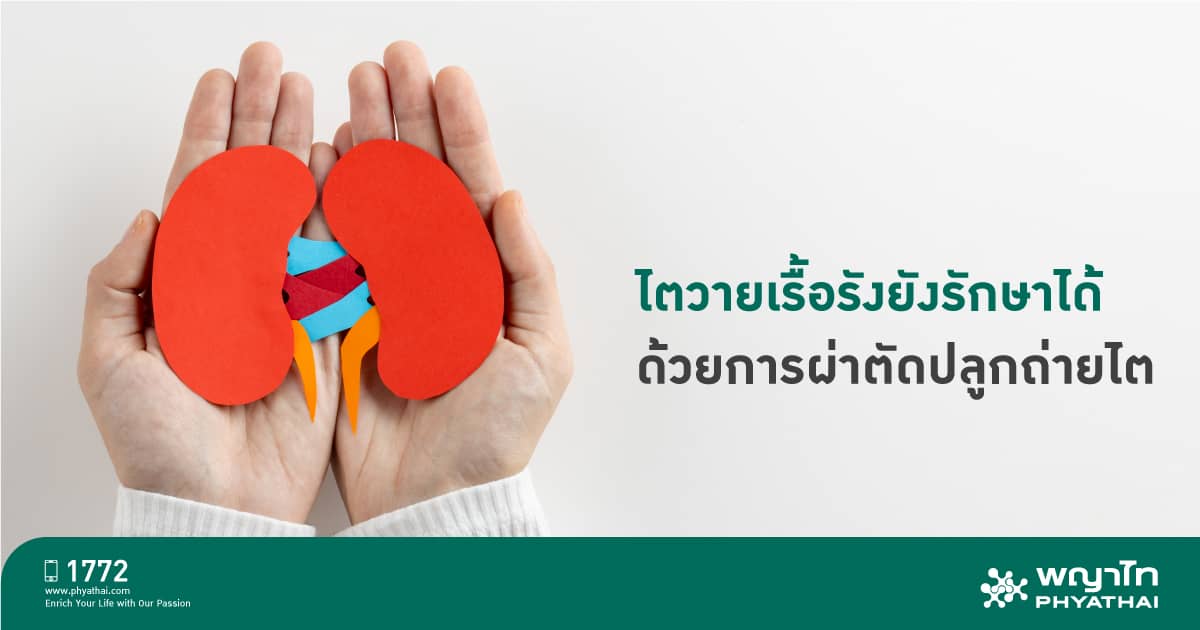
What is Kidney Transplantation?
Kidney transplantation is a treatment for patients with end-stage chronic kidney failure by receiving a kidney from another person. The kidney donor may be from a deceased donor or a living donor. Living donors must be family members with compatible blood types with the patient. This type of kidney transplantation is called ‘living donor kidney transplantation,’ where the donor can continue to live normally with the remaining kidney.
Advantages of Kidney Transplant Treatment
- After a successful kidney transplant surgery, patients can live normally and have a better quality of life, as if they have been given a new life.
- It helps treat end-stage chronic kidney failure, so patients no longer need to worry about dialysis or peritoneal dialysis.
- Patients will receive continuous follow-up care and guidance to help them understand and properly manage their health after kidney transplant surgery for long-term quality of life.
If kidney disease patients do not receive kidney transplant surgery, they may need lifelong kidney replacement therapy through dialysis or peritoneal dialysis, which prevents them from living a normal daily life.
How is Kidney Transplantation Performed?
It involves transplanting a compatible kidney from another person to the patient without removing the damaged kidney. The surgery places the new kidney in one side of the patient’s pelvis, connecting the new kidney’s blood vessels to the patient’s blood vessels and the new ureter to the bladder. Only one kidney is needed for transplantation. If the patient’s body accepts the new kidney well and there are no complications, the new kidney will function properly.
After kidney transplant surgery, patients must take immunosuppressive drugs for life and remain under medical supervision indefinitely. Without immunosuppressive drugs, the body will reject the new kidney, causing damage and potentially life-threatening complications.
Where Can New Kidneys for Transplantation Come From?
Donors
Kidneys used for transplantation come from two sources: living donors and deceased donors (cadaveric donors).
Kidney Donation from Living Donors
According to the Medical Council of Thailand’s regulations, living donors must be blood relatives, including parents, siblings, children, grandchildren, and relatives proven to be true blood relatives medically and/or legally. For husbands or wives donating kidneys to their spouses, they must have been legally married for at least 3 years and/or have children born from that marriage. Donors and recipients should have the same blood type or compatible blood types and blood compatibility tests must show no adverse reactions.
Important Requirements for Living Kidney Donors
Donors must undergo thorough physical examinations, blood tests, urine tests, ultrasounds, and electrocardiograms to ensure they are healthy and have minimal risk. Donors must understand the donation process, be willing, and sincerely want to help without any financial compensation.
After donating a kidney, the donor will have only one kidney remaining and will need 2-4 weeks to recover before returning to work or normal life. Donors can maintain normal health like people with two kidneys, able to work, exercise, travel, and live a normal lifespan. However, they should take care to protect the remaining kidney from infections or injuries.
Kidney Donation from Deceased Donors
Deceased donors are individuals who have died, with death confirmed by a medical team. The deceased’s family must consent to organ donation. The diagnosis of death and organ donation process must strictly follow the regulations of the Medical Council and the Thai Red Cross Organ Donation Center. Physicians in Thailand diagnose death based on criteria set by the Medical Council. When a patient’s brainstem permanently ceases to function with a clear cause, it is considered brain death, which is complete death even if the heart is still beating. Families of such deceased individuals can consent to organ donation.
Most confirmed brain deaths result from severe and permanent brain injuries caused by traffic accidents or brain hemorrhages. Once the donated kidney is removed from the donor’s body and properly preserved, it can be stored for up to 48 hours.
Opportunities to Receive a Kidney Transplant Sooner
Dr. Somnuk Damrongkitchaiporn, a nephrology specialist at the Kidney Center, Phyathai 1 Hospital, stated:
“For patients waiting for a kidney transplant, they can create opportunities to expedite the transplant surgery without waiting too long. The Kidney Center at Phyathai 1 Hospital has specialists directly caring for kidney diseases and has provided kidney transplant services for over 26 years. Therefore, we are well-prepared in the following areas:
- We have nephrology specialists and a multidisciplinary team dedicated to providing the best care for kidney patients.
- Patients needing kidney transplants can reserve a spot to receive a kidney without long waiting times.
- We maintain cleanliness and safety, successfully performing kidney transplant surgeries safely even during the Covid-19 pandemic.
Besides ‘kidney transplant surgery’, Phyathai 1 Hospital is also equipped to provide ‘dialysis services’ and comprehensive care for ‘kidney disease at all stages’, from early stages to patients requiring kidney replacement, with a fully prepared medical and multidisciplinary team.
Patients with kidney disease who need dialysis or peritoneal dialysis and kidney transplantation can contact the Kidney Center at Phyathai 1 Hospital directly for consultation.
Prof. Dr. Somnuk Damrongkitchaiporn
Nephrology Specialist
Kidney Center, Phyathai 1 Hospital
