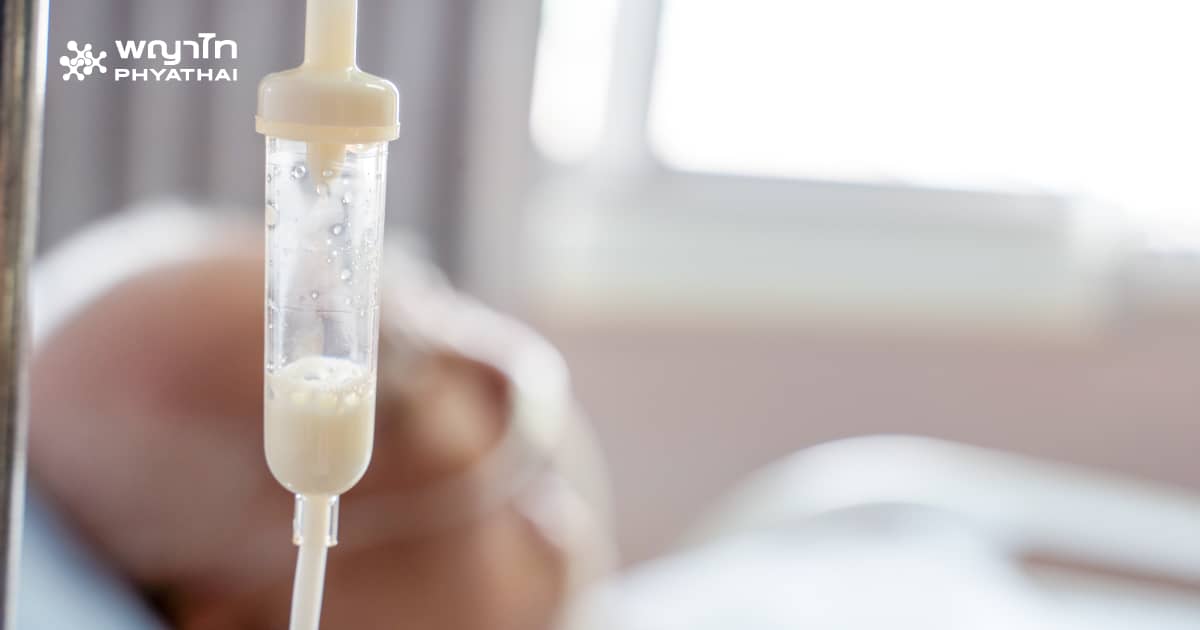
NG tube or Nasogastric Tube refers to the insertion of a rubber tube through the nostril down into the stomach. It is usually the first choice when it is necessary to provide nutrition to individuals who cannot eat enough by mouth and still have normal gastrointestinal function. It is typically used for a short term, not exceeding 4 weeks.
However, if tube feeding is required for more than 4-6 weeks, consideration should be given to switching to feeding through the abdominal wall (gastrostomy or PEG) to reduce the impact on the nasal and throat mucosa from prolonged nasal tube placement, reduce the risk of aspiration, and decrease the frequency of tube replacement.
Who should receive tube feeding (NG tube)?
- Those who cannot eat by mouth or consume less than 60% of the daily required energy for more than 3-7 consecutive days
- Patients with swallowing difficulties and food aspiration
- Those with malnutrition
- Unconscious patients or those who refuse oral intake, including patients with psychiatric disorders such as Anorexia nervosa or neurodegenerative diseases such as Dementia, Alzheimer’s, Stroke
How should tube feeding be administered?
Feeding times are generally recommended to be scheduled as meals, spaced 4-6 hours apart, or 4 times a day, with the following steps:
- Wash hands thoroughly, dry hands, position the patient sitting or lying supine with the head elevated in a semi-sitting position. If the patient has phlegm, have them cough or suction out the phlegm before feeding each time.
- Check the tube position at the nostril edge to ensure it is in the same place and check the condition of the tape securing the tube.
- Fold the feeding tube before opening the tube cap each time to prevent fluid from refluxing from the stomach when the cap is opened.
- Test feeding tolerance by checking for residual food in the stomach by connecting the feeding tube to a 50 ml syringe and aspirating stomach contents:
- If more than 50 ml is aspirated, push the food back and delay feeding for another hour.
- If less than 50 ml is aspirated, push the food back and proceed with feeding.
- If nothing is aspirated, test by pushing 5-10 ml of air while placing your palm or ear near the left lower rib cage to listen for air sounds. If air sounds are heard, feeding can proceed.
- For syringe feeding, disconnect the syringe from the tube, remove the plunger, reconnect the syringe to the tube, pour the food into the syringe, hold the syringe about 1 foot above the patient, and allow the food to flow slowly. Refill the syringe before it empties to prevent air from entering.
- For bag feeding, connect the feeding bag to the feeding tube, adjust the flow rate. Each feeding should take at least 30 minutes and should not be too fast. If the patient shows signs of choking, nausea, vomiting, or coughing during feeding, pause feeding by folding the tube at the syringe end. Resume feeding once symptoms improve.
- When administering medication before or after feeding, if multiple medications are given, crush and mix them with 5-10 ml of water. Do not mix medication with food. Always follow with at least 50 ml of water. Raise the tube end to clear the tube, fold the feeding tube, disconnect the syringe, clean the tube end, and close the feeding cap.
- Keep the patient sitting with the head elevated for 30-60 minutes after feeding to prevent aspiration.
How to care for the feeding tube to prevent complications
- Care for the nose and mouth area by wiping the nose with saline daily. Clean the mouth and teeth at least twice a day by having the patient brush their teeth, rinse their mouth, or use cotton swabs or a damp cloth to clean. If the patient cannot rinse their mouth, change the tape position to prevent pressure sores and frequently check the skin around the nostrils for wounds.
- Ensure the tube cap is tightly closed to prevent stomach contents from refluxing. After feeding, clean food residue from the tube end with a clean cloth to prevent ants.
- Check the tube position to ensure it remains in the same place before feeding. The tape securing the tube to the nose should be firmly attached. Be cautious of tube displacement or dislodgement. Record the tube length at the nostril or keep a record. If the tube is misplaced or dislodged, consult a nurse or doctor.
Advantages of NG tube insertion or tube feeding
- Easy and convenient to insert, low cost
- Insertion takes a short time, no surgery required, and tube replacement can be done at home
- Patients receive full nutrition as required by the body
- Easy to care for, no daily wound care needed
Disadvantages of NG tube insertion or tube feeding
- Irritation of the nose and throat; some elderly patients may not tolerate it and may pull the tube out frequently or require hand restraints for safety
- The tube can easily slip out of the stomach position, requiring reinsertion
- Frequent tube changes are needed every 2-4 weeks
- Insertion of a new tube each time may cause pain, trigger gagging, or potentially cause pneumonia
- Complications from NG tube may include pressure sores from the tube on the nose tissue, nostrils, sinusitis, possible ear infections such as otitis media, or partial reflux of stomach contents causing aspiration
- Some patients may feel abnormal swallowing, sore throat, difficulty eating by mouth, or difficulty swallowing training
- May cause loss of external appearance
