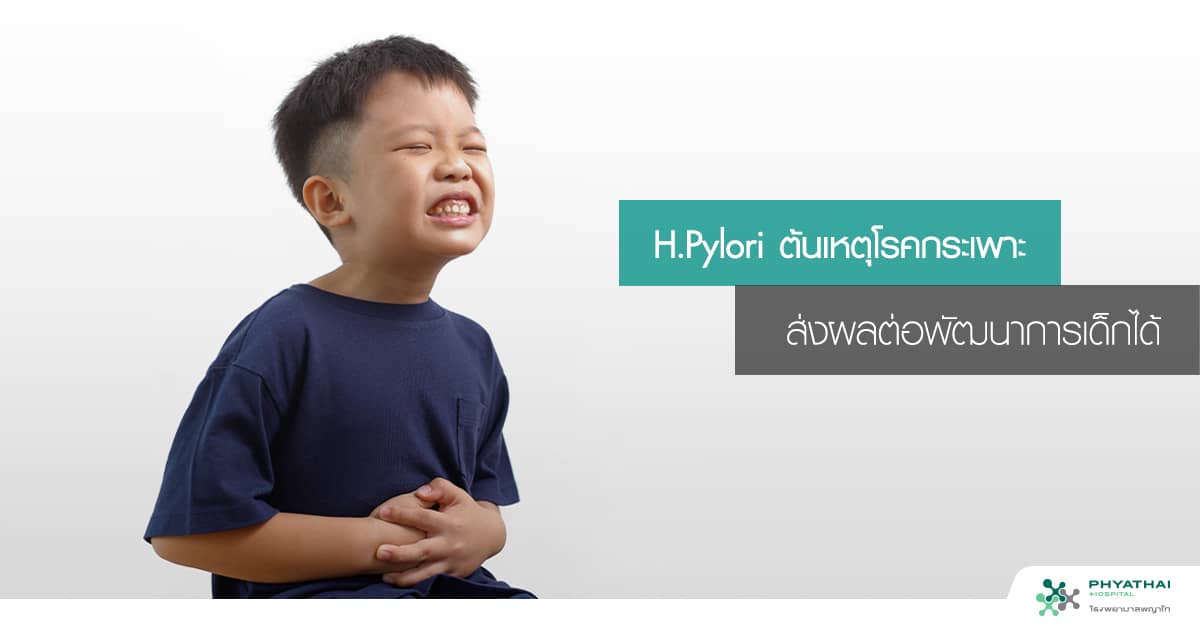
Abdominal pain, indigestion, belching, chest tightness, loss of appetite, poor appetite, eating less—parents should not be complacent because their child may be at risk of H. Pylori infection, the cause of gastritis and stomach ulcers in children. If left untreated, it can lead to slow growth and affect the child’s development.
Getting to Know H. Pylori (Helicobacter Pylori)
H. Pylori (Helicobacter Pylori) or H. Pylori bacteria is a type of bacteria that causes infection in the stomach. The bacteria are transmitted through water. Once inside the body, they reside in the stomach, causing inflammation. The bacteria attach to the stomach lining and damage the tissue, leading to gastritis. In some cases, the bacteria may cause stomach ulcers, duodenal ulcers, and even stomach cancer.
What are the symptoms of children infected with H. Pylori?
Some cases show no symptoms, but symptomatic cases may experience abdominal pain, indigestion, belching, chest tightness, loss of appetite, poor appetite, eating less, pain after eating, and abdominal pain at midnight. H. Pylori infection can reduce growth in children because they eat less, leading to nutritional deficiencies.
How is H. Pylori infection treated?
Treatment with medication follows the standard treatment protocols in Thailand and worldwide. In Thailand, two types of antibiotics and one type of antacid are used. If the child does not improve after medication, the doctor will prescribe additional medications in the next step.
What diagnostic tests will the doctor perform before treatment?
- Stool test involves collecting stool samples to detect antibodies or antigens indicating H. Pylori bacterial infection.
- Urea breath test involves breathing into a bag to detect bacteria. Before the test, the patient must fast for about 4 hours. The doctor will have the patient breathe into a bag for the first test before taking medication. Then, the patient takes a pill for the test and sits, lies down, or lies on their side for 15 minutes before breathing into a second test bag. If bacteria are present in the stomach, the pill breaks down, releasing urea, resulting in a positive test. If no bacteria are present, the pill is not broken down, resulting in a negative test. The stool test and urea breath test have over 90% accuracy. However, since young children may not be able to perform the breath test, doctors recommend stool testing instead. Results from both tests are available within 1-2 hours.
- Endoscopy is recommended for children with severe abdominal pain, very poor appetite, or who wake up at night due to pain. The doctor will perform an endoscopy to check the pathology and internal tissues. Endoscopy can also take tissue samples for microscopic examination to detect Helicobacter Pylori. Additionally, endoscopy can assess the condition of the tissues, check for severe inflammation, stomach ulcers, or acid reflux.
For young children tested by stool or breath tests who do not fully recover after medication, the doctor will recommend endoscopy. For children resistant to medication, endoscopy is used to obtain tissue samples for testing and culture to determine antibiotic resistance. After completing the standard 10-14 day medication course and symptoms improve, medication is stopped for 1 month, followed by repeat testing via stool or breath tests to check for remaining Helicobacter Pylori infection. If bacteria remain and endoscopy has not been performed, the doctor will recommend endoscopy next time. If repeat tests show no bacteria, further endoscopy is unnecessary.
The downside of H. Pylori infection, if left untreated for a long time, is that in 1% of adults, the bacteria can develop into malignancy or stomach cancer. Therefore, if symptoms occur, patients should see a doctor for testing and early treatment. In children, untreated infection can cause slow growth and affect development.
Dr. Rapeeporn Wisitsanan
Specialist in Gastroenterology and Hepatology
Child and Adolescent Health Center, Phyathai 2 Hospital
