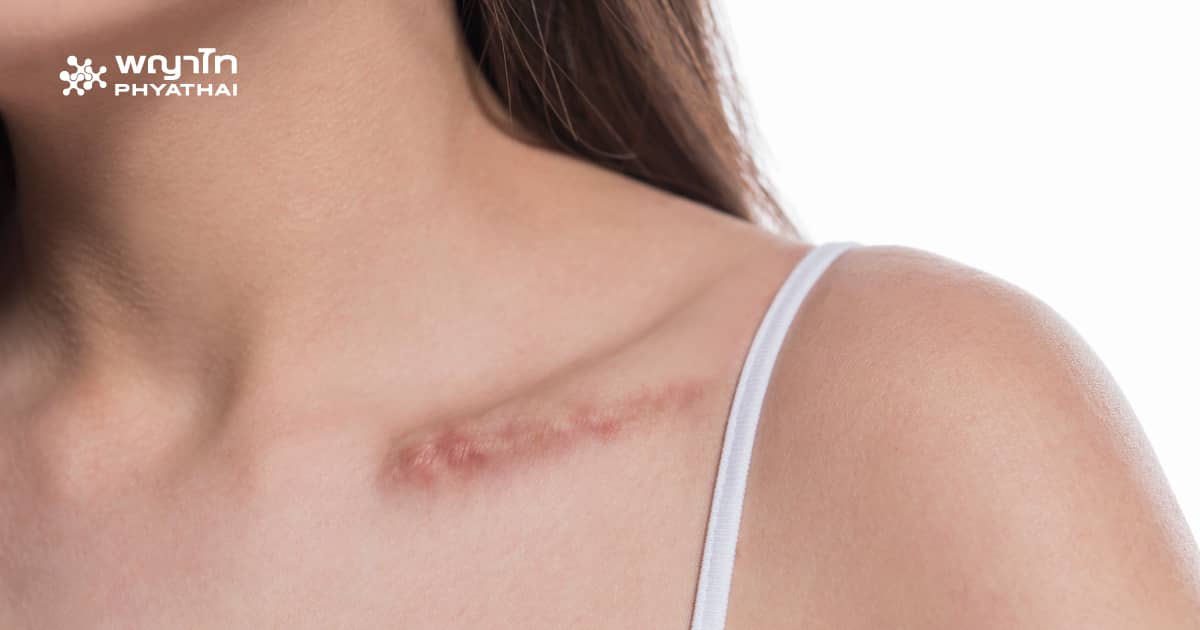
Keloid scars are bothersome. Every time you look at them, your confidence decreases. Many people want to stay away from the word “keloid scar” because besides causing pain on the scar, over time, they leave marks that reflect the pain again. Fortunately, nowadays, technology and the expertise of specialized doctors can help us say goodbye to keloid scars easily, restoring full confidence without any side effects on other parts of the body.
What is a Keloid?
Keloids are a type of scar characterized by raised scars that extend beyond the original wound boundaries. The scar color varies, such as red, dark, or bruised. Most keloid scars are itchy, some are painful, and the skin may feel tight. Although they do not cause any harm, they affect appearance and mental well-being.
Causes of Keloid Scars
Generally, the skin undergoes a natural wound healing process in three stages. The cause of keloid scars is an abnormality in the healing process, where excessive tissue and collagen are produced, leading to an imbalance of collagen and eventually forming raised scars.
Are Keloid Scars Dangerous?
Since keloid scars result from an abnormal natural healing process with excessive tissue and collagen production, no abnormal cells are found. Therefore, even if the scar grows larger, it does not turn into malignant or cancerous cells. The main problem is the appearance, which looks unattractive and causes a lack of confidence in showing the skin.
Factors That Cause Keloid Scars
- Ethnicity: Keloid scars are more common in people with darker skin than those with lighter skin.
- Genetic history: If family members have a history of easily developing keloid scars or if someone develops keloids from childhood, they are more likely to develop keloids in the future and should be especially cautious.
- Location of the scar: Areas of skin with a lot of tension have a higher chance of keloid formation, such as the shoulders, chest, and upper back from acne squeezing. Another common area is the ear, from the earlobe to the ear cartilage due to ear piercing for cosmetic reasons.
How to Prevent Keloid Scars
Because keloid scars have a high chance of recurrence, the best approach is to prevent keloid formation, especially in high-risk areas.
- When a wound occurs, start care immediately because the body’s natural healing process begins right away. Avoid rubbing or frequently touching the wound area. Do not pick off scabs prematurely as it affects skin repair and slows healing.
- Wounds with severe inflammation, oozing lymph fluid, or infection with pus prolong the healing process in the first week, increasing the chance of keloid formation. It is recommended to apply medication to prevent infection.
- Once the wound is dry, you can use scar treatment gels that often contain Silicone gel to keep the wound moist, which benefits skin cell regeneration. Medications containing onion extract (Allium cepa), which have anti-inflammatory properties, can enhance skin repair.
Can Keloid Scars Be Treated at Home?
If the keloid scar is just slightly raised, you can manage it yourself initially as it still responds to treatment. However, if left untreated until the scar becomes large and hard, treatment results may not be effective. Silicone gel sheets can be applied directly to the scar. The sheets help compress the scar to prevent cell expansion, increase skin moisture, and improve healing. They should be worn as long as possible, at least 12 hours a day, removed only when bathing. However, they may not adhere well on curved or frequently moving areas.
Keloid Scar Treatment by Specialists
There are several treatment options for keloid scars depending on the scar characteristics.
- Steroid injections (Intra lesional corticosteroid) are the standard treatment. Doctors inject Triamcinolone acetonide directly into the keloid scar. The medication reduces inflammation and suppresses the activity of all skin cells. After injection, the keloid shrinks, softens, and pain and itching subside. Local anesthetics can be mixed to reduce pain during injection. The injection interval is about 4-6 weeks. Once the keloid improves, follow-up treatments can be spaced further apart.
- Surgery involves removing or reducing the size of the scar. Surgery is usually chosen when initial treatments are ineffective or for keloids in operable locations, such as large earlobe keloids. The scar can be fully or partially removed, but surgery must be combined with other treatments because recurrence is still possible.
- Pressure garment therapy involves wearing tight garments over the keloid to prevent recurrence. This is often used shortly after surgery.
- Laser treatment is an alternative option using lasers with wavelengths that affect blood vessels or a 1064 nm wavelength that penetrates deeper into the skin, influencing collagen arrangement.
Keloid Scar Treatment Is Not as Scary as You Think…
Patients can be confident that keloid scar treatment has no side effects on other body systems. After treatment by specialists, the keloid area will shrink close to its original state. Proper post-treatment care reduces the chance of keloid recurrence. Treatment results vary depending on the method used. It is recommended to consult a dermatology specialist for accurate diagnosis and appropriate treatment.
