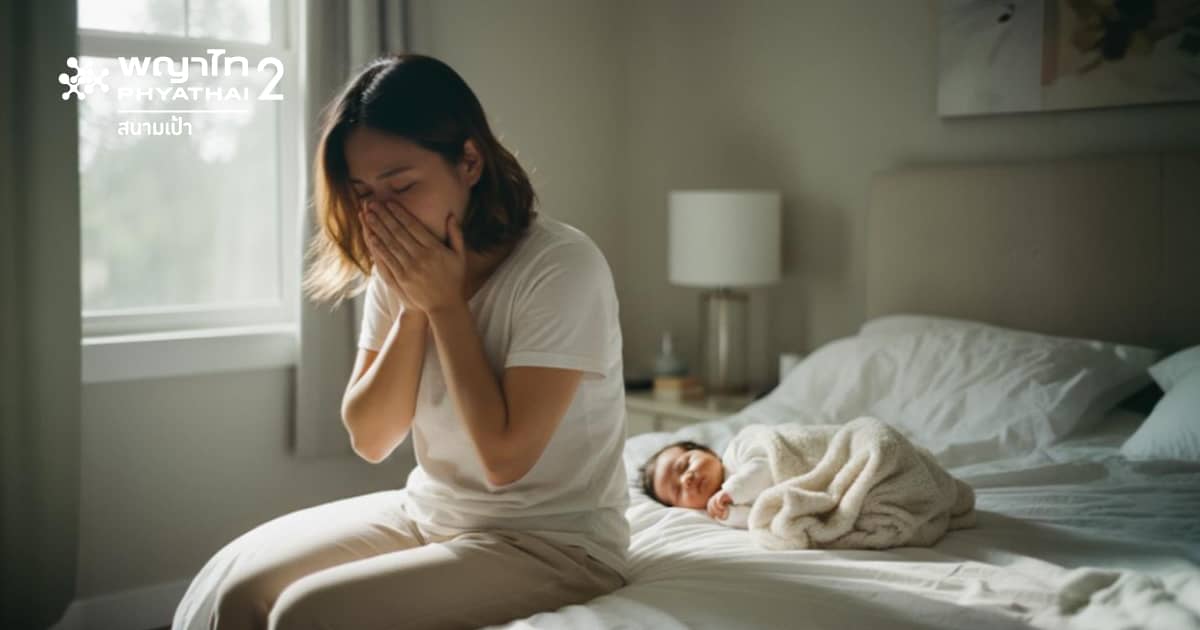
What is Postpartum Depression? ?
Postpartum Depression is an emotional and mental disorder that occurs in mothers after childbirth. It usually occurs within the first 4 weeks after delivery but can last up to 1 year if not properly treated. This condition is not a sign of weakness and is not the mother’s fault, but a health problem that can happen to any mother.
How is Postpartum Depression different from Baby Blues?
Many mothers may have heard the term Baby Blues, which is a common mood disturbance after childbirth but differs from postpartum depression as follows:
| Baby Blues | Postpartum Depression | |
| Duration | 2–14 days | Longer than 2 weeks |
| Severity | Mild | Moderate–Severe |
| Impact on daily life | Still able to care for the baby | Affects daily life |
| Need to see a doctor | Not necessary | Should see a doctor |
Symptoms of Postpartum Depression to Watch For
If a mother experiences these symptoms continuously for more than 2 weeks, it is important to seek medical attention.
- Feeling sad, depressed, empty
- Crying easily, irritable, mood swings
- Fatigue, lack of energy even after sufficient rest
- Feeling guilty, thinking you are a bad mother
- Loss of interest in things you used to enjoy
- Insomnia or excessive sleeping
- Loss of appetite or overeating
- Not wanting to care for the baby or feeling detached from the baby
- Having thoughts of harming yourself or others
Causes of Postpartum Depression
Postpartum depression results from multiple factors, including:
- Hormonal changes after childbirth, with rapid decreases in estrogen and progesterone levels affecting mood.
- Fatigue and insufficient rest due to caring for a newborn, leading to inadequate rest for the mother.
- Stress and pressure from the role of being a mother, family expectations, or financial problems.
- Mental health history Mothers who have had depression or anxiety before are at higher risk.
See a doctor immediately if you have the following symptoms
1. Emotional and cognitive symptoms
-
- Feeling sad, depressed, hopeless, or crying easily for more than 2 weeks
- Feeling guilty, blaming yourself, thinking you are a bad mother
- Not feeling love or attachment to the baby, feeling indifferent
- Excessive anxiety, fear of unintentionally harming the baby
2. Behavioral and lifestyle symptoms
-
- Insomnia or excessive sleeping, even when the baby is asleep
- Loss of appetite or overeating
- Fatigue, exhaustion, lack of energy, lack of motivation to do things you used to enjoy
- Social withdrawal, not wanting to meet people
Danger signs requiring urgent medical attention
- Having thoughts of harming yourself or suicidal thoughts
- Having thoughts of harming the baby
- Experiencing confusion, hallucinations, or delusions
Treatment approaches for postpartum depression include
- Consultation with a psychiatrist or psychologist
- Psychotherapy
- Medication (if necessary and under medical supervision)
- Support from family and close ones
Self-care tips when starting to experience postpartum depression
- Talk about your feelings with someone you trust
- Ask for help in caring for the baby
- Get enough rest
- Maintain proper nutrition
- Do light exercise as recommended by your doctor
- Avoid blaming yourself
Postpartum Depression…is not shameful, and mothers do not have to face it alone
Feelings of sadness, depression, fatigue, or detachment from the baby after childbirth may not just be “mood swings” but postpartum depression that requires proper care. The earlier the treatment begins, the better the symptoms improve, reducing complications and helping mothers regain physical and mental strength faster.
If you or someone close to you starts noticing abnormal signs, don’t wait until it’s too late. Just open your heart and talk to a specialist doctor. We are ready to support mothers every step of the recovery journey.
Dr. Tharinee Athibathanon
Obstetrician and Gynecologist specializing in Maternal-Fetal Medicine
Phyathai 2 Hospital
