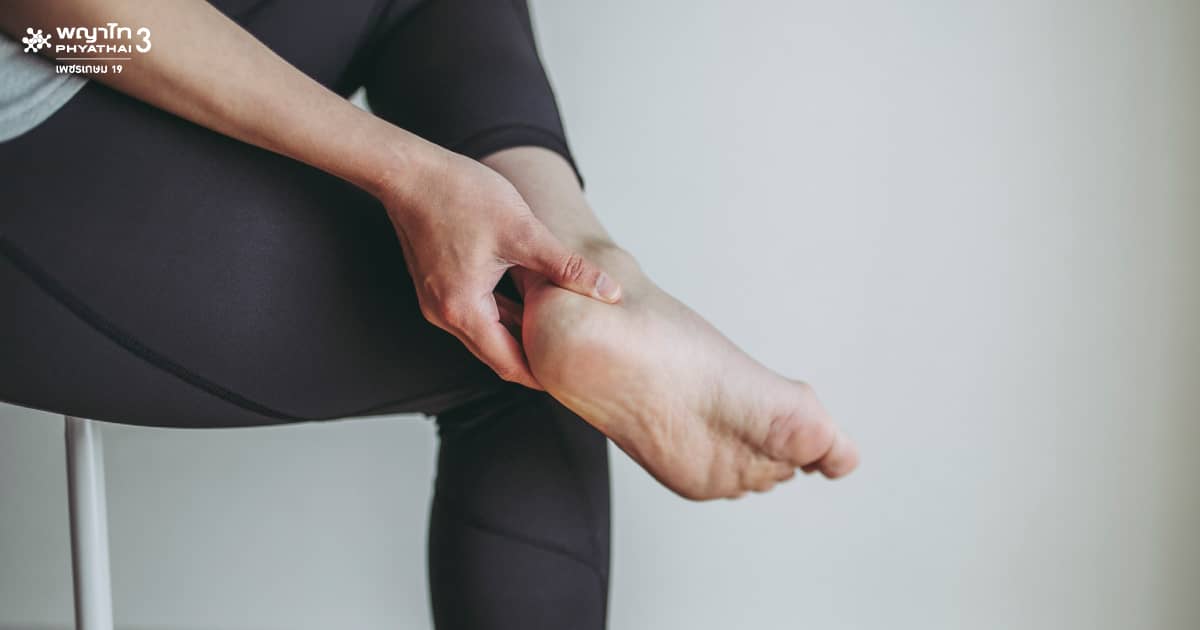
Achilles tendon degeneration is another common foot-related condition. When people see the word “degeneration,” they often think that only the elderly are at risk. However, in reality, young office workers can also develop Achilles tendon degeneration, which can cause significant pain when walking and performing daily activities. Therefore, getting to know about Achilles tendon degeneration is a good way to help keep our youth free from this condition and allow us to walk smoothly and normally without pain or suffering.
What are the symptoms that suggest Achilles tendon degeneration?
Achilles tendon degeneration is a condition caused by the deterioration of the Achilles tendon. The degree and speed of degeneration do not depend solely on age but also on how the body is used—whether it is heavily used and how well it is cared for. The warning signs indicating Achilles tendon degeneration include:
- Pain at the back of the heel, which worsens with increased foot use.
- Feeling a bony protrusion at the heel, which many people may not notice.
- Frequent shoe bites even though the shoes never caused discomfort before, due to the bony protrusion at the heel. This occurs because when the Achilles tendon degenerates at the attachment point, small tears form. The body repairs itself, but if the repair is abnormal, calcium deposits form at the back of the heel, causing the heel to protrude more than usual and leading to frequent shoe bites despite no previous issues.
- In cases of Achilles tendon degeneration above the attachment point, a palpable lump or clear bump may be felt.
Achilles tendon degeneration can be classified into degeneration at the heel bone attachment point and degeneration above the heel bone attachment. Some patients may also have other complications, such as Achilles tendon bursitis.
What causes the risk of Achilles tendon degeneration?
Both women and men are at risk of developing Achilles tendon degeneration. The causes and risk factors to be aware of include:
- Heavy foot use with repetitive activities causing abnormal calf muscle tightness, which reduces Achilles tendon flexibility. This increases pressure on the sole of the foot, leading to faster degeneration of the Achilles tendon.
- Excess body weight increases pressure on the feet, raising the risk of degeneration.
- People with foot deformities, such as flat feet or high arches, are more likely to experience faster Achilles tendon degeneration because abnormal foot shapes cause increased tendon tightness. Lack of stretching and prolonged use that increases tightness further accelerates degeneration.
- Wearing inappropriate shoes, such as very thin shoes that cause the feet, bones, joints, and tendons to absorb more impact during activities; fashion shoes that squeeze and deform the feet; shoes that do not fit well, are too tight, or high heels. Wearing unsuitable shoes for long periods increases problems and burdens the Achilles tendon, making degeneration more likely.
How to effectively treat Achilles tendon degeneration?
Treatment for Achilles tendon degeneration usually focuses on exercises to restore calf muscle flexibility and reduce Achilles tendon tightness, preventing tears during use and decreasing inflammation and pain. Since “degeneration” cannot be stopped, what we can do is “slow down” factors that overwork the Achilles tendon, such as wearing inappropriate shoes, excessive body weight, heavy foot use, and intense exercise or sports. If we exercise to improve and change risky behaviors, the degenerated Achilles tendon will not cause symptoms. Although the protruding part may not disappear, the pain will no longer bother us. However, if exercises are ineffective, the next treatment options include using sound waves or Shock Wave therapy to relax the tight area and relieve pain. In severe cases where all methods fail, surgery is required. For degeneration at the attachment point, the surgeon will remove the degenerated part, which has tears and inflammation causing pain. They will also remove calcium deposits formed from abnormal self-repair and suture the healthy tendon part to the heel bone. In cases of severe degeneration where no healthy tendon remains, the surgeon will transfer a nearby tendon to replace the damaged Achilles tendon.
Because life requires walking, running, and moving to perform activities constantly, if Achilles tendon degeneration progresses to cause pain with every step, it will greatly reduce quality of life and happiness. Therefore, taking good care of your feet, regularly stretching to relax muscles and reduce calf muscle tightness that causes the condition, and choosing appropriate, hygienic footwear are important and should not be overlooked. At the same time, you should monitor symptoms. If you experience pain at the back of the heel, it may be a warning sign of Achilles tendon degeneration, and you should see a doctor immediately for diagnosis and treatment to prevent the condition from worsening.
—
Dr. Chakorn Rimchala
Orthopedic surgeon specializing in foot and ankle surgery
Phyathai 3 Hospital
Tel. 02-467-1111 ext. 3100 and 3112
Phyathai Call Center 1772
