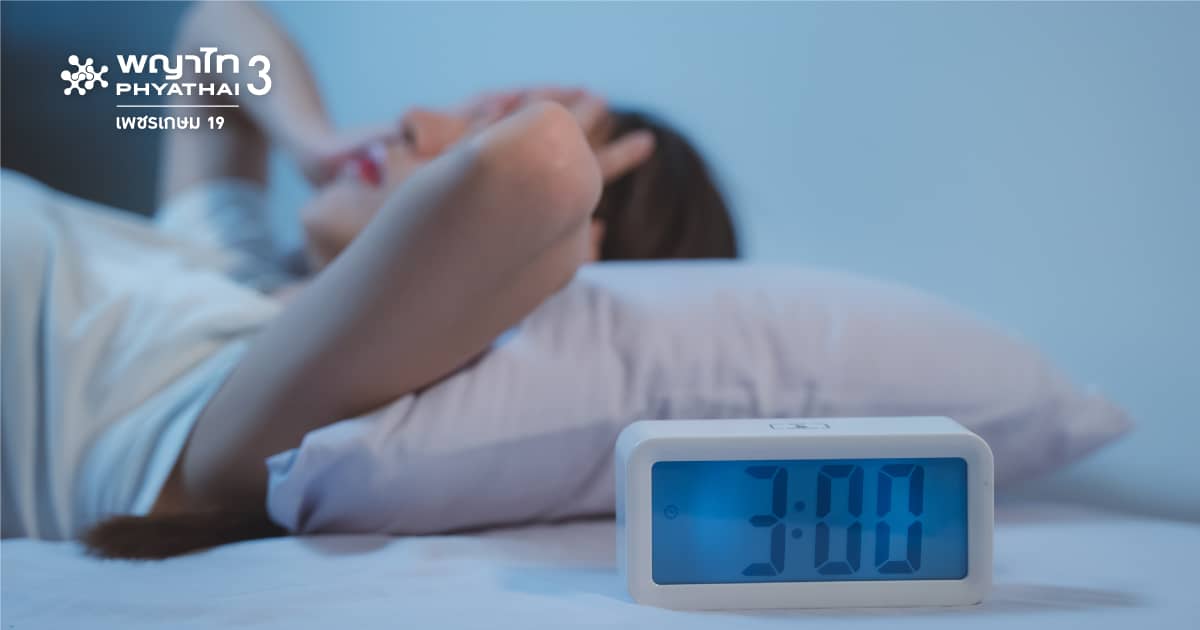
Insomnia and Difficulty Sleeping: Is Your Experience Normal? Do You Need Medical Help?
Sleep disorders come in many different forms. To help you identify what might be affecting you, let’s explore the various types of sleep disorders and understand their characteristics. This knowledge can help you recognize potential issues and determine when it’s time to consult a doctor.
Insomnia… What Type of Sleep Disorder Do You Have?
When we talk about sleep problems, there are people who have difficulty falling asleep, others who sleep but don’t get deep sleep throughout the night, and some who wake up feeling unrested despite sleeping enough hours. There are many different types of sleep disorders, so are your symptoms actually abnormal? And which category do they fall under? Let’s understand these distinctions so you can find the right solutions for your specific sleep issues.
Groups of patients with sleep disorders include:
1. Sleep–Related Breathing Disorders (SRBD)
Causes: Narrowing of the upper airway beyond normal limits.
Warning sign: Loud snoring (that may be audible even through closed doors) with irregular patterns and varying intensity.
2. Insomnia
Causes: Stress, irregular sleeping habits, prolonged screen exposure before bedtime, and underlying health conditions (both physical and psychological).
Warning Signs: Difficulty falling asleep, frequent nighttime awakenings, waking up feeling unrefreshed, daytime fatigue, mood disturbances such as anxiety or depression, and difficulty concentrating.
3. Central Disorders of Hypersomnolence
This category includes conditions such as narcolepsy, where individuals experience excessive daytime sleepiness and sudden, uncontrollable episodes of falling asleep.
Causes: The exact cause is unclear, but it is believed to be linked to decreased levels of hypocretin, a neurotransmitter that regulates wakefulness.
Warning Signs: Overwhelming daytime drowsiness, sudden sleep attacks, and an inability to stay awake even in active situations, occurring consistently for at least 3 months.
4. Circadian Rhythm Sleep–Wake Disorders
These disorders occur when an individual’s internal body clock is misaligned with their environment or lifestyle, such as in cases of jet lag or shift work disorder.
Causes: Aging, irregular work schedules, or inconsistent sleep patterns that disrupt the body’s natural circadian rhythm.
Warning Signs: Difficulty falling asleep (taking more than 30 minutes to do so), frequent nighttime awakenings, and poor sleep quality.
5. Parasomnias
Causes: Stress, medical conditions, or certain medications that affect brain activity during deep sleep stages.
Warning Signs: Excessive sweating, heart palpitations, sleep talking, screaming, or physically acting out dreams, sometimes even walking while still asleep.
6. Sleep–Related Movement Disorders
Causes: Chemical imbalances in the brain, neurological conditions, or underlying sleep disorders such as sleep apnea.
Warning Signs: Leg discomfort that improves with movement, involuntary leg jerking, teeth grinding (bruxism), or waking up with jaw pain or headaches.
Treatment for Sleep Disorders
For each sleep disorder category, treatment methods depend on the specific causes or factors contributing to that condition. Proper diagnosis relies on a thorough medical history, physical examination, and possibly additional sleep studies to ensure each patient receives targeted and maximally effective treatment tailored to their individual needs.
