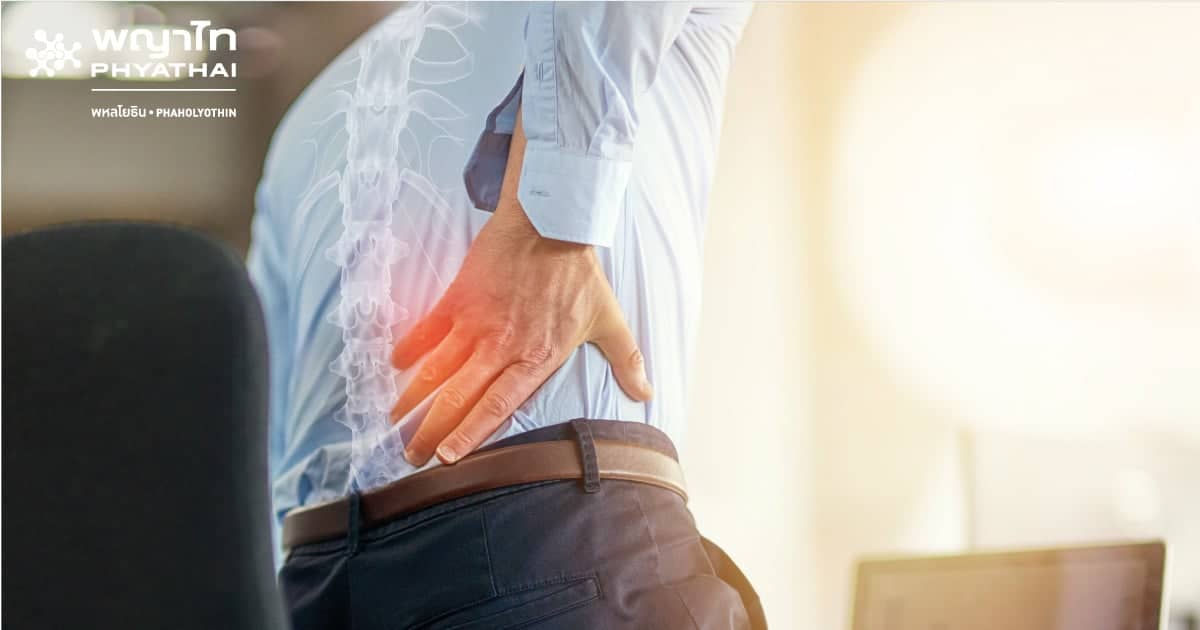
Spinal diseases are health problems that significantly affect quality of life. However, many patients are still concerned about surgery because they believe it may cause complications, pain, risk of paralysis, or require a long recovery time. Nowadays, with continuously developing medical technology, spinal surgery has new techniques and tools that make the surgery safer and less frightening than in the past.
Factors and Causes of Spinal Diseases
Spinal diseases are a group of conditions caused by abnormalities or degeneration of the spine, including related structures such as intervertebral discs, joints, and muscles. The main common factors and causes are as follows:
- Increasing age causes gradual degeneration of the spine, intervertebral discs, and joints, leading to degenerative disc disease, spinal degeneration, or spinal canal stenosis.
- Lifestyle behaviors such as prolonged sitting at work, frequent heavy lifting, or maintaining postures that put heavy pressure on the spine regularly, like sitting cross-legged.
- Overweight or obesity causes the spine to bear more weight than normal.
- Accidents such as falls, road traffic accidents, or sports injuries may cause spinal fractures or dislocations.
- Congenital abnormalities and genetics such as congenital scoliosis, genetic disorders affecting bone structure causing disproportionate dwarfism, or osteoporosis.
- Neurological and muscular diseases such as muscular dystrophy, muscle spasticity, or certain neurological disorders that cause spinal deformities.
- Infections and tumors such as spinal tuberculosis or cancer metastasizing to the spine.
- Other factors such as smoking, which affects blood circulation and tissue repair.
Types and Techniques of Spinal Surgery
Spinal surgery techniques can be classified based on the tools used and the surgeon’s approach as follows:
- Traditional surgery (Open Surgery) involves a large incision. The surgeon can clearly see the lesion and directly access the spine. It is suitable for complex conditions such as severe scoliosis or spinal deformities.
- Minimally invasive surgery (Minimally Invasive Spine Surgery: MISS) uses endoscopic technology. This small-incision endoscopic surgery also involves more specialized tools such as:
- Microscopic lumbar microdiscectomy to magnify the surgical area, suitable for patients with herniated discs compressing nerves or spinal canal stenosis.
- Full-endoscopic lumbar discectomy (Full-Endoscopic Lumbar Discectomy: FED) uses an endoscope, resulting in a small incision of only 1-5 cm, which helps reduce damage to surrounding tissues.
- Spinal fusion surgery to increase stability in patients with spinal displacement or degenerative discs and joints. This can be done using various techniques such as minimally invasive transforaminal lumbar interbody fusion (MIS TLIF), oblique lateral interbody fusion (OLIF), and anterior lumbar interbody fusion (ALIF).
- Decompressive laminectomy involves removing bone or tissue compressing the nerves to relieve pain or weakness.
- Percutaneous screw fixation involves inserting screws or metal devices through small incisions to stabilize the spine.
- Percutaneous vertebral augmentation to strengthen vertebrae that have collapsed or fractured due to osteoporosis.
Diagnostic Evaluation Before Choosing Appropriate Treatment
Doctors will perform a thorough physical examination to assess the bone structure, location, and severity of the disease, considering the patient’s age and underlying conditions before selecting the appropriate treatment method by:
- Taking medical history by asking about pain characteristics such as radiating pain to the arms or legs, numbness, weakness, or problems controlling bowel and bladder functions, which indicate the severity of nerve or spinal cord compression.
- General physical examination to observe the patient’s posture and gait for abnormalities such as scoliosis, kyphosis, or imbalance, including neck and back examinations in various positions to assess spinal curvature and mobility.
- Movement tests such as Schober’s test to evaluate lumbar spine flexibility and mobility.
- Neurological examination to assess muscle strength, sensation, and nerve reflexes in the arms and legs to determine nerve compression.
- X-ray examination in standing or sitting positions to detect spinal structural abnormalities such as bone spurs, scoliosis, dislocation, or spinal canal stenosis.
Indications and Suitability for Spinal Surgery
Spinal surgery is usually considered when non-surgical treatments fail or the patient has severe symptoms affecting quality of life. Key indications include:
- Severe back or neck pain lasting more than 6 weeks without response to non-surgical treatments such as medication, physical therapy, or epidural injections.
- Weakness, numbness, or radiating pain to the arms or legs, indicating nerve or spinal cord compression.
- Problems controlling bowel or bladder functions, which may be signs of an emergency requiring urgent surgery.
- Clear structural abnormalities of the spine such as scoliosis, dislocation, or fractures causing instability that affects walking or daily activities.
- Spinal canal stenosis combined with leg pain or numbness, causing reduced walking distance and impacting daily life.
Differences in Outcomes After Surgery by Technique
Outcomes after spinal surgery vary depending on the type of symptoms and surgical techniques used as follows:
| Type of Surgery | Recovery | Outcome |
| Open surgery with large incision | Slow recovery, may have significant back pain, requires long rest for several weeks, and hospital stay for several days. | Effectively corrects structural abnormalities. |
| Minimally invasive endoscopic surgery | Fast recovery, less pain, less pain medication needed, hospital stay of only 1-2 days, recovery within 1-2 weeks. | Small incision, minimal tissue damage, reduced infection risk, quickly relieves pain and nerve compression. |
| Spinal fusion surgery | Moderate to slow recovery depending on technique and number of spinal levels operated. | Increases spinal stability, reduces pain from displacement or instability. |
| Decompressive laminectomy | Recovery ranges from fast to moderate depending on compression severity and overall health. | Effectively reduces nerve compression, relieves numbness and weakness. |
| Percutaneous vertebral augmentation | Fast recovery, short hospital stay. | Increases bone strength, reduces pain, improves mobility. |
At Phyathai Phaholyothin Hospital, there is a specialized spinal surgery team equipped with advanced treatment technology, providing services from examination, diagnosis, symptom assessment to plan appropriate treatment, including various surgical techniques and postoperative care for optimal recovery, enabling patients to confidently return to their daily lives.
If you or your family members have symptoms related to the spine or are considering treatment options, you can consult with our medical team without the need to make an immediate decision to assess suitability and plan treatment tailored to individual needs.
Assoc. Prof. (Special) Dr. Pornpavit Sripirom
Orthopedic Surgeon, Spine Specialist
Bone and Joint Institute
