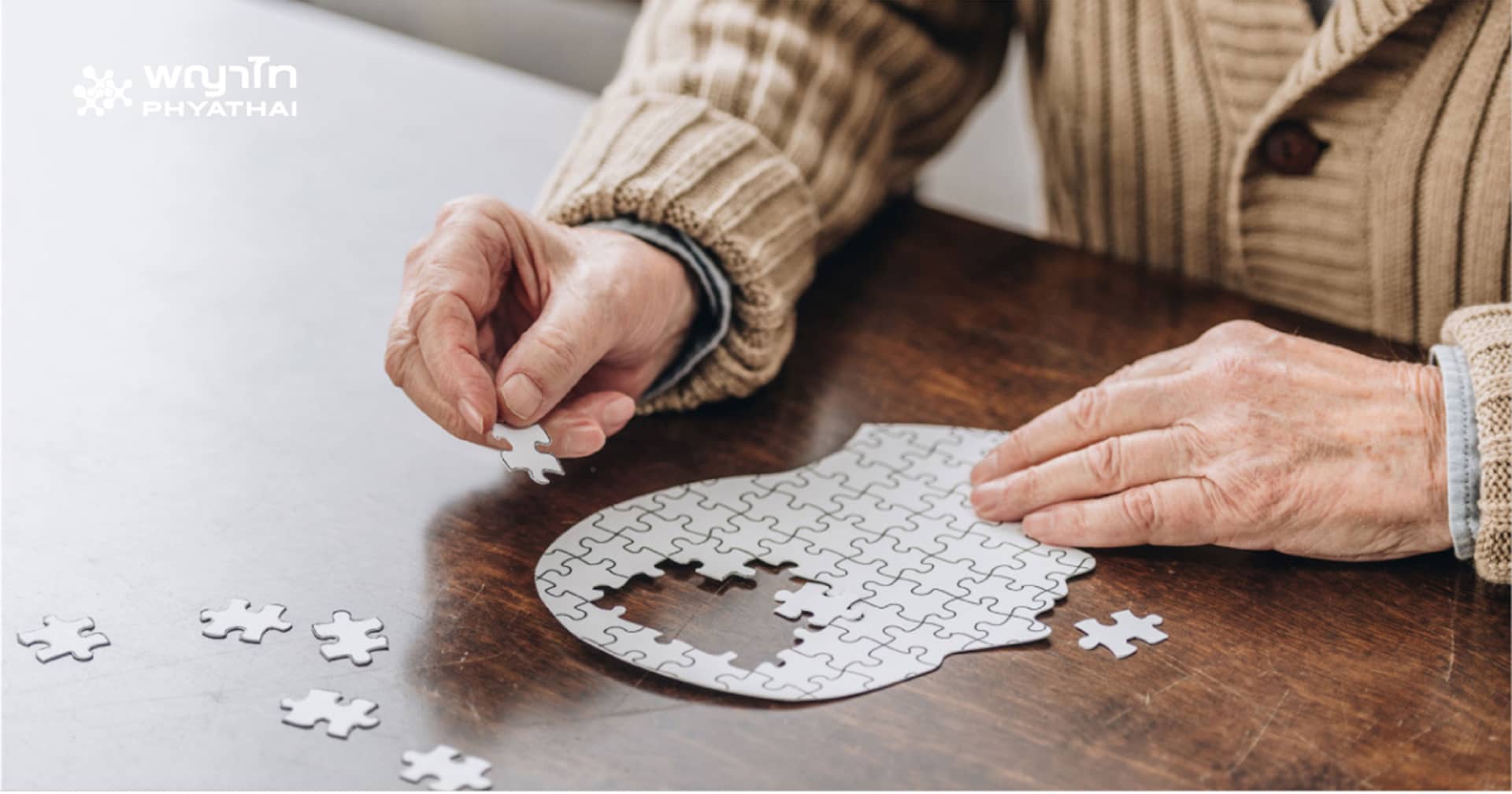
Dementia Many people often think only of Alzheimer’s disease, but in fact, did you know that dementia can also result from cerebrovascular disease, which is called vascular dementia? Studies on the incidence of dementia following stroke in the Thai population found that nearly half of stroke patients, whether from hemorrhagic stroke, ischemic stroke, or occlusion, will develop dementia symptoms over time, which may occur from 3 months up to 9 years after the stroke.
Risk Factors and Causes of Dementia after Stroke
Dementia following stroke occurs in patients who have had a stroke first. It can be divided into ischemic or occlusive stroke and hemorrhagic stroke, with the following causes:
- Ischemic or occlusive stroke: Caused by narrowing of the blood vessel walls in the brain due to thick fatty plaques accumulating, preventing or reducing blood flow to the brain. When the brain lacks blood, it stops functioning and some damage occurs. This narrowing happens gradually and accumulates, so patients or their close ones may not notice abnormalities. Another case is when a blood clot from elsewhere blocks the blood vessel leading to the brain, causing sudden lack of blood flow. Symptoms may be obvious, such as weakness in the arms or legs, facial drooping, slurred speech, or loss of balance. If not treated with clot-dissolving drugs or surgery to remove the clot within 4.5 hours, some brain damage and paralysis may occur.
- Hemorrhagic stroke: May result from fragile or insufficiently elastic blood vessel walls, also known as arteriosclerosis. When abnormal pressure occurs, such as high blood pressure, the weak part of the vessel wall ruptures, causing bleeding in the brain and damaging the affected brain tissue. Another cause is severe head trauma causing brain bleeding. In cases of hemorrhagic stroke, surgery is usually required to quickly remove the accumulated blood in the brain.
When hemorrhagic, ischemic, or occlusive stroke occurs, even with early or late treatment, some brain tissue may be damaged to varying degrees. Therefore, about 3 months after stroke treatment, patients often begin to show signs of dementia, especially if brain rehabilitation is not fully provided and the condition is left untreated, the dementia symptoms will worsen.
Observable Symptoms of Dementia from Stroke
- Restlessness, mood instability, irritability, and easy anger
- Slow movements, muscle weakness
- Repeating the same questions or unable to answer simple questions, taking a long time to respond
- Unable to remember locations within the home, such as the bathroom or kitchen
- Unable to remember dates, such as day, month, or year
Treatment of Dementia from Stroke
When a patient is found to have dementia from stroke, the initial focus is on treating and preventing recurrent stroke by controlling risk factors that cause stroke, such as managing high blood pressure, diabetes, or blood lipids, and preventing blood vessel hardening. Dementia symptoms can be alleviated with medication, possibly using drugs similar to those for Alzheimer’s patients, and psychotropic drugs may be given for symptoms like hallucinations, confusion, or delusions. Importantly, family members and close persons must understand the patient’s condition to help the patient live as normally as possible with others.
How to Rehabilitate the Brain
Besides medication, another essential factor that helps improve symptoms in patients with vascular dementia is brain rehabilitation through various brain exercises, especially for elderly patients. These include memory training, speech practice, reading, writing, arithmetic exercises, and asking and answering simple questions to restore past memories. Patients should use their brains daily and continuously. Another important aspect is to keep learning new things regularly to maintain motivation and prevent boredom and discouragement.
