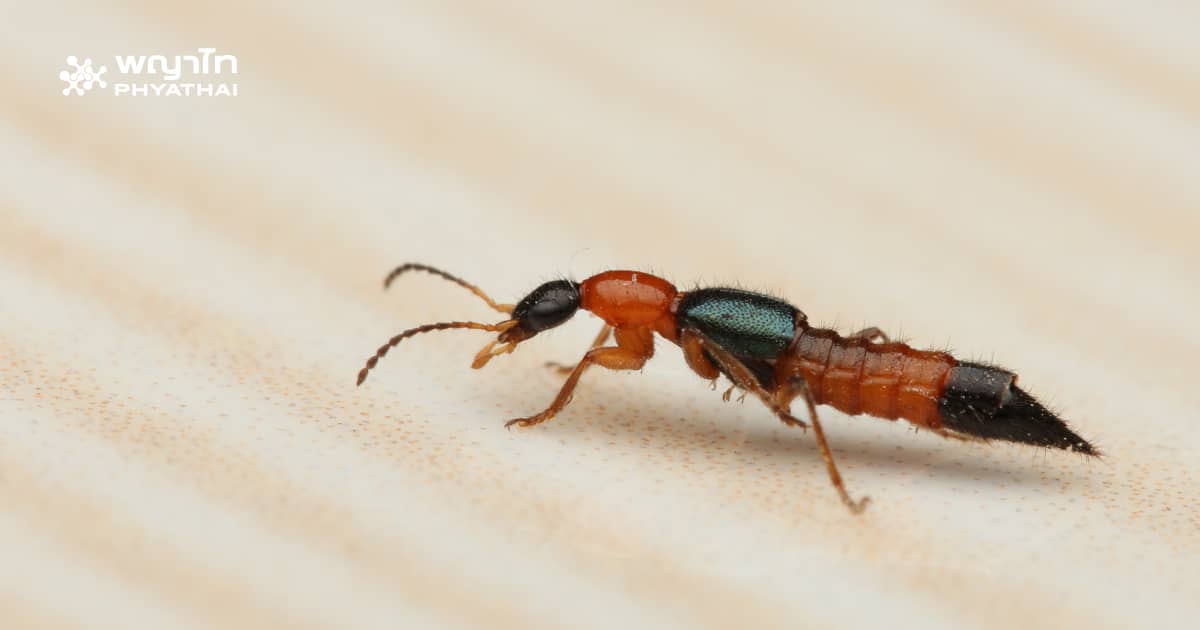
Rove Beetle or Paederus Beetle
Rove beetle is a small beetle with hard wings. The first pair of wings is short, shiny, and only 4-7 millimeters long. The common rove beetle found in Thailand has an orange-colored abdomen. People often call this insect short-winged beetle, rove beetle, or bent-tail beetle. It is usually found at the beginning of the rainy season because the humidity is suitable for breeding. The toxin found in rove beetles is Paederin, and just touching it can cause large blistering wounds.
The breeding grounds of rove beetles are in moist ground areas such as animal manure piles and wood piles. They like to fly towards lights in houses, and if they come into contact with our skin, it can cause itchy rashes or blistering wounds, redness, burning pain, fever, and if the toxin gets into the eyes, it may cause blindness.
Blister Beetle
The blister beetle, also known as the five-spotted blister beetle, has front wings with alternating yellow and black stripes, three stripes each. It is a hard-winged insect like the rove beetle. Its body length is about 3-3.5 centimeters, which is larger than the rove beetle. The danger of blister beetles often arises from the misconception that they are edible. Eating more than three beetles can cause difficulty swallowing, abdominal pain, nausea, sore throat, vomiting blood, blood in urine, diarrhea, low blood pressure, fainting, and death from heart failure.
The toxin found in this insect is Cantharidin. The poison is located in the joints of the beetle’s legs. If it comes into contact with the skin, it will cause blistering and inflammation. This toxin is not destroyed by heat from burning or cooking. Therefore, even if the blister beetle is heated, it still poses a danger to the consumer.
How to protect yourself when in contact with rove beetles
Neither rove beetles nor blister beetles bite. However, if the insect accidentally crawls on the body and is crushed, the toxin inside will be released as a liquid and absorbed into the body, causing allergic reactions as described.
If your body comes into contact with toxins from rove beetles or blister beetles, immediately wipe with ammonia or wash with clean water and stop further contact with the affected area to prevent secondary infection and spreading. Apply antibiotic cream to the wound, but if symptoms are severe, see a doctor immediately. Additionally, you can protect yourself by closing window screens or reducing the brightness of lights at night to prevent rove beetles and blister beetles from entering your room or home.
Are you concerned about your health or the health of your loved ones? Plan ahead with health insurance. You will receive comprehensive coverage including medical expenses (inpatient hospital care), room charges, medical services, and medication costs. Having health insurance can help manage side effects smoothly and effectively, allowing you to live confidently and comfortably every day.
If you are interested in learning more about health insurance planning, the Exclusive Care @ BDMS plan offers free consultation at 02-822-1155 or you can read more at Allianz Ayudhya

