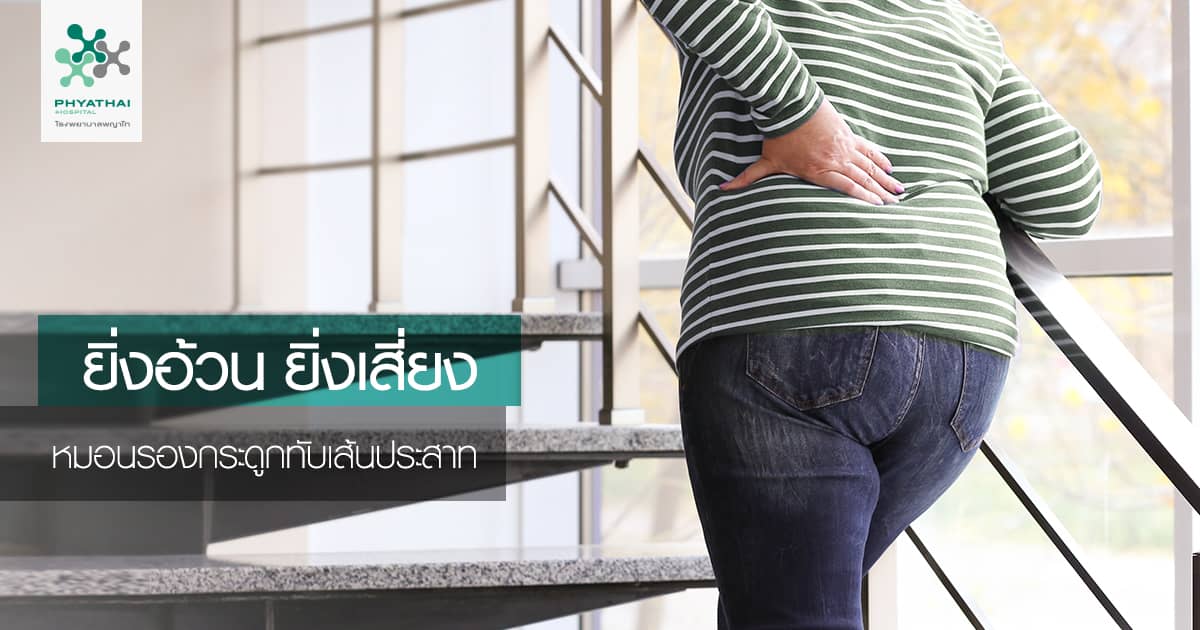
Back pain can result from various causes, including accidents, metabolic diseases, inflammation, infections, or spinal degeneration, which is the main and increasingly common cause. We can prevent these symptoms by not allowing the spine to bear excessive burden from increased body weight and improper posture.
How are obesity and back pain related?
As is well known, obesity or being overweight causes many diseases, including diabetes, heart disease, and high cholesterol. Not only that, obesity can also cause back pain because an obese person’s body has to carry more weight than a normal person, which accelerates the degeneration of the intervertebral discs.
Normally, the spine is the central axis of the body that must fully support the weight. Every movement of the body, whether sitting, standing, or walking, involves the use of the spine. Therefore, the heavier the weight, the more the spine has to bear. Especially for those with abdominal obesity, the increased weight combined with a protruding belly causes the back muscles to exert more pulling force, increasing the lumbar lordosis. If this pulling continues for a long time, it results in uneven weight distribution on the intervertebral discs, which may cause displacement or herniation compressing the nerves. This leads to herniated discs compressing the nerves, rapid spinal degeneration, chronic back pain radiating down the legs, and sometimes weakness may also occur.
What weight is considered above standard?
Excess weight can affect the spine, and we can determine the standard value by using the Body Mass Index (BMI) for each person. The BMI calculation formula is = weight (in kilograms) divided by height (in meters) squared.
BMI assessment criteria
- A value less than 18.5 is underweight
- A value between 18.5-24.9 is normal weight
- A value between 25-29.9 is overweight but not yet obese
- A value between 30-39.9 is obese
- A value equal to or greater than 40 is severely obese and very dangerous
For example, if you weigh 80 kg and are 175 cm tall (1.75 meters), BMI = 80 / (1.75 x 1.75) = 26.14 *(This value is between 25-29.9, meaning you are overweight but not yet obese)
How to avoid “herniated disc compressing the nerve”?
Herniated disc compressing the nerve has several important causes besides obesity. This condition is increasingly common among office workers who sit in front of computer screens for long periods, lifting heavy objects, walking, standing, or sitting with poor posture, playing sports incorrectly or aggressively, and those who do not exercise regularly.
Prevention can be done by avoiding behaviors that cause back pain and increase the risk of herniated discs compressing the nerves as mentioned above. Additionally, control your weight to avoid obesity, eat nutritious food, try to lose weight without starving, consume a balanced diet with all five food groups, avoid high-calorie foods, avoid lifting heavy objects, consult a doctor, and seek proper treatment as soon as symptoms appear or if you notice any abnormalities.
