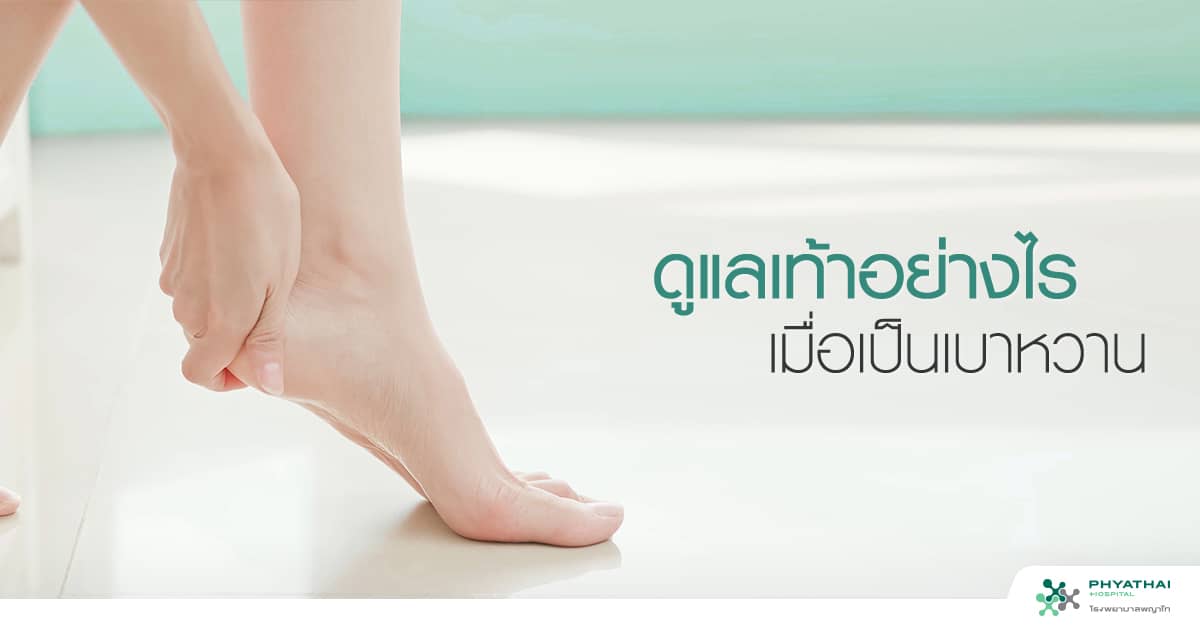
People with diabetes should pay special attention to foot care because diabetes affects blood circulation in the body, especially in the feet. The sensory nerves in the feet do not function well, particularly the sensation of pain, pressure, or temperature (hot-cold). The sensory perception gradually decreases until eventually, the feet may not be able to feel any sensation at all.
Therefore, when a foot wound occurs in a diabetic person with high blood sugar levels, it can easily become infected by bacteria and other pathogens. If not treated properly, the infection can spread extensively, which may ultimately lead to disability or amputation.
Increase Caution to Reduce Risk
Side effects of diabetes cause peripheral neuropathy in the feet, peripheral blood vessel narrowing, and pressure ulcers. Diabetics are therefore more prone to wounds, slow healing, and high risk of infection. Diabetics should prevent foot wounds by regularly caring for their feet, choosing appropriate footwear, and strictly controlling diabetes according to medical advice to reduce the risk of amputation.
When Wounded, Care with Attention
Whether the wound is small or large, do not be careless. Maintain cleanliness of the wound regularly.
- For minor wounds such as blisters or abrasions, keep the wound and surrounding area clean.
- For fresh wounds, special care is required as follows:
- Clean with boiled water that has cooled and mild soap, then pat dry. When wiping the wound, wipe from the wound outward in a circular motion without wiping the same spot repeatedly.
- Apply an antiseptic that does not irritate tissue, such as Betadine solution or antibiotic cream. Avoid using iodine tincture and hydrogen peroxide on the wound.
- Cover the wound with sterilized gauze.
- Check the wound daily for signs of infection. If the wound does not improve, shows inflammation, redness, swelling, or fever, see a doctor immediately.
- While the wound has not healed, avoid putting weight on the foot because standing and walking increase pressure on the wound, causing it to open and heal more slowly. Rest by lying down, sitting on a chair, wheelchair, or using crutches.
- If exercise is desired, it can be done but choose types that do not put weight on the foot or exercise using the arms instead.
- For large wounds or severely inflamed wounds, consult a doctor early to prevent spreading infection.
