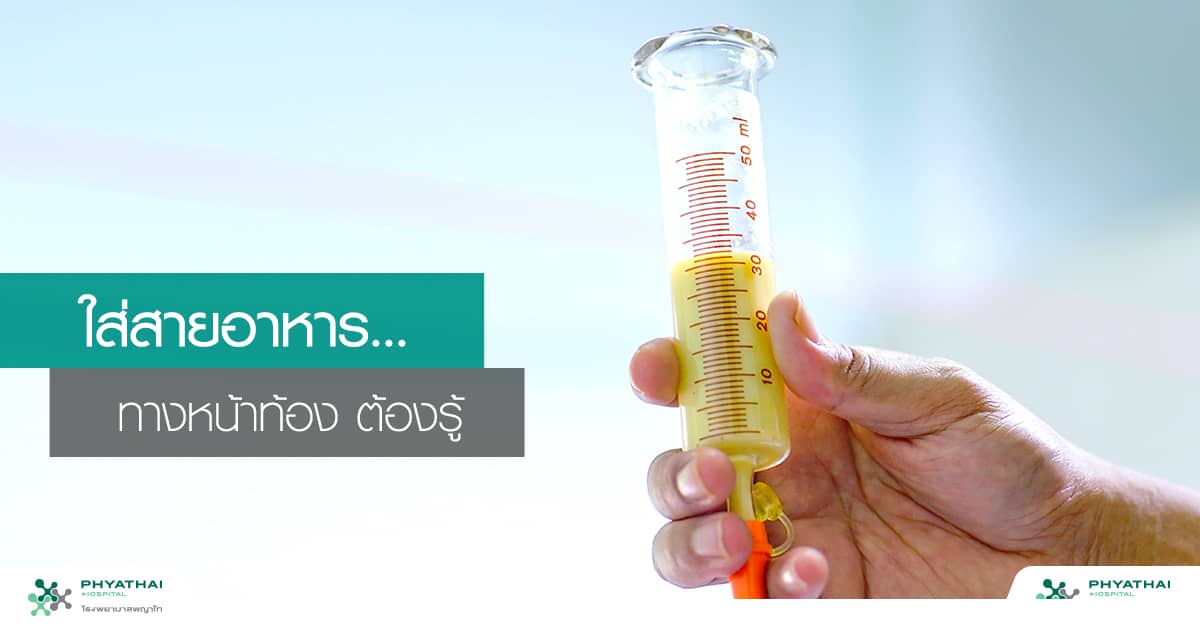
Illnesses that prevent patients from eating orally or cause them to consume less than 60% of the required amount put the body at risk of malnutrition, which may lead to complications. Therefore, doctors must consider using a feeding tube to deliver nutrients directly to the stomach. The most familiar method is nasal feeding tube insertion, but did you know that nowadays we can also insert feeding tubes through the abdomen? Today, we will introduce this method to you.
Getting to Know Percutaneous Endoscopic Gastrostomy (PEG)
Percutaneous Endoscopic Gastrostomy (PEG) is a procedure that allows nutrients to pass directly through the abdominal wall into the stomach using an endoscope. It is a standard method for medium to long-term feeding access. The procedure is simple, safe, requires only local anesthesia, and is highly beneficial for many types of patients. The gastrostomy tubes come in both long and short types that attach to the skin surface, also known as button PEG tubes.
Who Should Use PEG?
Patients who need a nasogastric tube (NG tube) for feeding for more than 4-6 weeks should switch to PEG. This includes patients who cannot eat orally or consume less than the required amount, patients with brain diseases, patients with swallowing difficulties, patients at risk of aspiration, and patients who frequently need to avoid oral intake leading to malnutrition, such as those who are often fatigued from lung or heart diseases, patients with cancers of the mouth, pharynx, and esophagus awaiting radiation or surgery, etc.
Advantages and Disadvantages of Using PEG
Advantages
- Reduces complications from long-term nasogastric tube use, such as pressure sores at the nostril edges, nasal cavity, and sinusitis
- Reduces discomfort or pain from the tube in the throat
- Reduces the risk of food aspiration into the lungs
- Decreases the frequency of tube changes from monthly to more than every 6 months because PEG tubes are made from more durable materials, better supporting feeding and lasting longer
- Improves swallowing training efficiency
- More aesthetically pleasing as the tube can be hidden under clothing
- If the tube is no longer needed, such as after completing radiation therapy or recovery from the underlying disease allowing normal oral intake sufficient for the body’s needs, the PEG tube can be removed by a doctor, and the wound will close on its own within 2-3 days. Alternatively, if oral intake is adequate, the PEG port can simply be capped and left unused
Disadvantages
- Patients will have a small wound on the abdomen and may experience pain at the wound site for about 2-3 days after insertion
- Requires daily care including tube rotation and wound cleaning with saline once a day
- Higher cost for the procedure and materials compared to NG tubes, especially for the initial insertion
What Are the Steps for PEG Tube Insertion?
Before insertion, all patients must be admitted for readiness assessment and blood tests to check blood clotting. Patients must not have infections on the abdominal skin or a history of stomach surgery. The first PEG insertion is performed in an endoscopy room or operating room, taking about 15-30 minutes. An anesthesiologist will administer sedation intravenously. Then, the doctor will use an endoscope to evaluate the upper gastrointestinal tract. If there are no contraindications such as large ulcers or stomach cancer, the doctor will administer local anesthesia, suture the stomach to the abdominal wall, and create an opening to insert the tube between the stomach and abdominal skin.
After PEG insertion, patients usually recover immediately but must be closely monitored in the recovery room for about 1 hour before returning to their ward. Generally, doctors advise fasting from food and water for about 6-24 hours and keeping the wound tightly closed for 24 hours before starting feeding through the PEG the next day.
Each PEG tube lasts about 6 months to 1 year, depending on tube care and the type of feeding. Tube replacement can begin after more than 4 weeks from the first insertion, once the tract is fully formed. Replacement involves using special equipment to remove the old tube by deflating the balloon and inserting a new tube. The procedure takes about 10 minutes and can be done without hospital admission.
Will the Wound Get Infected? How Should the Wound Be Cared For?
The wound edges may have slight leakage of fluid, milk, or blood, which is normal. It is recommended to place a small gauze pad after wound care and keep the tube straight, perpendicular, and firmly fixed to prevent movement during the day. The risk of infection from PEG is less than 1%, mostly caused by patients not properly caring for the tube, failing to rotate it regularly, causing the tube to become embedded and immobile, which hinders feeding. Therefore, proper tube care is essential as follows:
- Wash and dry hands thoroughly before cleaning the wound every time
- During the first 1-2 weeks after initial tube insertion, clean the wound daily using a cotton swab soaked in saline, wiping around the wound until clean, then dry and place sterile gauze on both sides. Then, apply adhesive tape close to the tube to keep it perpendicular and prevent movement during the day
- Once the wound is dry, patients can bathe, but should clean the wound again with a cotton swab soaked in saline or boiled water after bathing
- Visit the doctor as recommended every 3-6 months for wound care, dressing, and tube replacement
Other Recommendations
- Change the tube every 6 months or when the tube is swollen, blocked, broken, or deteriorated
- If the tube is not in use, flush with 30-50 cc of water at least once a week
- Clean the patient’s mouth, tongue, and teeth daily even if not feeding orally to maintain good hygiene
- Even with PEG, if the patient can eat orally, they should continue to eat normally by mouth
