When it comes to diagnosing diseases from tissue samples, the first thing that comes to mind is usually surgery to remove these masses before sending them to the laboratory for examination. But wouldn’t it be better if today we could accurately diagnose diseases without having to surgically remove the entire mass?
Introducing Image Guided Biopsy
The Diagnostic Radiology Center at Phyathai 3 Hospital not only serves as a unit for disease diagnosis using various radiological imaging tools but also offers an advanced technology for disease diagnosis called Image Guided Biopsy. This involves diagnosing diseases from tissue samples using high-resolution ultrasound machines or a 256-slice computed tomography (CT) scanner to precisely locate the disease for the most accurate diagnosis.
This method has increasingly played a role in diagnosing lesions in the neck, chest, and abdominal areas because it does not require surgery to remove the entire mass for examination. Instead, a small needle is inserted through the skin into the organ from which the tissue sample is to be taken, with the location confirmed by high-resolution ultrasound or a 256-slice CT scanner.
What abnormalities can be detected?
Diagnosis from tissue samples using high-resolution ultrasound can detect abnormalities and lesions in the thyroid gland, lymph nodes, lungs, liver, kidneys, as well as other lesions in the chest and abdominal cavities.
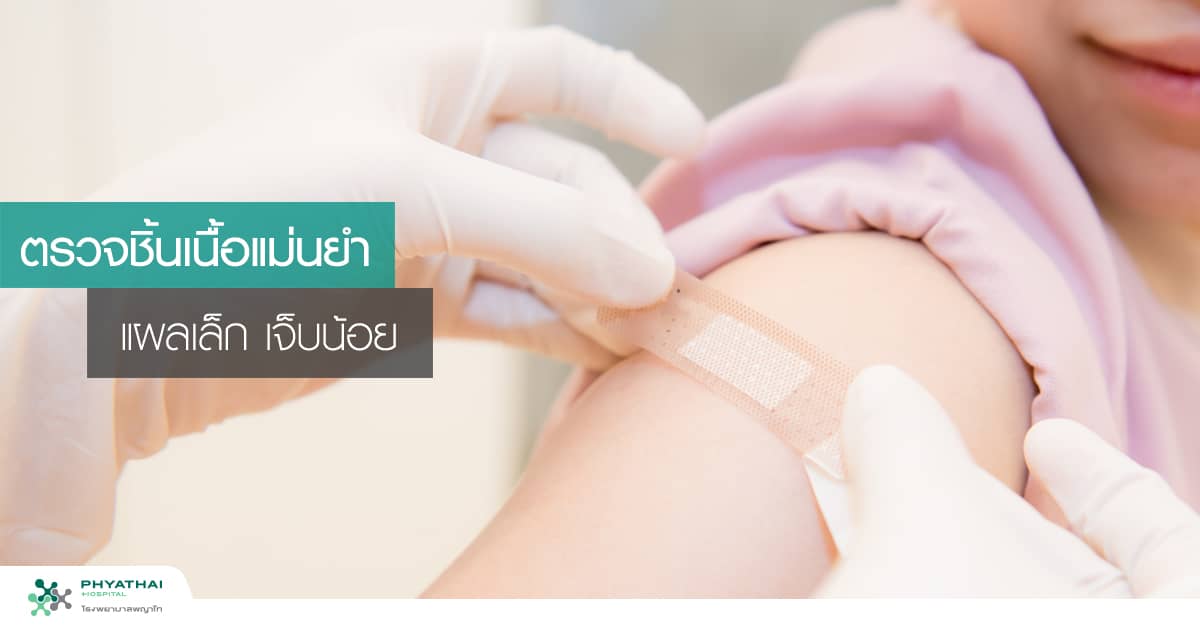
Small wound, less pain, accurate
The advantage of this method is a small wound (only slightly larger than an injection), which naturally causes less pain and requires less recovery time. Patients can usually go home the next day.
In terms of treatment, current technology allows us to create high-resolution diagnostic images that can detect very small lesions. When combined with highly accurate tissue sample diagnosis as mentioned, it enables early detection of serious diseases, reduces unnecessary surgeries in cases of benign lesions, and helps doctors plan the correct treatment based on biopsy results.
Precautions Patients who are taking antiplatelet or anticoagulant medications must inform their doctors to temporarily stop these medications before undergoing tissue sample diagnosis.
Dr. Thanat Witayanulak
Diagnostic Radiology Department
Phyathai 3 Hospital
