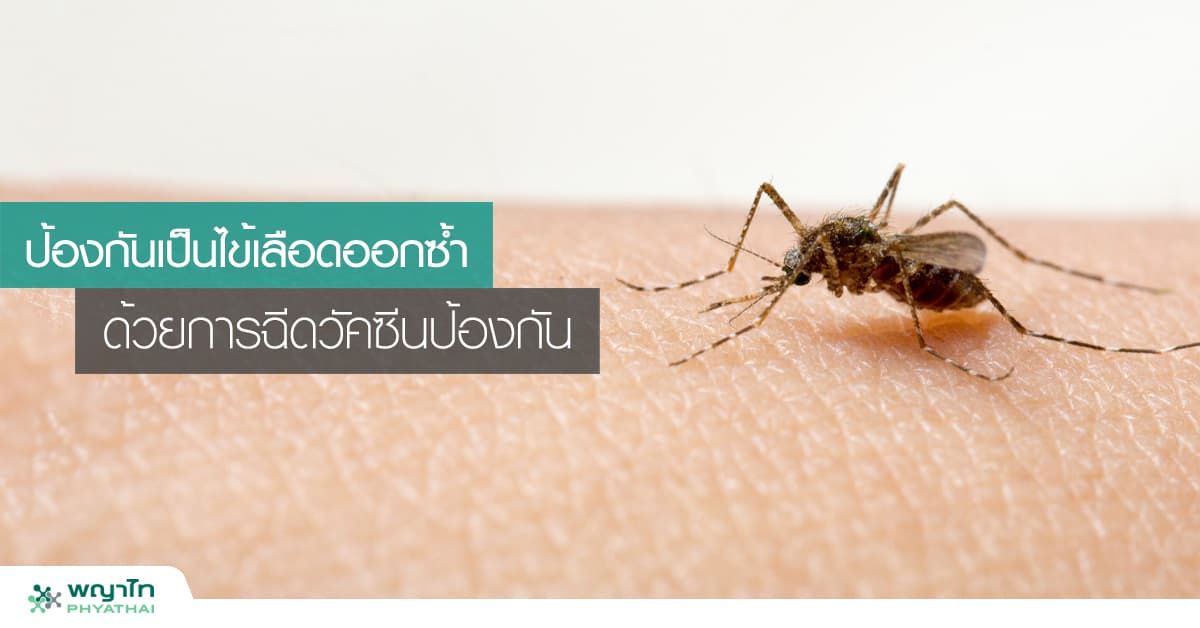
Nowadays, dengue fever remains one of the diseases that claim many Thai lives every year. The dengue virus, which has 4 different serotypes, is the main cause. Those who have had dengue fever before can still get reinfected, and reinfection carries a risk of developing severe dengue, which increases the chance of death. Therefore, “dengue vaccination” should not be overlooked, as it helps prevent dengue fever by up to 82% in those who have been previously infected.
Who should get the dengue vaccine?
Dengue vaccination is recommended for those who have been previously infected with the dengue virus because even though the body has immunity, reinfection can occur and may be severe. The main issue is that people who have never had dengue fever before cannot be guaranteed that they have never been infected, as many dengue virus infections are asymptomatic and go undiagnosed, so they do not know if they have been infected before.
Currently, the World Health Organization recommends blood testing before vaccination to screen for suitability to receive the dengue vaccine. For those who test negative for previous infection, vaccination is not recommended. However, those who have been infected with the dengue virus before are the group that should definitely receive the vaccine. Vaccination helps provide better protection, reduces the risk of severe dengue by up to 84%, and decreases hospitalization rates by up to 79%.
Rapid Diagnostic Tests for previous dengue virus infection
The blood screening method to determine if the body has been previously infected with the dengue virus can be done using Rapid Diagnostic Tests (RDT), which detect all 4 dengue serotypes. These tests have high sensitivity and specificity and are the first RDT used to identify dengue serostatus from past infections, with over 95% sensitivity and 98% specificity. This differs from other tests currently used only for diagnosis. The RDT blood test is similar to a regular blood draw, where a blood sample is taken and results are available in about 30-40 minutes to confirm whether the person has been previously infected with the dengue virus.
Thailand is a country in a climate zone with a high prevalence of dengue fever. Therefore, understanding dengue fever well is important for everyone to be aware and take care of themselves to stay safe and avoid this disease as much as possible.
The most effective prevention of dengue fever is to avoid mosquito bites. For those who have had dengue fever before, dengue vaccination helps prevent severe reinfection. The dengue vaccine requires 3 doses, each given 6 months apart. For those who have never had dengue fever or are unsure if they have been infected before, they can undergo blood testing with the Rapid Diagnostic Tests to screen and confirm whether they should receive the dengue vaccine to reduce the risk of severe reinfection.
Internal Medicine Physician, Infectious Diseases Subspecialist
Infectious Diseases Center, Phyathai 3 Hospital
