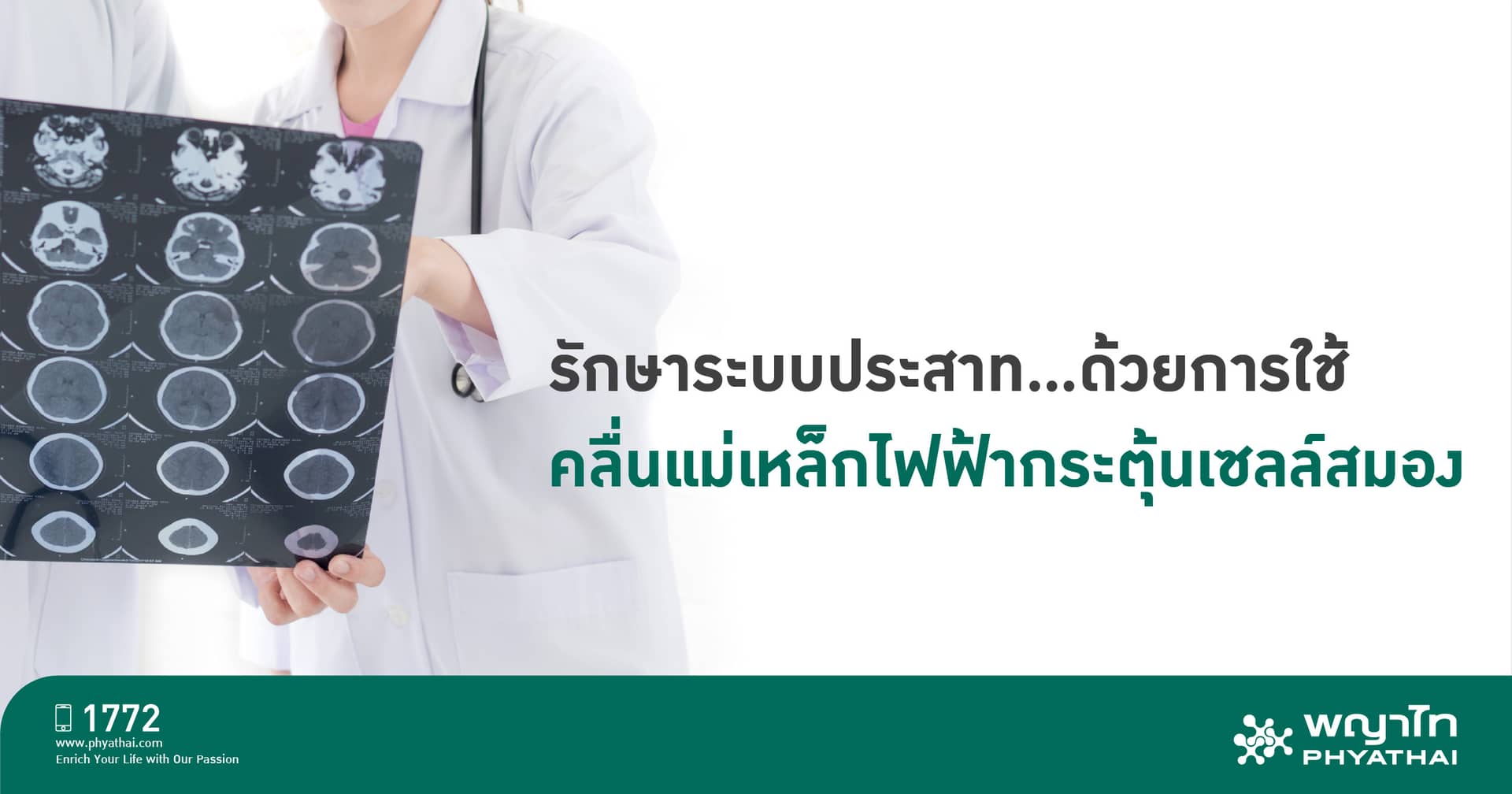
What is TMS?
TMS is an abbreviation for Transcranial Magnetic Stimulation, which is a device that stimulates brain cells using electromagnetic waves.
In operation, the TMS device generates a high-intensity magnetic field and sends that magnetic field to stimulate brain cells in the affected area. Stimulating brain cells to generate electrical currents improves brain cell connectivity, balances neurotransmitter function, enhances brain cell activity, and also increases the function of vascular endothelial cells, thereby improving blood circulation in the stimulated brain area.
Procedure for Neurological Treatment with TMS
First, the doctor will assess the disease and find the appropriate location to stimulate the brain for each patient and calculate the suitable electromagnetic wave intensity for treatment. Then, the magnetic wave coil is placed on the head, limbs, or the area to be treated. The treatment takes about 30-60 minutes. During TMS, patients may feel slight muscle twitching.
This treatment requires multiple sessions, with the number depending on the disease being treated. Another advantage of TMS treatment is that patients do not need to stay in the hospital for recovery after the procedure.
Side Effects of Neurological Treatment with TMS
- Muscle stiffness, twitching (occurs in 1-2%)
- Headache, facial muscle twitching
- Dizziness, ringing in the ears
Limitations of Neurological Treatment with TMS
- Those with metal implants in the brain, such as coils, because the magnetic field induces metal objects
- Those with pacemakers, as the magnetic field can interfere with the electrical circuits
- Patients with uncontrolled epilepsy
Benefits of Neurological Treatment with TMS
The treatment is recognized as a standard for many diseases, supported by research both domestically and internationally, such as:
- Stroke rehabilitation, improving about 30% in muscle strength, movement, speech, and swallowing
- Reducing and preventing headaches and migraines
- Memory stimulation in patients with memory impairment
TMS neurological treatment is considered a new approach and an alternative treatment for neurological diseases alongside primary treatments. It is highly safe, has few side effects, and provides effective treatment results.
Dr. Rudeerat Wattanawong
Stroke and Neurology Internist
Brain and Nervous System Center
Phyathai 3 Hospital
