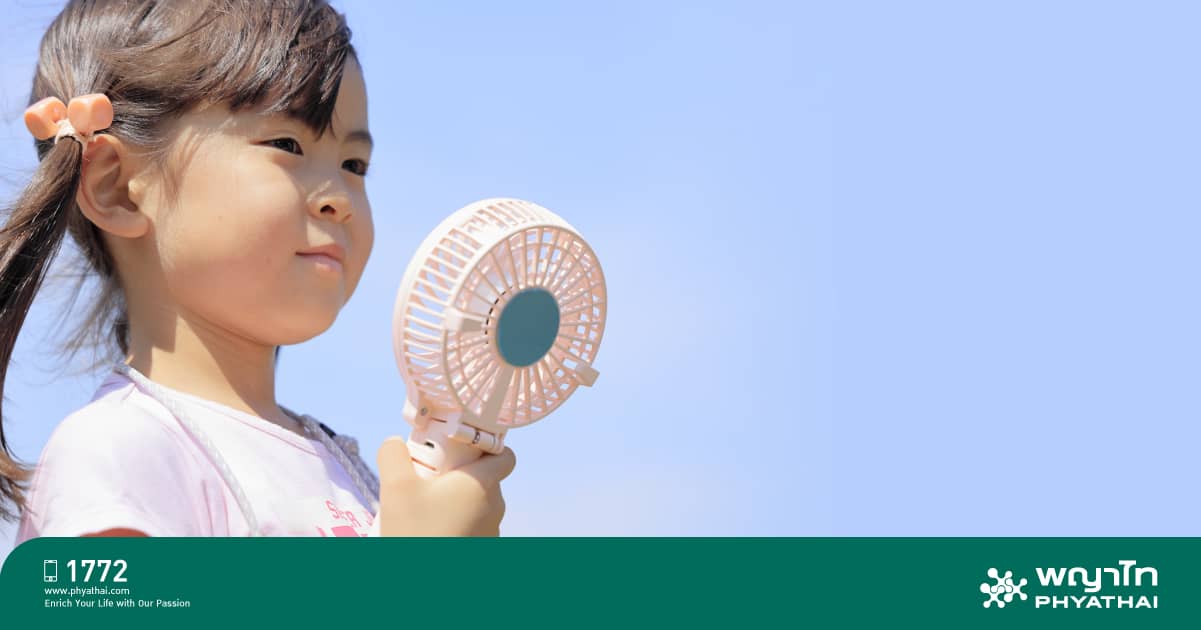
Heat Stroke is a condition characterized by central nervous system dysfunction, multiorgan failure, and a body temperature higher than 40.5 degrees Celsius (extreme hyperthermia). It is divided into two groups:
- classic heat stroke (non-exertional group) and
- exertional heat stroke (group caused by intense physical exercise)
Risk factors for heat stroke include
1. Environmental factors such as prolonged exposure to heat radiation. For example, children playing outdoors in hot weather.
2. Physiological factors such as impaired heat dissipation, dehydration or insufficient body fluid volume (cardiovascular insufficiency), abnormal body response to increased body temperature with delayed reaction, and impaired skin heat dissipation, meaning slower or reduced heat loss through the skin.
3. Social factors including neglected patients, those unable to care for themselves such as children, disabled persons, or the elderly, and those staying in poorly ventilated places.
4. Underlying diseases that increase the risk of abnormal high body temperature.
Mechanism of heat stroke
In normal individuals, when the core body temperature rises, the body responds (thermoregulatory response) by increasing heart rate to pump more blood to the skin for heat dissipation through sweating. However, if the body cannot lower the temperature or if factors cause prolonged high body temperature, blood flow to organs decreases, leading to heart failure and subsequent multiorgan failure such as brain, liver, kidneys, muscles, and blood system.
Initial treatment of heat stroke
1. Perform CPR, prepare for resuscitation, and provide oxygen to maintain blood oxygen saturation above 90% (oxygen at 4 liters/min to increase oxygen saturation to >90%).
2. Rapidly reduce core body temperature and maintain it, generally below 39 degrees Celsius or averaging between 38 to 38.5 degrees Celsius.
3. Administer adequate intravenous fluids.
4. Be cautious of seizures and promptly transfer the patient to the hospital or intensive care unit.
Care of patients in the intensive care unit/pediatric intensive care unit (ICU/PICU)
1. Lower core body temperature to normal (Normothermia) by inserting a core temperature monitoring probe.
2. Monitor for seizures and administer anticonvulsants if symptoms occur. If there is brain swelling or severe coma (GCS<8), consider intubation, elevate the head to 45 degrees, and check arterial blood gas (keep PCO2 34-36 mm Hg).
3. Perform blood tests to check muscle inflammation markers, liver and kidney function, and electrolyte levels, and monitor to maintain normal ranges.
4. Monitor brain function (EEG monitoring).
Prevention of heat stroke is the best treatment, which is to avoid risk factors
1. Avoid staying in places with prolonged exposure to heat radiation.
2. Stay in well-ventilated areas, use air conditioning or fans to reduce surrounding temperature.
3. Drink enough water or prepare appropriately for exercise by wearing breathable clothing.
4. Avoid keeping children or elderly people in closed, poorly ventilated spaces.
[base64_img]
Dr. Issara Sangwadee
Pediatric Neurologist
For more information, please contact
Child Health Center
Phyathai 3 Hospital
Tel. 02-467-1111 ext. 3419