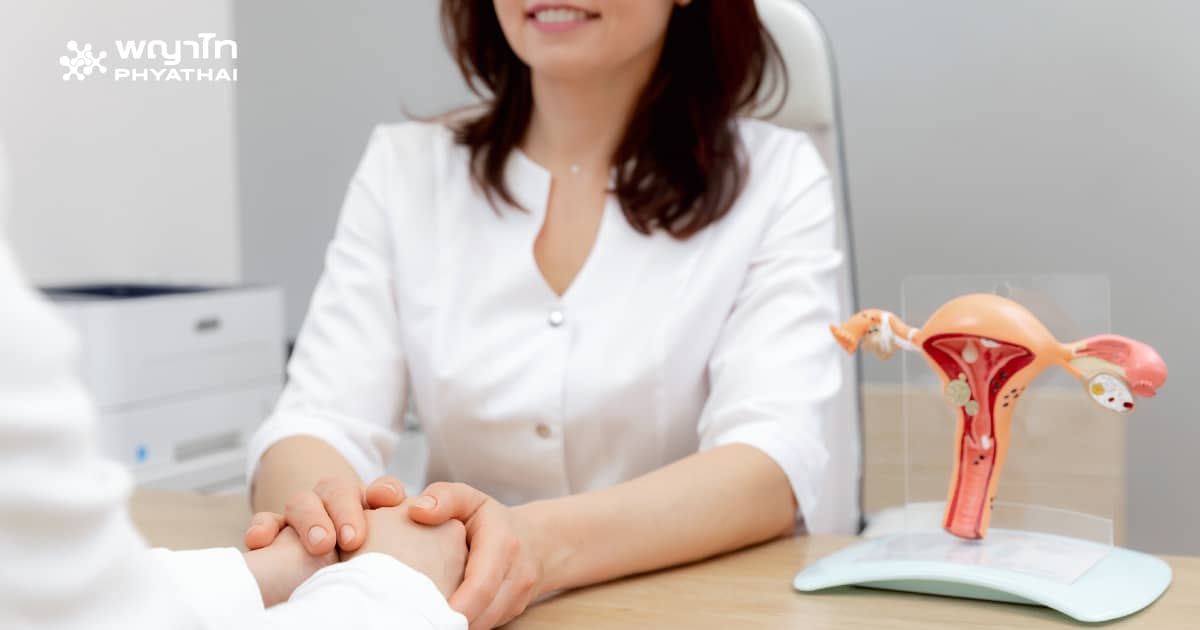
Uterine fibroid problems, no one wants to encounter them. But if you do, the next thing we need to look for is an effective and modern treatment method to be able to return to a normal life again. Today, we have an obstetrician and gynecologist from the Innovation Center for Gynecology, Phyathai Nawamin Hospital, to provide knowledge on this topic.
Uterine Fibroids… A Silent Threat That Must Be Watched
“Uterine fibroids are a disease of the uterine muscle. It is a common condition and is not malignant, not cancer. The growth of fibroid lumps is usually slow, and in some cases, the fibroids may not grow or cause any symptoms.” Simply put, the symptoms of uterine fibroids depend on their location. “If they are close to the uterine lining, there will be symptoms with heavier than normal bleeding. But if they are located more towards the outside, there may be no symptoms.”
Signs… That You Can Start Noticing Yourself
Although sometimes there may be no warning signs or symptoms of uterine fibroids, the doctor says there are still small signs that we can start to notice abnormalities ourselves. “You can observe from your menstrual cycle. If your period is abnormal, you should promptly get checked to see if there are uterine fibroids, endometriosis, or any abnormalities suspected to possibly become cancer.” Therefore, the doctor recommends annual internal examinations or ultrasound scans as another helpful method.
Once Diagnosed… Is Surgery Necessary?
Regarding treatment methods, the doctor says surgery may not be necessary in every case, but there are five main criteria that, if met, require surgery.
- Abnormally heavy menstrual bleeding
- Severe abnormal abdominal pain
- Fibroids pressing on adjacent organs such as the bladder or rectum
- Rapidly growing fibroids
- Suspicion that the fibroid is cancerous
Besides these five characteristics, in patients with infertility, if fibroids are detected, they should be surgically removed before pregnancy. However, if already pregnant, surgery should wait until after delivery.
Why Choose Treatment by “Laparoscopic Surgery”
“For cases treated for uterine fibroids, I use laparoscopic surgery 100% because patients have smaller wounds, less pain, faster recovery, quicker return of liver and kidney function, and less blood loss.” For the quality of life of patients, the doctor must choose the most effective treatment method.
Dr. Mongkol Chantaphakul
Specialist in Obstetrics and Gynecology, Gynecologic Laparoscopic Surgery
Women’s Health Center, Phyathai Nawamin Hospital

