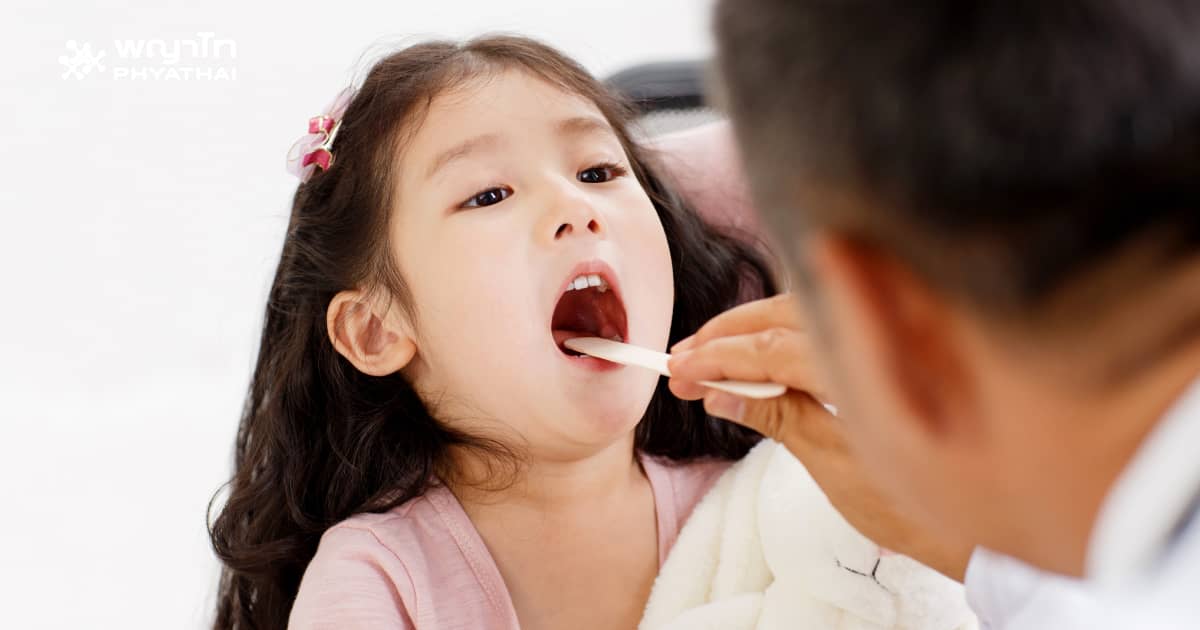
If your little one has a sore throat or a high fever, parents should not ignore it. You should promptly take your child to see a pediatrician to make sure whether it is just a common fever or “tonsillitis”!!!
Get to know… “Tonsils”
The tonsils are lymph nodes located on both the left and right sides of the throat. Their function is to catch and destroy germs that enter the body and help build the body’s immunity.
How do the “Tonsils” become inflamed?
Tonsillitis is caused by bacterial or viral infections. It is a common disease in children, especially those under 10 years old, because their immune systems are not yet strong. They often put toys, nearby objects, or even their fingers and hands into their mouths, making it easy for germs to enter the body, leading to frequent “tonsillitis”.
Are your little one’s symptoms “tonsillitis”?
Parents should observe if their child has any of these symptoms or warning signs of tonsillitis, such as:
- The tonsils are swollen and red
- Sore throat, especially when swallowing saliva or food, causing loss of appetite
- Headache
- Chills, mild fever, but some cases may have a high fever leading to seizures
- Fatigue, weakness, crying continuously day and night
- Vomiting, stomach pain, and diarrhea
How to care for your child when they have “tonsillitis”
When your child is sick, parents need to take special care and, importantly, strictly follow the doctor’s advice. When you take your child to the doctor, the doctor will start treatment based on the severity of the symptoms.
- Medication treatment depends on the cause of the tonsillitis
- If caused by a virus, treat the symptoms, such as giving fever reducers, sprays, or lozenges for sore throat
- If caused by bacteria, treat with antibiotics, taking the medication continuously for about 7-10 days
- Closely monitor your child’s symptoms
Parents should regularly observe their child’s symptoms. If the child has a high fever or chills, frequently wipe their body to reduce body temperature and prevent seizures
- Pay attention to your child’s diet
Give your child soft foods such as rice porridge or boiled rice, and encourage frequent sipping of fluids, especially sweetened water
- Ensure your child gets enough sleep
When your child is sick and weak, parents should ensure they get plenty of rest because the body needs time to recover and regain strength
- Maintain cleanliness in the home
When your child has tonsillitis, parents should especially keep the home clean, including toys and personal items, to prevent more germs from entering your child’s body
Parents should closely monitor their little one. If there are warning signs or symptoms, promptly take them to see a doctor for proper diagnosis and treatment. Although “tonsillitis” is not a serious disease, if left untreated for a long time, it may lead to severe complications.
Because we should care and pay attention to our little one’s growth… without negligence
