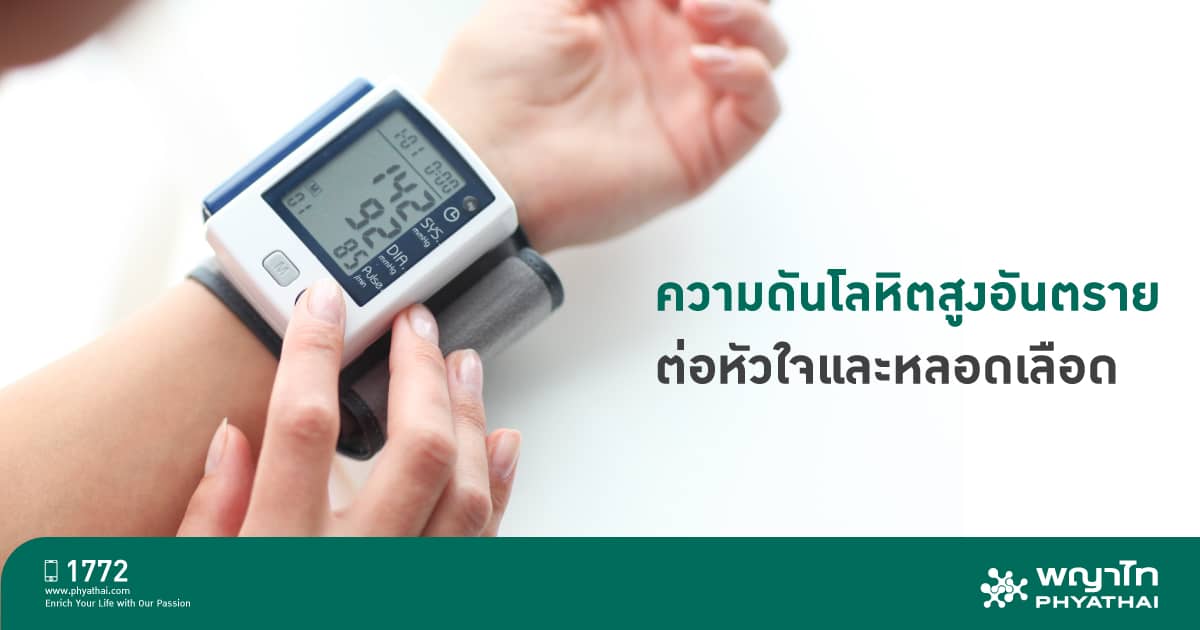
If you are one of those who neglect health check-ups, you may not realize that… you are having “High Blood Pressure”, which is very dangerous. High blood pressure is considered a silent threat that often shows no symptoms in the early stages but affects other aspects of health and can become a severe chronic disease if left untreated.
What is High Blood Pressure?
First, let’s get to know the term “Blood Pressure”, which refers to the pressure of the blood flow against the walls of the arteries caused by the heart pumping blood.
High blood pressure means a condition where blood pressure levels are higher than normal. It is a condition that needs to be controlled because high blood pressure causes the arteries to gradually deteriorate and become damaged faster than they should, leading to artery hardening, blockage, or even rupture. Importantly, it is a risk factor for other complications such as heart disease, stroke, dementia, or chronic kidney failure.
Check now! Do you have “High Blood Pressure”?
To know whether you have this condition, you need to measure your blood pressure with a blood pressure monitor. The measured blood pressure consists of two values as follows:
- Systolic pressure is the blood pressure when the heart contracts
- Diastolic pressure is the blood pressure when the heart relaxes
Table of Blood Pressure Severity Levels for People Aged 18 and Over
|
Type |
Systolic Blood Pressure (mm/Hg) / Diastolic Blood Pressure (mm/Hg) |
| Normal Blood Pressure | < 120 and < 80 |
| Elevated Normal Blood Pressure | 120-129 and < 80 |
| High Blood Pressure Stage 1 | 130-139 and/or 80-89 |
| High Blood Pressure Stage 2 | ≥ 140 and/or ≥ 90 |
| Isolated Systolic Hypertension | ≥ 140 and < 90 |
Types of High Blood Pressure
- Primary Hypertension or Essential Hypertension (Primary Hypertension or Essential Hypertension)
where the exact cause cannot be identified. It is commonly found in people aged 40 and above, and the risk increases with age. - Secondary Hypertension (Secondary Hypertension)
caused by various underlying health conditions such as sleep apnea, kidney disease, thyroid problems, adrenal gland tumors, congenital vascular abnormalities, use of certain medications, substance abuse, or alcohol consumption.
Symptoms to Watch For
As mentioned, the danger of this disease is that it often shows no symptoms, and the cause is usually unknown. It is often detected through health screenings or when patients visit doctors for other illnesses. However, patients with severe high blood pressure may show the following symptoms:
- Severe headache
- Nausea, vomiting
- Feeling easily fatigued
- Dizziness, frequent fainting
- Nosebleeds
These symptoms are nonspecific and cannot clearly indicate the disease, so regular health check-ups are recommended for continuous monitoring.
Reduce Risky Behaviors… Avoid Developing High Blood Pressure
Long-term blood pressure control can be achieved by taking care of your health and reducing risky behaviors such as:
- Eating nutritious food and reducing sugar, fat, and salt intake
- Exercising regularly to maintain a healthy weight
- Not smoking
- Avoiding alcoholic beverages
- Allocating adequate rest time and getting enough sleep
- Reducing stress by engaging in enjoyable activities
- Regular health check-ups to monitor blood pressure levels so that any abnormalities can be treated promptly to return to normal
Generally, about 90-95 percent of high blood pressure patients have no known cause and no symptoms. By the time the disease is detected, it may already be in a severe stage.
However, diseases that come to us uninvited can be prevented by consistently taking care of our health and not neglecting “health check-ups,” which help us keep up with the body’s deterioration and recognize any disease risks early, allowing for prevention or early treatment.
…Don’t let “High Blood Pressure”
known by many as the “Silent Killer” live inside you…
Dr. Yuttasit Thanapongpipat
Family Medicine Specialist
Health Promotion Center, Phyathai Nawamin Hospital
