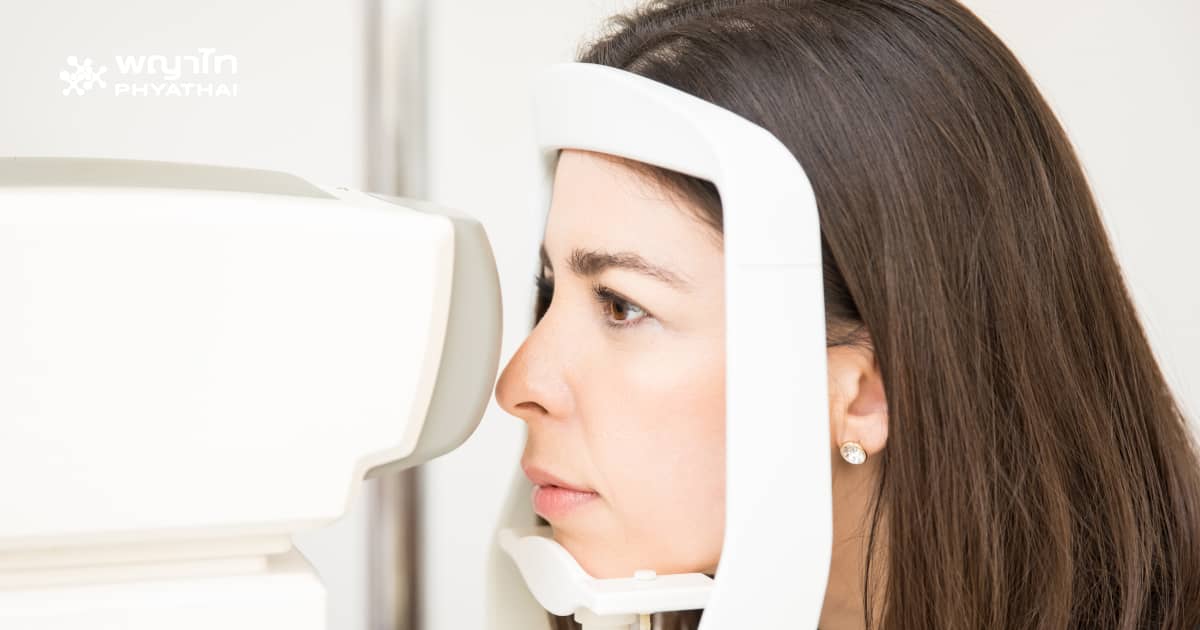
What is OCT Optic Nerve Head Analysis?
OCT (Optical Coherence Tomography) optic nerve head analysis is an examination of the optic nerve head, retina, and macula by creating cross-sectional images using a laser device. It captures cross-sectional images of the retina to produce both 2D and 3D images with a resolution for diagnosis at the level of 10-15 microns. It also shows the retina in a way similar to microscopic biopsy images, where the retina is seen divided into 10 sublayers, including the optic nerve head
This examination also shows the thickness of the retinal layers and the thickness of the macula to determine if there are any problems or damage caused by various conditions. It reveals details of traction between the vitreous interface and the macula, and it can assess whether the fluid level in the eye caused by macular edema has decreased after treatment. All of this is to detect lesions, diagnose existing diseases, and provide targeted treatment before symptoms worsen.
Who should undergo OCT optic nerve head analysis?
- People under 50 years old should have the test every 2-4 years
- People over 50 years old should have the test every 1-2 years even if there are no visual symptoms
- People at risk of retinal degeneration due to diabetes
- People at risk of glaucoma
OCT optic nerve head analysis procedure
The patient sits in front of the machine similar to a general eye exam, without the need for pupil dilation drops, and no equipment or radiation touches the eye. The examiner will test one eye at a time, and the test takes about 5 minutes.
Preparation before undergoing OCT optic nerve head analysis
- No special preparation is required
Interpretation and evaluation of OCT optic nerve head analysis results
The doctor will evaluate the results and diagnose diseases based on images processed by a computer system. It can detect various eye diseases such as
- Age-related macular degeneration, mostly occurring in the elderly
- Macular hole or macular edema from various conditions such as diabetes or abnormal or blocked retinal blood vessels
- Epiretinal membrane and macular conditions, retinal detachment
- Chronic inflammation in the iris
- Glaucoma
Because the retina is the organ that allows us to see images or objects clearly and cannot be replaced or treated with artificial retina implants, we should take good care of the retina and all parts of our eyes by getting examined immediately when suspicious symptoms arise or if there is a risk of disease.