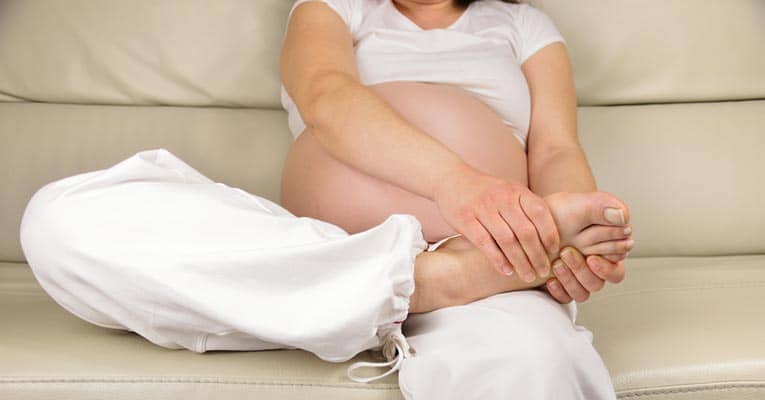
Major Causes of Swollen Hands and Feet During Pregnancy
Dr. Tharinee Lamluk explained the ‘major causes of swollen hands and feet in pregnant mothers’ as follows: Firstly, it is often caused by the enlarged size of the uterus during pregnancy, which presses on blood vessels, resulting in poor circulation of blood and lymphatic fluid that needs to flow back to the heart. This causes blood to pool in the lower part of the body. Secondly, during pregnancy, hormone levels increase, causing tissues to absorb and retain more water than usual, leading to swelling of the hands, feet, and body.
Initial Remedies for Swelling in Pregnant Mothers
Initial remedies for swelling that pregnant mothers can do by themselves include trying to lie on their side and elevate their feet while sleeping. If unable to lie down, they should frequently change positions to keep the body moving and avoid uterine pressure, allowing smooth blood circulation throughout the body.
As for swollen hands, it is not caused by the uterus pressing on blood vessels. Pregnant mothers will experience hand swelling regardless of their posture because the cause of swollen fingers and hands is ’tissues absorbing and retaining more water in the body or tissues.’ Therefore, pregnant mothers should avoid wearing rings to prevent problems caused by swollen fingers.
Is the Swelling in Pregnant Mothers Abnormal? Know How to Observe
Besides the usual swollen fingers and hands that are not seriously dangerous, pregnant mothers should be extra cautious by observing other warning signs of abnormal swelling caused by preeclampsia. This swelling is characterized by pitting edema, meaning when the skin is pressed, the skin indents and the depression remains without quickly returning to normal. This swelling can occur in the legs, hands, or face and is often accompanied by high blood pressure and protein leakage in the urine. Other important symptoms to watch for in pregnant mothers include headaches, blurred vision, and pain in the upper abdomen. If these symptoms occur, medical consultation should be sought immediately.
Abnormal Swelling and Protein Leakage in Urine
Protein leakage in the urine of pregnant mothers can only be diagnosed by a doctor. This diagnosis is made in conjunction with high blood pressure and three main symptoms: headache, blurred vision, and pain in the upper abdomen.
Protein leakage in urine occurs due to kidney function. When hormone levels in pregnant mothers increase significantly, the kidneys cannot retain protein in the body, causing it to leak out. Protein leakage in urine is a symptom of ‘preeclampsia’, which can lead to premature birth. Dr. Tharinee emphasizes that pregnant mothers should constantly monitor changes in body swelling as it is very important.
Oxygen Levels in Pregnant Mothers Can Be Initially Observed from Nail Color
Currently, in medical practice, devices are used to measure oxygen levels inside the bodies of pregnant mothers, in addition to observing changes in nail color. For example, if nails that were normally pink turn dark or greenish, oxygen level testing should be done. Knowing the oxygen level in the body of a pregnant mother helps determine whether the oxygen supply is sufficient for both mother and baby. Therefore, pregnant mothers should avoid painting their nails to facilitate observation of their physical condition.
Pregnant Mothers Should Eat a Variety of Foods to Reduce the Risk of Food Allergies
Besides observing swollen hands and feet, diet is also important. Pregnant mothers can drink coconut water and eat durian but should be cautious about starch and sugar intake, which may cause excessive weight gain and bloating. Dr. Tharinee recommends that pregnant mothers avoid eating the same type of food repeatedly or frequently, as it may cause allergies. Research indicates an interesting trend that excessive consumption of cow’s milk during pregnancy may cause the baby to be allergic to cow’s milk. Pregnant mothers may consider what they want from milk; for example, if calcium is needed, they can switch from milk to calcium tablets or obtain calcium from other sources such as small fish, beans, or sesame. If protein is needed, they can choose fish, pork, chicken, or eggs in addition to milk but should alternate these foods because excessive egg consumption may cause egg allergies in children. In cases where the mother is allergic to cow’s milk, there is about a 30% chance the baby will also be allergic.
