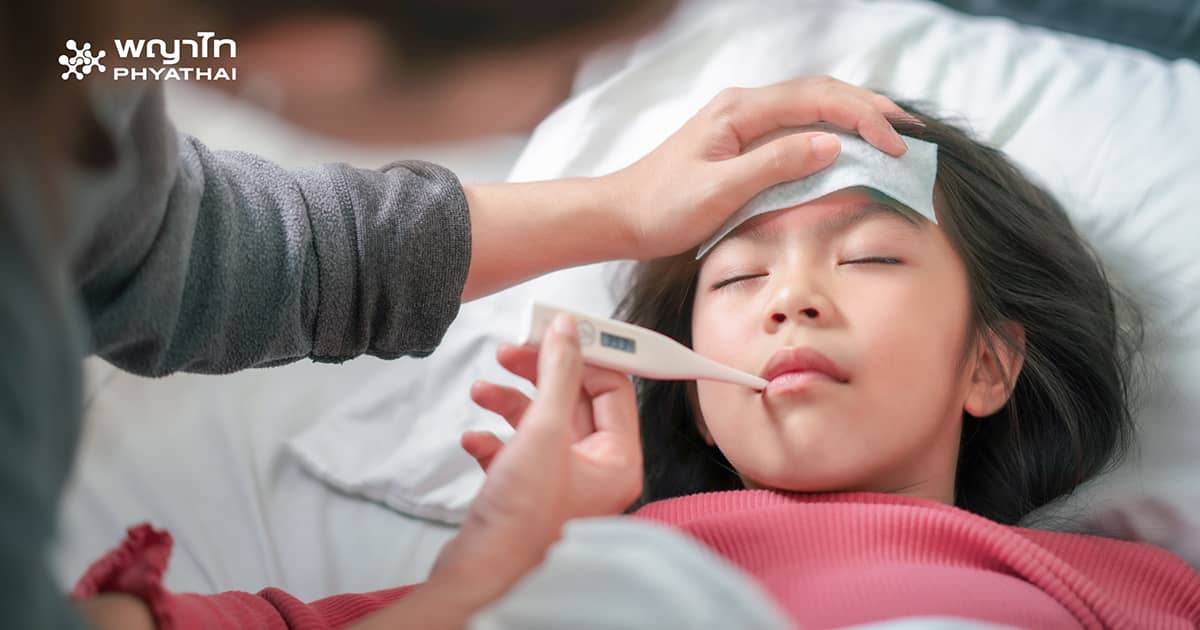
Febrile Seizures in Children occur when the cause of the fever is not due to an infection in the brain, electrolyte imbalance, or hypoglycemia, but is often caused by infections in the upper respiratory tract, tonsillitis, middle ear infection, viral exanthema, or various viral infections. These are found in 2-5% of children aged 6 months to 15 years.
Characteristics of Febrile Seizures
When a child starts to feel unwell, they may have symptoms such as a runny nose, cough, sore throat, loss of appetite, vomiting, frequent diarrhea, lethargy, high fever, and seizures. The seizure characteristics include stiffening of the body, twitching of hands and feet, rolling eyes, clenched teeth, frothing at the mouth, unconsciousness, and may have vomiting or urination and defecation during the seizure. The seizure usually lasts no longer than 15 minutes, but in prolonged seizures, the face, lips, and hands and feet may turn blue due to lack of oxygen.
First Aid for a Child Having a Seizure
- Place the child on their side without a pillow, turning the head to one side to prevent choking.
- Loosen tight clothing.
- Do not use a spoon, any objects, or fingers to pry the mouth open, and do not give medicine or water by mouth while the child is unconscious.
- Wipe the body with tap water or warm water; do not use cold water or alcohol for wiping.
- Take the child to the hospital or see a doctor immediately to ensure the cause of the seizure is due to fever or other causes such as brain infection, which requires treatment of the underlying cause.
First Aid for a Child with High Fever to Prevent Seizures
- Give antipyretic medication such as paracetamol and encourage the child to drink water frequently.
- Wipe the body with tap water or warm water.
- Turn off fans and air conditioners while wiping the body.
- For wiping, remove all clothing, use a small towel soaked moderately with water, and wipe thoroughly from the face, neck, front and back of the torso, arms, and legs repeatedly. While wiping, apply a wet cloth to the forehead, armpits, and groin.
- If the hands and feet are cold, apply warm water compresses. If the fever does not reduce, see a doctor.
What Parents Should Know About Seizures in Children
- Febrile seizures have been found to have a genetic component. Children born into families with a history of febrile seizures have a higher chance of febrile seizures than those without such a family history.
- Generally, febrile seizures do not cause brain damage. Children will have learning abilities and intelligence (IQ) similar to other children.
- The chance of recurrent febrile seizures is about 30%, usually occurring within the first 2 years.
Prevention of Recurrent Seizures in Children
When a child starts to have a fever, give paracetamol to reduce the fever and frequently wipe the body to cool down, then promptly see a doctor. The use of anticonvulsant medication is at the discretion of the attending physician. Caregivers must understand how to administer anticonvulsant medication correctly according to the doctor’s instructions to ensure proper medication use. If in doubt, always consult a doctor.
