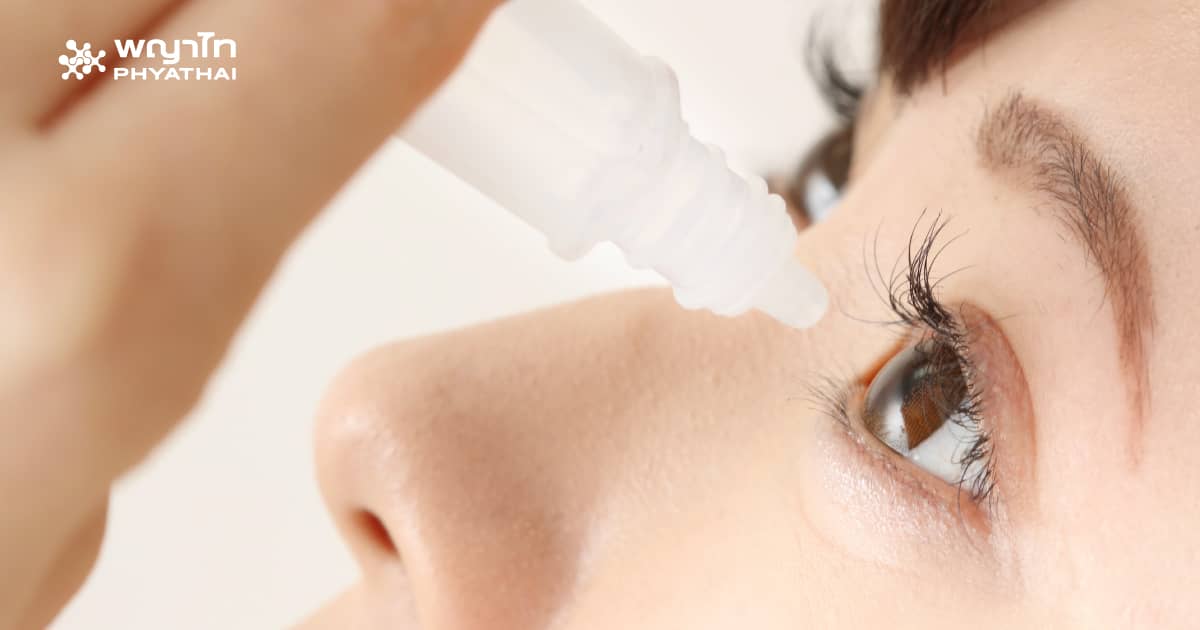
Normally, the human pupil is small, about 3-4 mm in diameter, and becomes smaller when exposed to light. To examine the internal parts of the eye, including the lens, vitreous humor, retina, and optic nerve head, light must pass through the pupil. Therefore, using pupil-dilating eye drops is a good solution to clearly see abnormalities inside the eye!
5 Good Reasons Why You Should Use Pupil-Dilating Eye Drops
- Dilates the pupil to allow a more detailed examination inside the eye.
- Assists in eye surgeries, including cataract surgery (lens surgery), vitreous surgery, retinal surgery, and laser treatment on the retina.
- In some cases of inflammation inside the eye, the iris may stick to nearby parts such as the lens, cornea, vitreous humor, or the drainage angle of the eye, causing glaucoma, cataracts, or pupil blockage that obstructs vision. In these cases, pupil dilation helps reduce adhesions of the iris to these parts.
- Pupil-dilating drops often relax the focusing muscles of the eye, making them suitable for treating iris diseases and diseases of the eye tissue called the ciliary body. These drops relax the iris and ciliary body, reduce pain, and help inflammation heal faster.
- Helps measure vision more accurately (due to relaxation of the focusing muscles), especially for children or first-time eyeglass wearers. This is because children often focus their eyes constantly, causing inaccurate vision measurements.
Side Effects from Using Pupil-Dilating Eye Drops
- Light sensitivity because the pupil does not constrict in response to light, causing eye stinging and discomfort when exposed to light. However, these symptoms gradually improve as the effect of the drops wears off.
- Blurred near vision due to the focusing muscles not working.
- In some patients with narrow anterior chamber angles, it may cause acute glaucoma.
Recommendations After Using Pupil-Dilating Eye Drops
- After using pupil-dilating drops, vision will be blurry for about 6-8 hours, making it impossible to drive or read.
- Patients must be accompanied by a relative every time and/or should not drive after pupil dilation. If the patient comes alone and wishes to have their pupils dilated, it is recommended to take a taxi home or wait for a relative to pick them up.
- If the patient needs to be sent to another department for further examination after pupil dilation, they must be transported by vehicle every time to prevent falls or other injuries.
- Use sunglasses to help reduce glare.
