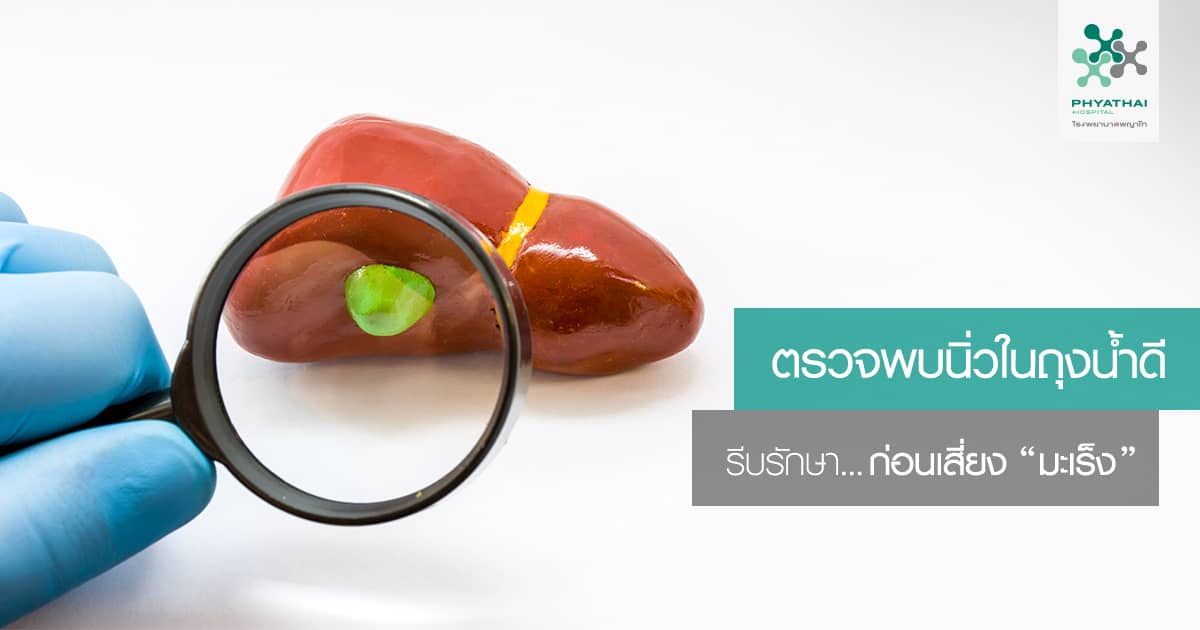
Gallbladder is an organ responsible for storing bile, which helps digest fats. When the compounds in bile become unbalanced, sediment can form and turn into stones. This condition is mostly found in people aged between 40-60 years. If left untreated, it can lead to the risk of gallbladder infection and inflammation, as well as an increased risk of gallbladder cancer. Therefore, it is important to get timely examination and treatment.
Imbalance of bile components… Factors causing “gallstones”
An imbalance in bile components, such as certain compounds being too high or too low due to metabolic disorders or infections, are factors that can cause gallstones. So, what compounds are in “bile”? Let’s take a look..
- Water
- Cholesterol
- Phospholipids (mostly lecithin)
- Bilin or bile pigments (bilirubin diglucuronide)
- Bile salts (sodium glycocholate and sodium taurocholate)
- Bicarbonate ions
Risk groups more likely to develop gallstones than others
- Women over 40 years old
- Family members with a history of gallstones
- Overweight (BMI over 25) or rapid weight loss in a short period
- Having multiple children / pregnancy
- Using cholesterol-lowering drugs
- History of diabetes
- Using contraceptive pills or hormone replacement therapy
- Dietary habits high in fat and calories, low in fiber
At risk of “gallstones”? Find out with these methods..
- Medical history and physical examination
- Blood test to check liver function
- Upper abdominal ultrasound
- Endoscopic retrograde cholangiopancreatography (ERCP) for suspected bile duct stones
- Magnetic Resonance Cholangiopancreatography (MRCP), an MRI scan to detect abnormalities in the bile ducts
If gallstones are found on ultrasound, treatment can be divided into 2 cases..
- Case.. Ultrasound shows gallstones but no other symptoms
If the doctor detects a polyp, further diagnosis such as blood and urine tests will be done. If the polyp is small and the patient has no other symptoms, the doctor will schedule regular follow-ups every 6 months to 1 year.
- Case.. Ultrasound shows gallstones with other symptoms
Common accompanying symptoms include..
- Severe abdominal pain, especially in the upper abdomen or right side, lasting from 15 minutes to several hours, possibly radiating to the shoulder blade or right shoulder
- Nausea and vomiting
- Other gastrointestinal symptoms such as bloating, indigestion, heartburn, and gas, especially epigastric discomfort after eating fatty foods
- If acute cholecystitis occurs, symptoms include fever, pain under the right rib cage, jaundice, and dark urine
Treatment guidelines for gallstones
- Laparoscopic cholecystectomy (gallbladder removal by laparoscopy)
- Endoscopic retrograde cholangiopancreatography (ERCP) if bile duct stones are present
- Open cholecystectomy (open abdominal surgery)
- Transvaginal cholecystectomy (gallstone surgery through the vagina)
Open surgery Vs Laparoscopic surgery: What are the differences?
| Factors to consider | Open surgery | Laparoscopic surgery |
|---|---|---|
| Amount of blood loss during surgery | More blood loss | Less blood loss |
| Size of incision | 12 – 20 centimeters | 6 – 8 millimeters 3 – 4 small incisions |
| Postoperative pain | More | Less |
| Hospital recovery time | Longer | Shorter |
| Recovery time at home until return to work | 4 – 6 weeks | 2 – 3 weeks |
Self-care after surgery
Generally, if there are no complications, patients may stay in the hospital for 1-2 days and can return home to recover for about 1 week. In laparoscopic surgery, which involves 3-4 small incisions on the abdominal wall, wound care is not complicated. Some patients use waterproof dressings and follow up with the doctor for wound care as scheduled.
