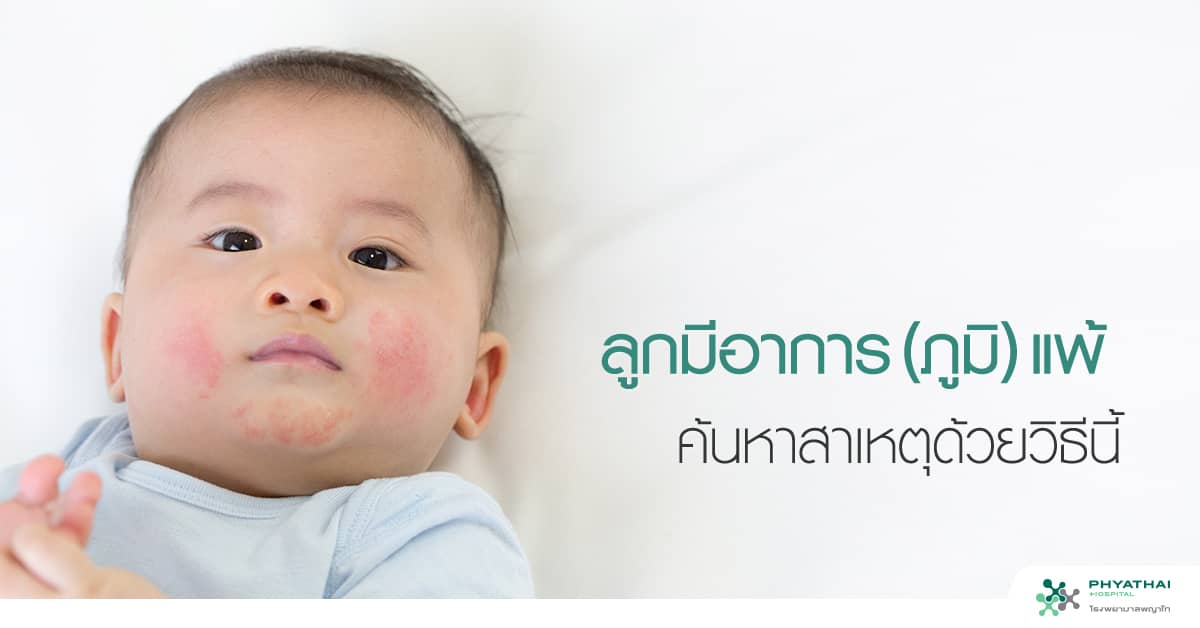
Allergic diseases are caused by inflammation of various organs in the body. They are commonly found in children from infancy to school age. Different allergic diseases appear at different ages. For example, from birth to 1 year old, allergic skin diseases are common in children, who often have rashes on the folds of the joints or cheeks that come and go. Another common condition is food allergies, which in the first year of life often include allergies to cow’s milk, eggs (both yolk and white), wheat flour, peanuts, soybeans, and others.
What methods are used for allergy testing?
There are 2 methods for allergy testing as follows:
- Skin prick test: This involves applying allergen extracts onto the skin, usually on the forearm or back. Then, a needle tip is used to prick the skin so the solution can penetrate beneath the skin. The body’s reaction to the allergen is observed for about 15-20 minutes.
Advantages of the skin prick test are that results can be known immediately after testing. However, there are limitations: antihistamine medications must be stopped before the test, and the child must have skin suitable for testing, such as not being overly sensitive to pricking, as this may cause false negative results.
- Blood test for specific IgE antibodies directly against allergens, which can detect both food allergies such as cow’s milk, egg yolk, egg white, wheat flour, nuts, and airborne allergies such as dust mites, dog dander, and cat dander.
Advantages of the blood test are that it can be performed on children who cannot undergo skin prick testing, such as those with severe allergies who need to continue antihistamine medication and cannot stop it, or children with skin that is too sensitive to pricking. Blood test results take time and are usually available within 5-7 days.
How to manage yourself after knowing you have allergies
For those with airborne allergies, they are often sensitive to allergens such as dust mites, dog dander, and cat dander. Therefore, if you know which allergens you are allergic to and avoid them properly, your airborne allergy symptoms can improve. For food allergens, if an allergy is detected, it is recommended to consult a doctor for accurate diagnosis and to consider avoidance strategies as well as guidance on what to do if accidental exposure occurs. Monitoring symptoms and allergy levels for that food is important for planning ongoing care. Doctors will use food allergy test results to monitor the resolution of food allergies, as most food allergies in children can be outgrown.
