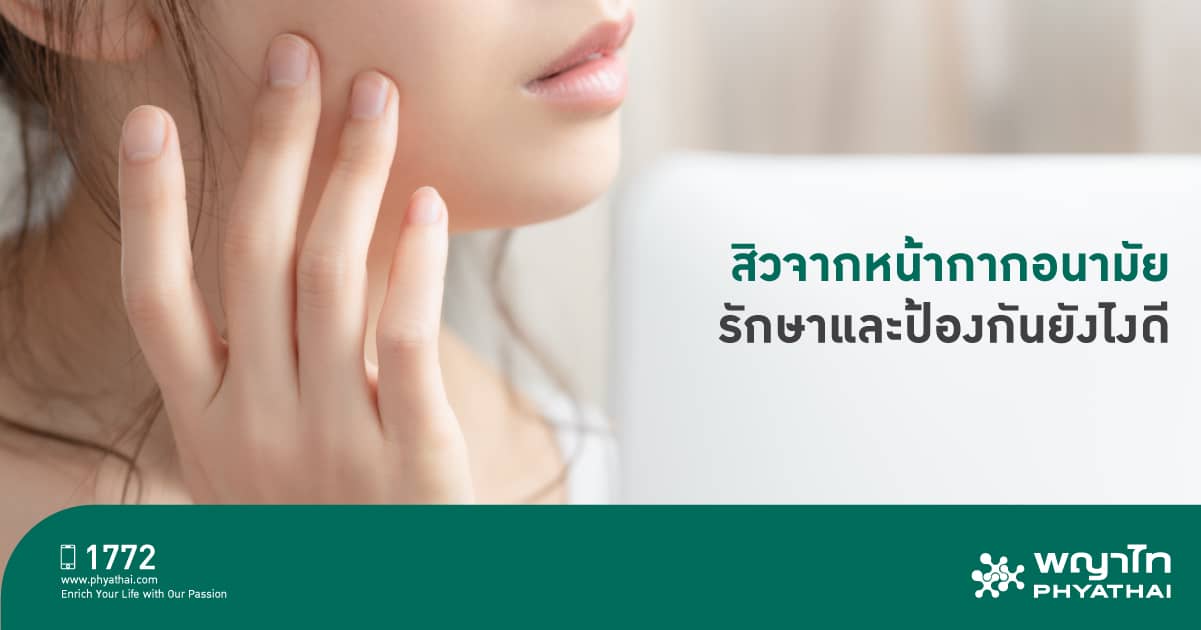
Wearing a face mask every day for a long time has caused clogged acne to pop up like mushrooms, and we still don’t know how much longer we have to keep wearing it. Since “old acne hasn’t healed yet… and new acne must be prevented”, let’s listen to the advice from Dr. Wallapa Asawabenjang, a dermatologist at the Beauty Center, Phyathai 2 Hospital, about this mask acne problem.
How is mask acne “different from” regular acne?
Although it is called “acne”, mask acne is still different from the common acne that many people are familiar with. The doctor explained that mask acne occurs under the face mask due to humidity, increased temperature, changes in the skin balance under the mask, and frequent friction caused by the mask edges pressing tightly against the skin and moving up and down, especially when we talk, causing repeated friction. These factors are important triggers for acne.
How to choose a face mask to reduce acne irritation
Regarding the criteria for choosing a face mask, the doctor advised that it should be based on the activities we do each day. For example, if you need to travel to high-risk areas, you should choose a medical mask because protection efficiency is more important. But if you are in a low-risk area, maintaining distance from others, or at home, you should choose a fabric mask with a soft texture that does not irritate the skin to help reduce the chance of clogged acne.
The size and style of the face mask are also important. If it is too loose or does not fit well, it will move easily and cause frequent friction. If it is too tight, it will cause pressure, friction, and high humidity, which are factors that can trigger mask acne as well.
Did you know? The longer you wear a mask, the more your (skin) face needs rest
The key to preventing mask acne, besides the type and style of the face mask, the doctor also recommends an additional tip… After wearing a mask continuously for 4 hours, you should find time to rest your skin by temporarily removing the mask in a safe place to reduce the temperature and humidity under the mask. If the mask becomes damp, it should be changed during the day to help prevent clogged acne.
If you have mask acne, can you use “acne medication” that contains…?
For those who often have acne problems, of course, they will already have acne medication or spot treatment at home. Most acne medications tend to dry, peel, exfoliate skin cells, reduce clogging, and reduce oiliness, which may cause irritation because mask acne usually occurs around the nose folds, cheeks, around the mouth, and chin, which are highly sensitive areas.
The doctor recommends initially choosing a spot treatment that is not too strong to prevent possible irritation, such as those without alcohol or benzoyl peroxide topical treatments that can be washed off. Choose formulas with lower percentages because high concentrations may not be suitable for treating mask acne.
Even if you have to wear a face mask, you can reduce acne with these (not so) secret tips
- Avoid makeup under the mask or wear light makeup to reduce clogging
- Choose a gentle soap that reduces oiliness but does not dry out the skin
- Focus on moisturizing with a lightweight moisturizer that is not too thick, as thick moisturizers may clog pores
- Avoid sweet foods, dairy products, and chocolate because they affect insulin levels, causing sebaceous glands to work harder and leading to clogged pores
Skin problems from wearing face masks are not just about acne. The high temperature under the mask can also cause enlarged pores, itchy rashes, and wrinkles from friction. If self-care and treatment do not improve the skin condition, seeing a doctor to adjust the treatment plan may be another option that yields better results.
Dr. Wallapa Asawabenjang
Dermatologist
Beauty Center, Phyathai 2 Hospital
