Children are like the apple of their parents’ eyes. If a child is sick, parents are willing to do everything possible to make them well. However, when a child has to be admitted to the ICU, it can cause parents to worry about how their child will manage alone. The top cause of children needing ICU admission is respiratory system diseases. Dr. Manchai Ratchatachayas, a pediatric pulmonologist and critical care specialist at the Child and Adolescent Health Center, Phyathai 3 Hospital will explain the reasons why children need to be treated in the Pediatric Intensive Care Unit (PICU).
RSV Pneumonia… The Villain for Little Ones
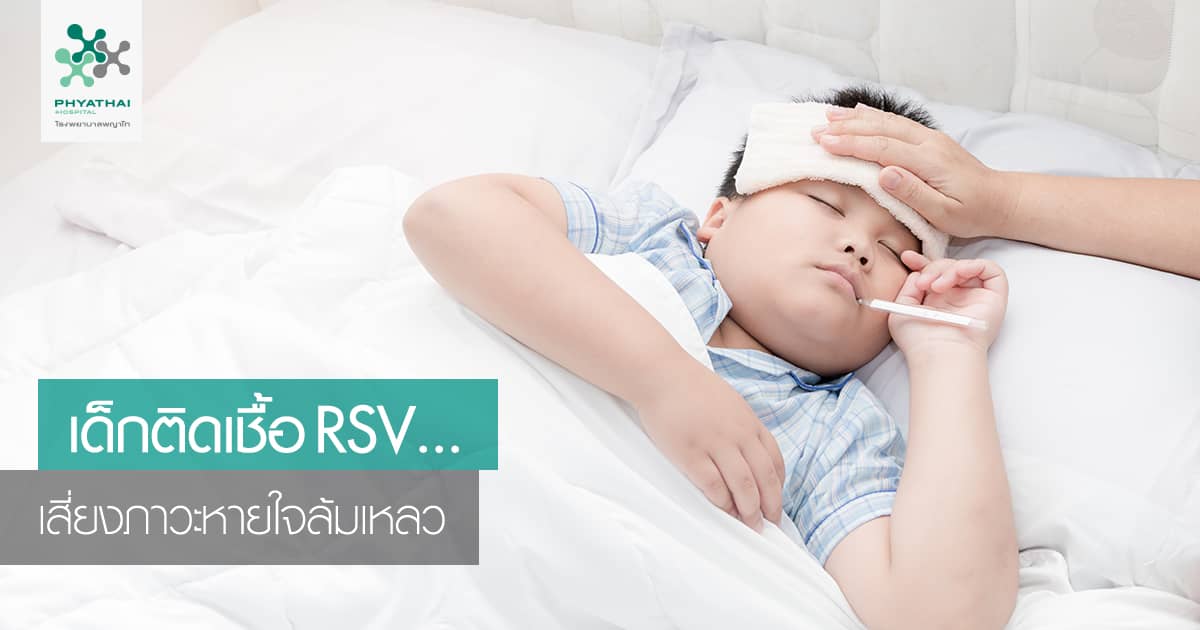
Dr. Manchai explains that most children admitted to the PICU come from respiratory infections. The number one cause is pneumonia, followed by bronchiolitis, mainly caused by RSV (Respiratory Syncytial Virus). This virus causes the production of secretions such as mucus and bronchial constriction due to swelling of the bronchial mucosa and airways, resulting in symptoms like wheezing, fatigue, and difficulty breathing. This virus is contagious through close contact with the secretions of infected patients.
Parents Must Closely Observe Symptoms
When a child has a respiratory illness, parents caring for them at home can observe the following abnormalities:
- The child breathes faster than usual, wheezes, or has difficulty breathing.
- The child shows signs of respiratory distress, such as chest retraction when inhaling, flaring nostrils, or labored breathing.
- The child has indented areas around the neck, collarbone, or under the ribs due to heavy breathing.
- The child’s lips turn pale or blue, indicating severe symptoms.
Which Symptoms Require PICU Admission?
- Children with respiratory distress or at risk of respiratory failure.
- Respiratory distress observed by initial symptoms such as rapid breathing, labored breathing, chest retractions, indented areas around the collarbone or under the ribs, or low blood oxygen levels.
- Children requiring close respiratory therapy, such as frequent nebulizer treatments, high-flow oxygen, or mechanical ventilation.
PICU Provides 24-Hour Care by Expert Staff
The PICU or Pediatric Intensive Care Unit at Phyathai 3 Hospital has a team of pediatricians, nurses, and specialized staff with experience in closely monitoring pediatric patients. The unit is equipped with comprehensive and modern equipment, such as vital sign monitors to closely track symptoms and assist respiratory therapy. One side of the room is glass, allowing the team to continuously observe the children and provide prompt care. One parent is allowed to stay with the child, and visitor numbers are limited to control infection.
Additionally, PICU admission is categorized into several severity levels. Most children are not in critical condition or may be in a semi-critical state but receive treatment in the same unit. The PICU at Phyathai 3 Hospital clearly separates pediatric patients from adult patients.
How to Protect Your Child from Respiratory Infections
Dr. Manchai states that children under 5 years old are most commonly affected by severe respiratory illnesses. Prevention methods include:
- Avoid taking children to public places such as markets, shopping malls, and playgrounds.
- Many cases of infection come from family members. Patients should be separated from children, and both parents and children should wear masks to prevent transmission through coughing and sneezing. Basic hygiene should be maintained, including wearing masks, eating hot food, using shared spoons, frequent handwashing, and cleaning shared items with disinfectants or mild soap.
- If sending children to daycare or preschool, delay as long as possible because early attendance often leads to frequent illness. Choose daycare centers with adequate caregivers and not too many children.
- Currently, there is no vaccine to prevent RSV in children, but children can receive the influenza vaccine to help prevent the flu as an additional protective measure.
Although ICU admission for children may seem daunting and cause parental anxiety, the hospital’s readiness and the expertise of the medical team will help children recover and return to normal if treated correctly and promptly.
