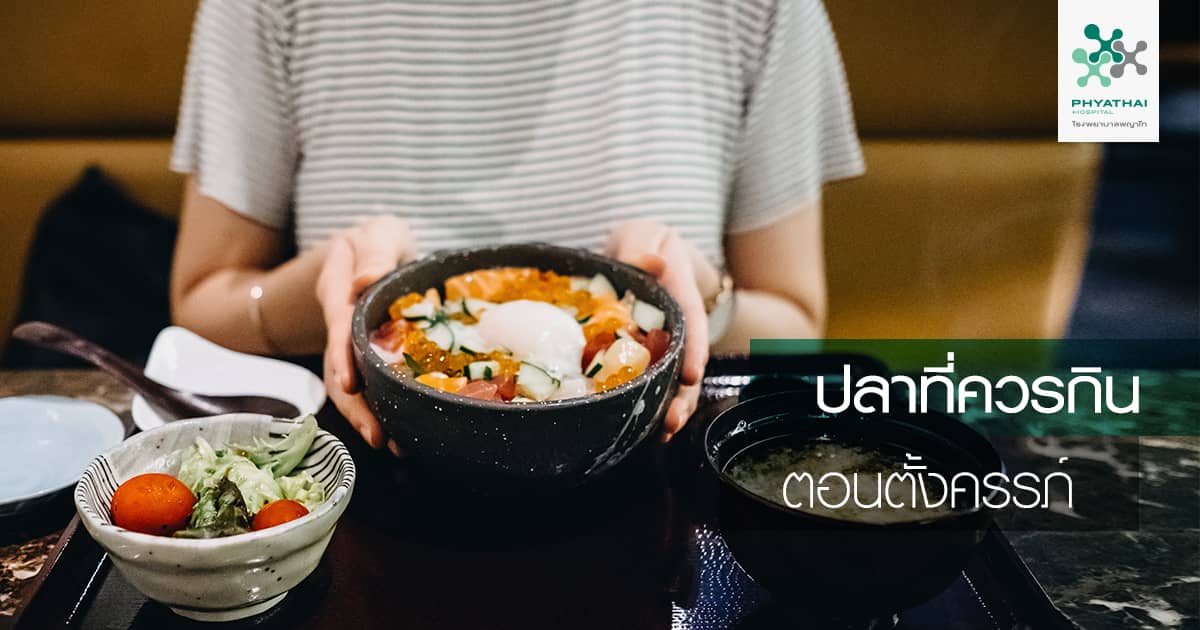
During pregnancy, doctors often advise mothers to eat nutritious foods, focusing on “protein from meat, vitamins, and minerals from vegetables and fruits”. The recommended meat to eat a lot of is “fish” because fish contains protein that is easy to digest, preventing bloating in pregnant mothers. In addition, fish, especially sea fish, contains fatty acids (DHA, Omega-3) that are beneficial for the baby’s brain development. Mothers can eat fish throughout pregnancy or even continue eating it while breastfeeding after delivery.
What fish is good to eat? How much should you eat?
Not all fish can be safely consumed because the concern is that all seafood may be contaminated with heavy metals, which come from factories near water sources. Contamination accumulates from small fish to larger fish that eat smaller fish. Therefore, larger fish have a higher chance of heavy metal contamination.
This table summarizes “fish and seafood” that are easily found in Thailand. The recommended portion size per serving is roughly the size of one palm (excluding fingers).
|
Recommended to eat 2-3 times per week |
||
|
|
|
|
Recommended to eat once per week |
||
|
||
|
Not recommended to eat |
||
|
||
Freshwater fish… can you eat them? Are they beneficial?
Freshwater fish can be eaten. The recommended ones are catfish, snakehead fish, and striped catfish. Especially farmed fish, which are found to have high omega-3 fatty acids (obtained through the feed used to raise the fish), can be eaten as a substitute for sea fish.
Can you eat raw fish (Japanese cuisine)?
You can eat it, but choose certain types of fish, such as salmon, which is safe to eat. However, maguro is not recommended to be eaten in large amounts, and you must ensure that the fish used has been frozen beforehand because freezing kills parasites in the fish. If some mothers want to make sushi/sashimi at home, it is recommended to freeze the fish for at least 4 days.
Currently, salmon is farmed, and due to farming methods, the chance of parasite infection in the fish is very low, which increases safety when eating. However, if a mother experiences abnormal symptoms after eating raw fish, such as nausea, abdominal pain, bloating, or diarrhea, it is recommended that she avoid eating raw fish throughout pregnancy (similar to the case with popular dishes like som tam).
Can you eat other raw (uncooked) seafood?
Seafood with hard shells, such as shrimp, shellfish, and crab, is “not recommended” to be eaten raw or undercooked because these types of food have a chance of bacterial contamination (in addition to parasites), which can easily cause food poisoning in mothers.
Dr. Adisorn Aksornphusitpong
Obstetrician specializing in maternal-fetal medicine
Women’s Health Center, Phyathai 3 Hospital
