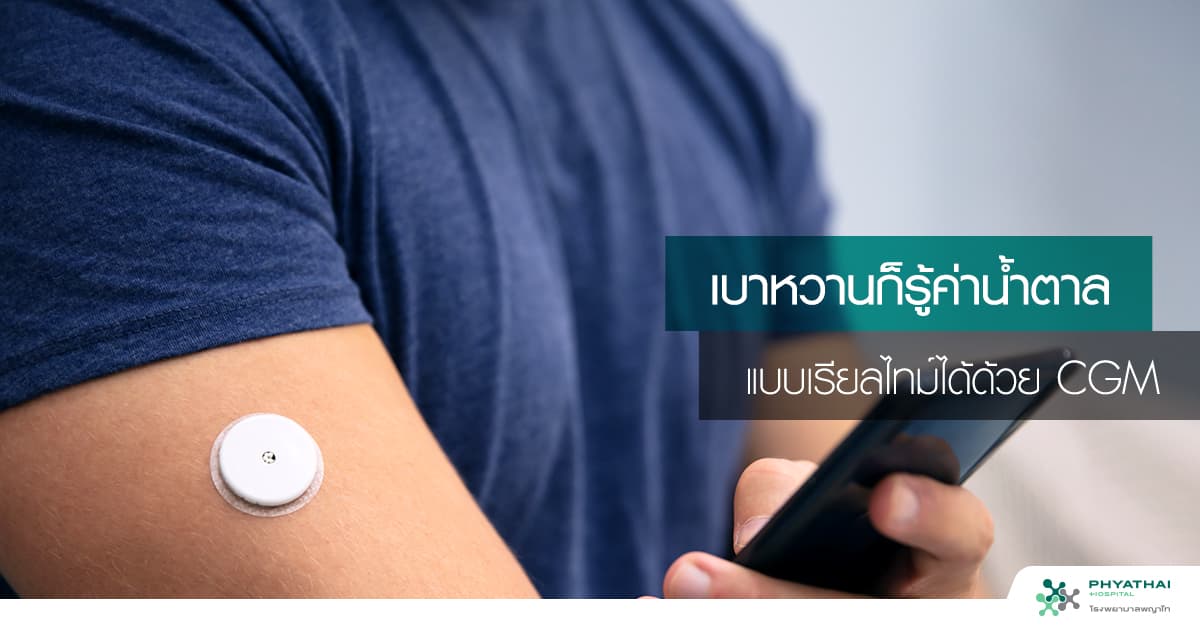
The key to maintaining stable diabetes control is managing blood sugar levels so they are not too high or too low. Generally, diabetic patients can know their blood sugar levels only by testing with specific devices. The frequency of testing varies for each individual, depending on the severity of symptoms and the doctor’s diagnosis. But today, diabetic patients can know their blood sugar levels through their smartphones.
CGM, a new technology, increases safety for diabetic patients
Is it true? That we can know blood sugar levels through a smartphone? Let’s find out together. First, let’s get to know the continuous glucose monitoring device, or CGM. CGM is a tool that measures blood sugar levels by using a sensor attached under the skin (subcutaneous), which measures sugar levels and sends the readings to a receiver. It continuously displays sugar values up to 288 readings per day.
CGM is divided into 2 types:
- Real-time continuous glucose monitoring system (RT-CGM) is a device that displays current sugar levels immediately on the screen. It allows observation of sugar level changes at all times, making diabetes care safer.
- Professional continuous glucose monitoring system is a continuous glucose monitoring device worn for 6 days, then removed to review past sugar data. This information is suitable for healthcare professionals to adjust treatment more effectively.
“CGM can be used by all types of diabetic patients, those who want to control sugar levels within target ranges, people with hypoglycemia without warning symptoms, and it can be used for both children and adults.”
How is CGM different from other glucose measurements?
The sugar values obtained from CGM are from interstitial fluid (Sensor Glucose-SG), which measures electrons and converts them into sugar values. It sends signals via Bluetooth every 5 minutes and displays results on a connected mobile phone. It shows the pattern and trend of sugar levels throughout the day. In contrast, fingerstick blood glucose measurement (SMBG) measures blood sugar from the fingertip (Blood Glucose-BG) and only provides sugar levels at the time of the test.
Do you still need to do fingerstick blood tests after using CGM?
CGM measures sugar from interstitial fluid to observe sugar patterns throughout the day. It is still necessary to perform fingerstick blood tests to ensure the accuracy of the results.
When can we do fingerstick tests to compare with CGM readings?
It is recommended to do fingerstick tests before each meal or before bedtime, as these are times when blood sugar from the fingertip and interstitial fluid sugar levels are most similar.
Know clearly the benefits of CGM
- Alarm: When sugar levels are above or below the set target, the device immediately alerts the diabetic patient.
- Predictive Alert: Can warn up to 60 minutes in advance when sugar levels rise or fall.
- Remote Monitoring: Doctors and caregivers can access important data and monitor results anytime from internet-connected devices.
- Carelink®: Important data is automatically stored and can generate reports in various formats.
CGM devices can report results in real-time, alerting when sugar levels are above or below set values, helping to effectively control sugar levels. Real-time display also helps identify which foods cause blood sugar to rise, understand appropriate intake amounts, leading to safe and effective diabetes care.
Thank you for the information from Medtronic (Thailand) Ltd.
