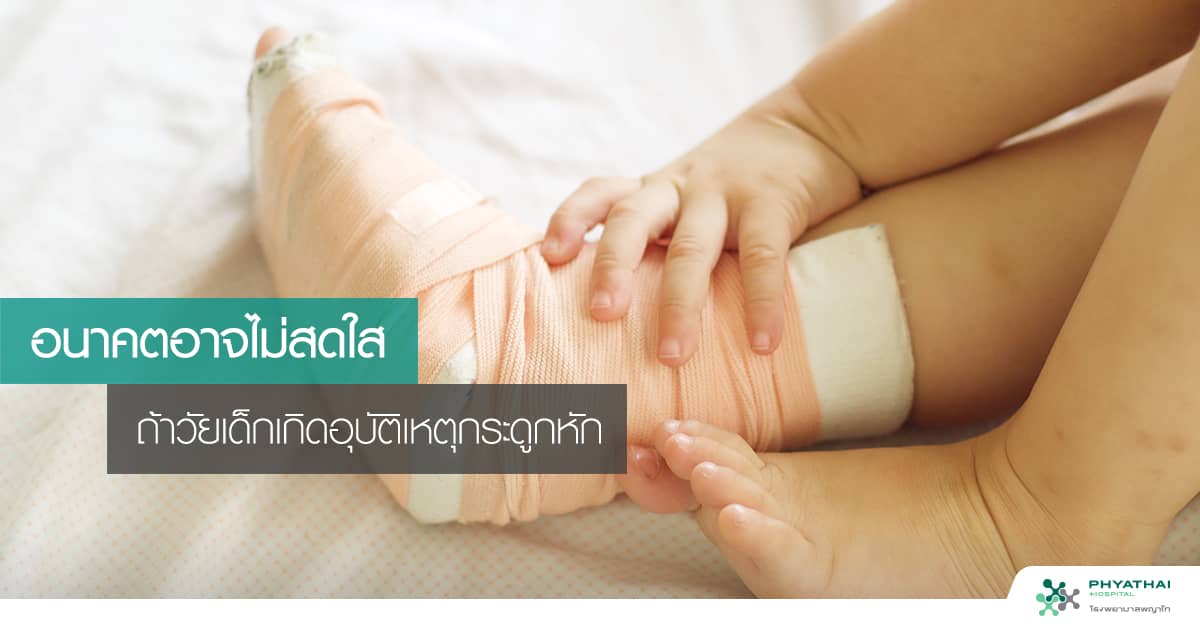
Children and playing roughly until accidents happen seem to be normal, but if it is severe enough to cause a bone fracture, many parents might not realize that bone fractures in young children are actually much more dangerous than in adults, especially if not treated properly. Therefore, to take care of our little ones safely and effectively, understanding bone fractures in children is something every parent should not overlook.
How are bone fractures in children different from adults?
In reality, whether it is a child’s bone or an adult’s bone, the likelihood of fracture is not much different. However, the characteristics of the fracture and the areas prone to fracture in children have some specific differences from adults. For example, bones around the elbow and wrist in children are more likely to break, as we often see children playing in ball pits or on merry-go-rounds falling and hitting their elbows hard enough to fracture the bone. Additionally, in terms of severity from bone fracture accidents, it is more dangerous in children because the “Growth Plate” or “the bone growth plate” is not fully closed like in adults. Therefore, if a fracture occurs and is not properly treated, with poor bone alignment or improper setting, it can result in bone deformity in the future.
How to tell if your child has a bone fracture?
Normally, when an accident occurs, we can clearly observe whether the child has a “bone fracture or not?” from the deformity of the injured area, but this is usually in cases of severe fractures. If the accident causes only slight displacement or minor fractures, deformity may not be noticeable. However, we can observe whether there is a fracture from the following symptoms:
- Pain, swelling, redness, or bruising around the injured area
- The child refuses to move or use the injured area because movement causes pain
- In young children who cannot speak yet, they often move their arms or legs less, refuse to walk, cry, or refuse to drink milk. They may not cry all the time if the fracture is not severe but will cry when the fractured area is touched or moved
How to treat bone fractures in children?
The treatment approach for bone fractures in children is not different from adults. Doctors will realign, reduce, or surgically fix the bones first, then apply a cast or supportive device. However, because children’s bones are smaller, the devices used cannot be the same size as those for adults. Instead, special devices similar to wire braces are used to hold the fractured bones firmly together. The recovery time in children is much faster than in adults. For example, newborns take about 1-2 weeks, while older children take about 4-6 weeks. Adults may require more than 6-8 weeks for complete bone healing.
How to provide first aid when your child has a bone fracture?
Many times, parents panic when they see their child hurt from an accident causing a bone fracture, which can lead to attempts to help that may cause more pain and harm. The basic first aid guidelines when your child has a bone fracture are as follows:
- Try to move the fractured part as little as possible
- If you need to provide first aid, find something to support or immobilize the fractured bone
- Do not pull or try to realign the bone, as this may worsen the injury
- Keep the injured area in its current position as much as possible and promptly take the child to the hospital for diagnosis and treatment
Because children’s bones are still growing, if a fracture is not properly treated and aligned, there is a high chance of deformity. The newly grown bone may become crooked, bent, or shortened. Girls’ bones typically fully mature around age 14, while boys’ bones mature around age 16. Therefore, if a fracture occurs before the age of 14-16, treatment must be under the supervision of a specialist. X-rays should be done to check the condition of the growth plate and plan appropriate treatment to ensure the bone heals correctly and returns to the best possible condition. Thus, if your child has a bone fracture, follow first aid instructions strictly and consult a doctor immediately for the best outcome.
Pediatric Orthopedic Specialist
Musculoskeletal Center, Phyathai 3 Hospital
