Q: How severe is the UK COVID-19 variant (B.1.1.7)?
Dr. Winai: The UK COVID-19 variant can spread more easily and quickly than previous variants (clearly seen in the UK in December 2020). Because it transmits easily and spreads rapidly, this variant has caused widespread outbreaks, especially in crowded areas such as entertainment venues, sports stadiums, and enclosed spaces. This is why this wave has seen a large number of teenage and middle-aged patients, many of whom have no risk factors or underlying diseases.
“To stop further mutations, we must halt the spread of this virus as quickly as possible, which can be achieved through discipline and strict adherence to known measures, including wearing masks, maintaining social distance, avoiding crowded places, and getting vaccinated promptly.”
Q: Why do many people infected in this new wave of COVID-19 show no clear symptoms such as fever or dry cough like in previous waves, but instead have an increased loss of smell?
Dr. Winai: There is no clear data explaining why this variant does not prominently cause fever like previous variants, but it is believed that this variant attaches better to respiratory tract cells than the original strain. Patients therefore experience loss of smell, rapid shortness of breath, and are more prone to inflammatory pain. Some reports show that this variant has a higher mortality rate than previous variants, so it is not surprising to see an increase in deaths among younger people without underlying conditions from the UK variant currently spreading in this new wave. In addition, infections have been found even in groups that appear healthy, such as athletes or those who exercise regularly.
Q: Can the COVID-19 vaccines currently used in Thailand protect against the UK COVID-19 variant (B.1.1.7)?
Dr. Winai: The vaccines currently in use can protect against the UK variant. Studies in Thailand have shown that after receiving two doses of the Sinovac vaccine, vaccinated individuals have a satisfactory increase in COVID-19 immunity four weeks after the second dose. The immunity generated after vaccination is comparable to the immunity detected from natural infection at 4 to 8 weeks.
Q: Who should receive the COVID-19 vaccine?
Dr. Winai: There is an interesting example from the UK in December when there was a large outbreak of COVID-19 in the UK and Europe caused by the UK variant (B.1.1.7), which spreads easily and is the same variant currently spreading in our country. The UK therefore launched an intensive vaccination campaign to cover the population. Today, the number of patients in the UK has significantly decreased, and the daily death rate has also dropped.
“Therefore, it can be seen that besides the high-risk groups who should receive the vaccine, the general population should also hurry to get vaccinated to prevent a major outbreak that may occur in the future. This mutated variant no longer only affects high-risk groups but also affects the general healthy population. In the future, there may be other variants, and if there is a large outbreak in Thailand, new variants may also emerge here.”
Q: If I have received the COVID-19 vaccine but have not yet completed the full dosage, how should I behave to stay safe from the virus?
Dr. Winai: For those who have received the vaccine but have not yet completed the full course, if there are reasons preventing the second dose—whether the recipient is not ready, ill, it coincides with a long holiday, or the provider is not ready, or there is a vaccine shortage—the appointment for the second dose should be postponed later, not brought forward. It is well known that spacing out the vaccine doses yields better results than shortening the interval. You should strictly follow safety measures such as wearing masks, maintaining social distance, and avoiding crowded places.
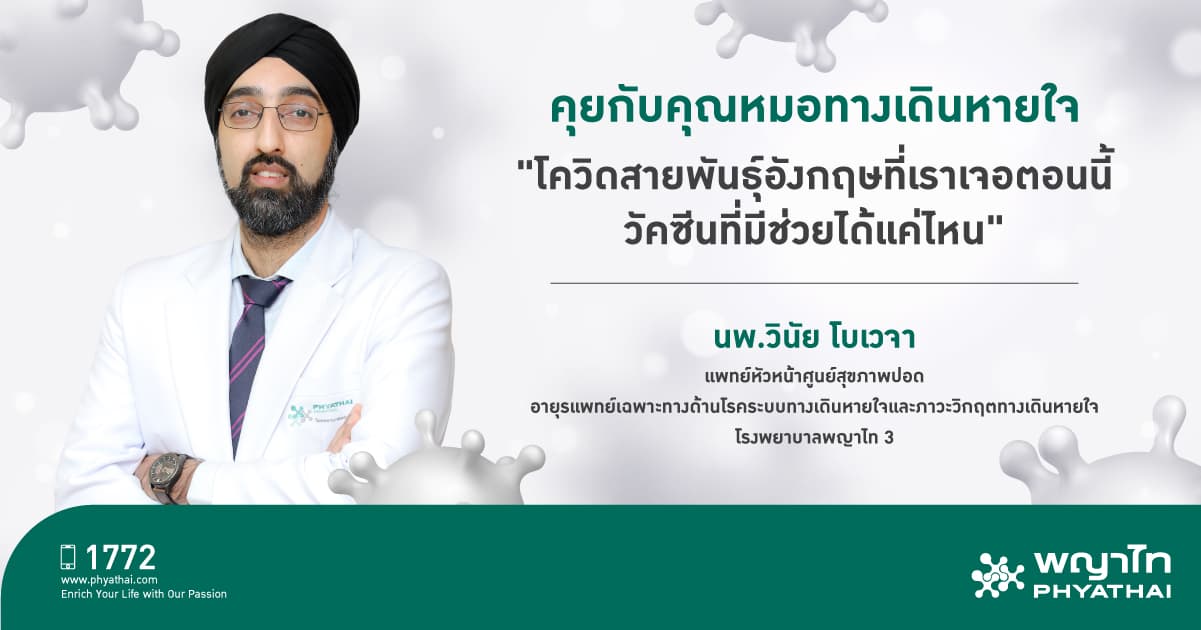
Head of Lung Health Center
Specialist in Respiratory System Diseases
and Respiratory Critical Care
Phyathai 3 Hospital
