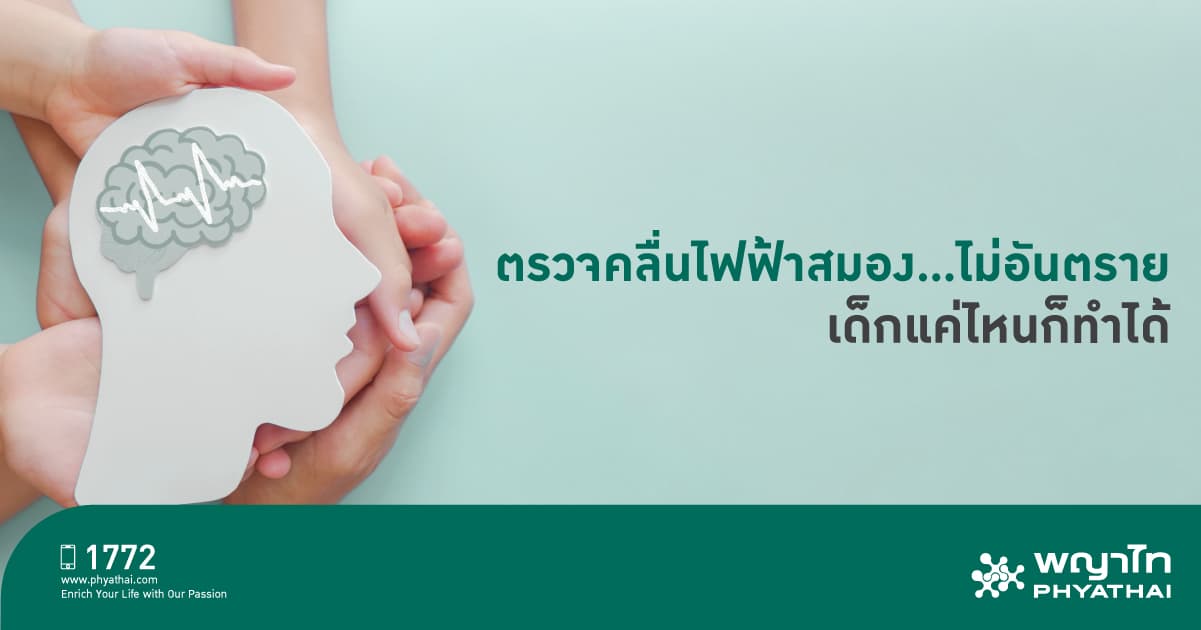
Children with high fever may have seizures, but parents should not immediately assume that the seizures are caused by a common cold. If the child has a history of more than 4 febrile seizures or has more than one seizure within 24 hours, it may be suspected that it is not just a simple fever but caused by epilepsy in children or other serious diseases. The way to be sure of what illness the child has is by performing an electroencephalogram (EEG).
When it comes to EEG, even adults find it intimidating, and it causes even more concern when it is for children, making parents reluctant to have their child undergo the test. However, did you know that EEG is actually not dangerous or as scary as you might think? It is a very useful test that helps identify hidden serious diseases. To ease parents’ minds, today we will take a deep look into EEG testing in children.
What is EEG in children and why is it necessary?
EEG: Electroencephalogram is a test that measures the electrical activity of the brain to detect abnormalities. Normally, EEG is not used to diagnose a disease directly but to confirm whether the patient actually has the suspected condition. Often, physical examination and symptoms alone are insufficient to determine the exact disease, so EEG is needed to confirm the diagnosis and guide further detailed investigations for appropriate treatment planning.
Which childhood diseases require EEG testing?
Not all pediatric patients need EEG testing. Doctors will consider EEG for children with the following abnormal symptoms:
- Testing children with new-onset epilepsy or suspected epilepsy who present with tonic-clonic seizures, whole-body jerking, frequent seizures, prolonged seizures, or severe seizures. These three groups have a tendency to cause long-term harm to the child, and the severity of epilepsy or other underlying abnormalities is unknown. Therefore, EEG is needed to confirm the diagnosis and assess the severity.
- Testing children who already have epilepsy, as a follow-up to see if abnormal EEG patterns improve after medication. This helps determine how well the treatment is working and guides further treatment planning. It also helps assess the risk of unseen seizures so that care and precautions can be better planned to prevent harm.
- Testing children with unusual histories or unclear seizure symptoms, such as children who frequently stare blankly, have declining academic performance, or suddenly freeze while eating or doing an activity. Such history may suggest absence seizures, a form of epilepsy in children.
Epilepsy in children may be caused by premature birth or may be unrelated. Therefore, the important thing to determine the cause of epilepsy in each child is to first confirm whether the child truly has epilepsy, which can be confirmed by EEG.
What are the steps involved in EEG testing in children?
EEG testing in children can be done from newborns without any scary or harmful procedures. It is simple and as follows:
- Attach electrodes to the scalp by sticking them on without any puncture.
- Wrap the electrodes securely enough to prevent them from moving or falling off.
- Perform the EEG test, which takes about 20-30 minutes.
- Wait for the results to analyze whether there are any brain abnormalities and where they are located.
EEG testing in children is not really different from adults, but the special challenge is that children usually do not stay still like adults. Most children are uncooperative, scared, fidgety, or cry. Therefore, during EEG testing in children, it is necessary to keep the child as still as possible. For infants, they may be fed and soothed to sleep before attaching the electrodes. For older children who cannot be easily calmed, mild sedatives may be given to help them relax or fall asleep to facilitate the test. However, doctors cannot use sleeping pills because they affect EEG results. This is why EEG testing in children requires experienced medical personnel specialized in pediatric care.
Contraindications and benefits of EEG testing that parents should know
Although EEG testing in children is safe and has no complications, there are some contraindications and precautions. To give parents a clear overview, we summarize the benefits and precautions of EEG testing as follows:
Benefits of EEG testing
- Provides information that helps in treatment planning.
- Clearly identifies which additional tests the patient may need.
- Helps monitor treatment outcomes to see if medication is effective or needs adjustment.
- Confirms whether the child truly has the suspected disease to enable accurate treatment planning.
Contraindications or precautions for EEG testing
- Should not be performed on areas with wounds to avoid scalp infections and harm.
- Should not be performed on patients who have had brain or skull surgery that caused deformities or missing parts of the skull unless done with extreme caution and expertise.
EEG testing is very important as it helps make diagnosis and treatment planning more effective. The procedure is simple and risk-free, so parents can be assured that their child can safely undergo EEG testing. However, EEG cannot reveal everything. The most important factors are detailed and accurate medical history and symptom records, which help determine the exact illness. Therefore, parents should closely observe and monitor their child’s symptoms to provide complete and accurate information to the doctor, leading to the most precise diagnosis and treatment.
Pediatric Neurologist
Child and Adolescent Health Center
Phyathai 3 Hospital
