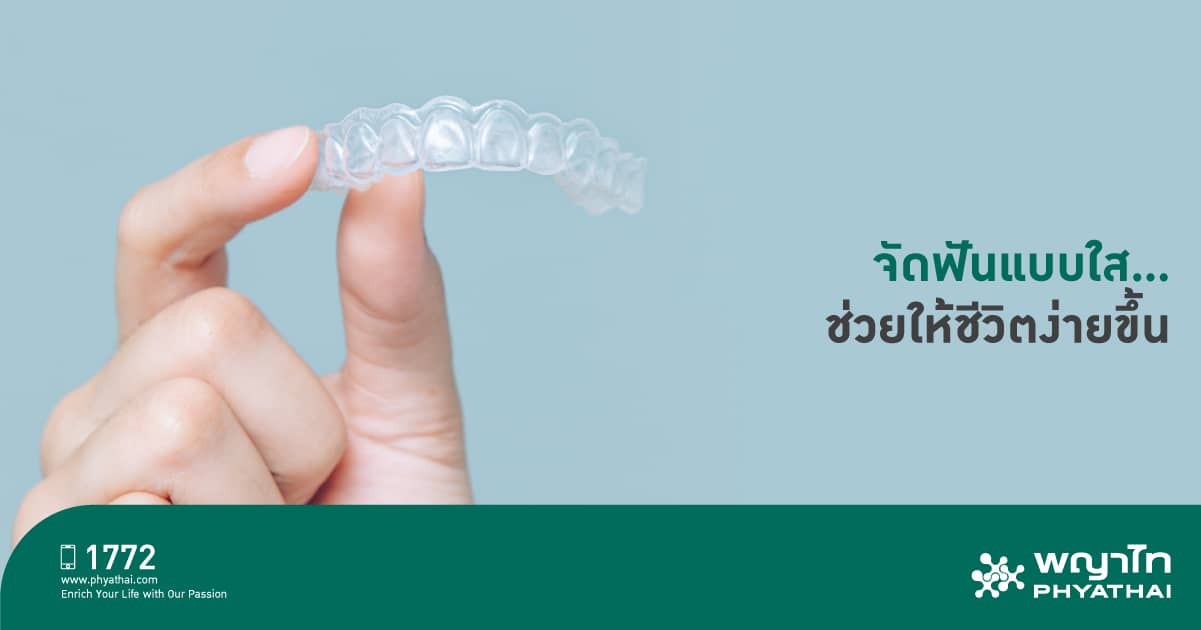
Many people may think that “jaw surgery” is the final answer for treating “malocclusion”. However, in many cases of malocclusion, it can be corrected or treated with orthodontics using clear aligners called “Invisalign” , which is a good solution to the problem. Today, we will get to know about treating malocclusion with this method.
What problems can malocclusion cause?
- Poor chewing quality due to reduced efficiency in biting, chewing, tearing, and grinding food, resulting in the digestive system having to work harder. This may cause bloating, indigestion, or constipation easily. When digestion is poor, nutrient absorption in the intestines decreases, which may lead to diseases or other illnesses caused by nutrient deficiency.
- Abnormal growth of the jawbone according to the malocclusion, causing pain in the jaw area, jaw joints, and even both ears. In some cases, degeneration of the tissues supporting the jaw joints may occur, causing difficulty in opening the mouth, snoring, and sleep apnea.
- Some teeth bear more chewing force than normal in an unnatural way, causing those teeth to wear down more than others. The teeth become weaker, and the excessive force can cause inflammation of the tissues around the tooth roots, leading to toothache, loose teeth, and eventually loss of those teeth.
- Causes facial asymmetry, unclear speech, and drooling. When self-image is affected, it leads to reluctance to smile or talk to others, resulting in a lack of confidence and psychological and social problems.
What is clear aligner orthodontics “Invisalign”?
Clear aligner orthodontics, or Invisalign, uses orthodontic devices made of clear plastic with a smooth surface and no metal wires like traditional braces. For every case, the dentist designs and sends the specifications to a laboratory to produce aligners tailored to each individual’s dental problems, ensuring comfort and no irritation in the mouth.
In terms of aesthetics, clear aligners are almost unnoticeable when worn. Additionally, the wearer can remove and reinsert them easily for brushing teeth and eating. This is made possible by a technique that provides flexibility and shape memory when reinserting the aligners, called SmartTrack Technology.
How do Attachments work to direct tooth movement?
Attachments are small buttons that the dentist attaches to the patient’s teeth to guide the teeth to move in the desired direction, whether pulling, rotating, moving the entire tooth, or shifting the root. They transmit gentle, continuous forces through these buttons, allowing the teeth to gradually move naturally to the planned positions. The design varies depending on each patient’s specific problem.
How long do you have to wear the aligners?
Generally, when a patient visits the dentist for an evaluation, a treatment plan is made that estimates the duration of treatment quite accurately through analysis and 3D computer modeling of tooth movement. The length of time depends on the individual dental issues. Patients must visit the dentist to change to a new set of aligners every 2 weeks. Patients may feel slight discomfort on the first day of each new set, which means the teeth are moving in the intended direction. Treatment success progresses continuously.
Steps of clear aligner orthodontics “Invisalign”
- Consult and evaluate dental condition with a specialist dentist to determine if clear aligner treatment is suitable.
- If the dentist determines it is possible, the next step is to take intraoral and facial photos, dental X-rays, and dental impressions to send to the laboratory for custom device design.
- Listen to the treatment explanation from the dentist, view 3D computer images, and discuss the treatment. At this stage, the patient will see a model of tooth movement for each new aligner from the first to the last.
- Schedule to receive the aligners, wear them for the first time, and practice inserting and removing them. Patients must wear the aligners for at least 20-22 hours a day, removing them only for brushing and eating to ensure continuous tooth movement.
- Visit the dentist every 2 weeks to change to a new set of aligners until the treatment is complete.
- Wear a retainer to maintain the corrected tooth position.
- Visit the dentist as scheduled for dental health check-ups and to monitor treatment completeness.
After completing orthodontic treatment, patients should maintain oral hygiene by choosing a soft-bristled toothbrush and using dental floss. Avoid hard-to-chew foods for a while, strictly wear the retainer to maintain tooth position, and regularly clean the retainer with toothpaste and a soft-bristled toothbrush. If the retainer is damaged, notify the dentist promptly to order a replacement.
To keep teeth stable, strong, and maintain good oral health, it is recommended to have dental check-ups twice a year. From now on, you will have clean, well-aligned teeth that can efficiently bite, chew, and grind food, effectively solving malocclusion problems.
