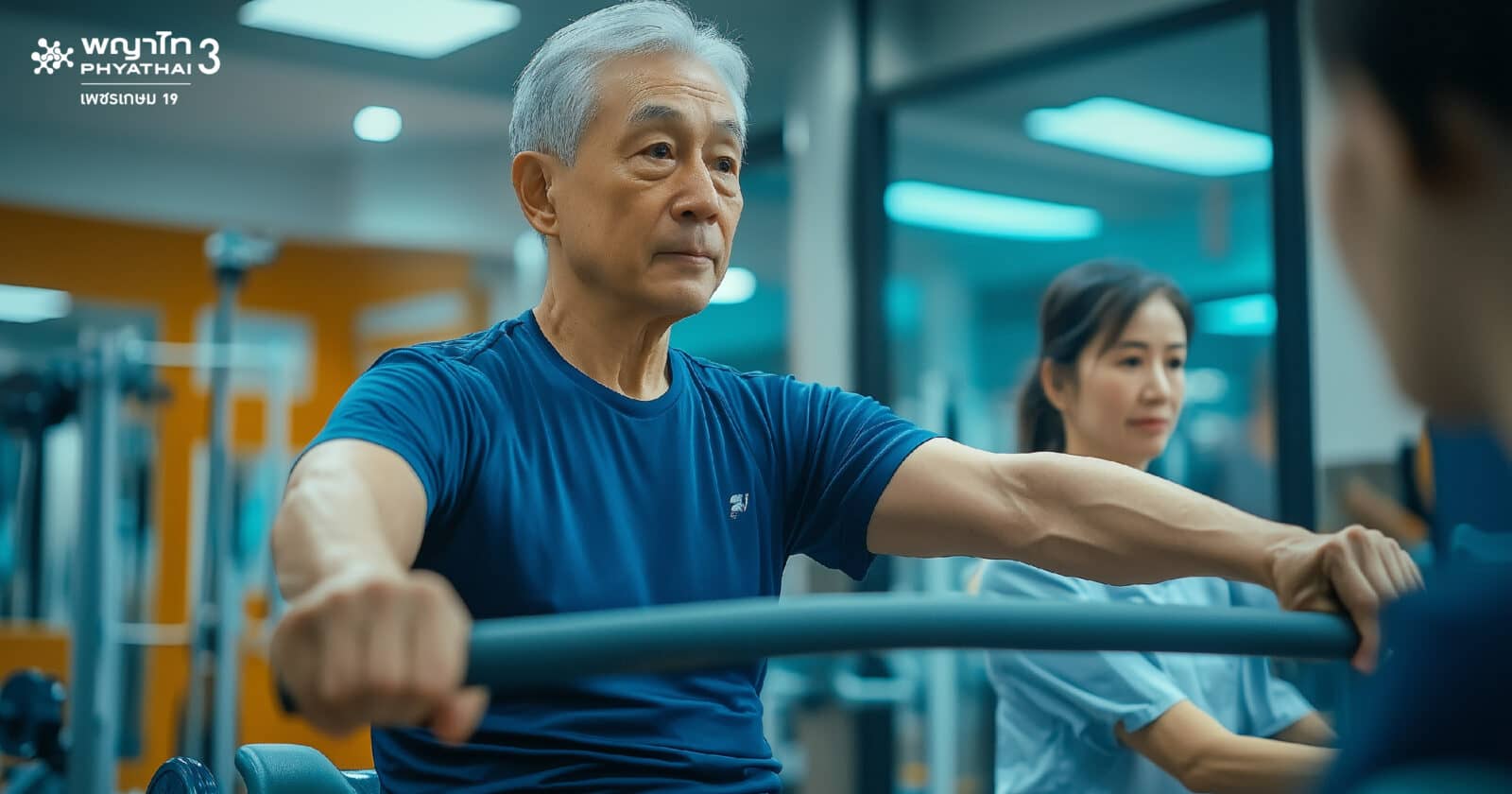
Stroke is a serious disease that no one wants to happen because it prevents patients from living a normal life, ranging from speech problems such as slurred speech or inability to speak, numbness, and swallowing difficulties. Besides treatment from neurologists or neurosurgeons, another important hope that helps patients regain their independence is “Rehabilitation Medicine and Physical Therapy”
Rehabilitation Medicine and Physical Therapy… Designing Rehabilitation Programs That Patients Trust
Rehabilitating patients with hemiplegia or paralysis through physical therapy and speech therapy is something that patients and their families expect and trust. Phyathai 3 Hospital is well-equipped with experienced physical therapists specialized in brain disease rehabilitation, as well as modern equipment and technology to assist in physical therapy. We also have occupational therapists and speech therapists to care for patients simultaneously. Our patient care approach follows the doctor’s treatment plan combined with designing individualized rehabilitation methods based on the patient’s symptoms and severity, along with continuous assessment and follow-up.
- Physical Therapy: We are ready to care for patients at all levels of symptoms, whether it is weakness or inability to move. Our team of experienced physical therapists uses effective physical therapy equipment. The core of brain patient rehabilitation focuses on frequent repetitive training of the same movements. The best rehabilitation period is from the onset of illness up to 6 months, as the first 3 months show rapid recovery which then slows down but can still improve, though at a slower pace and may require additional aids.
- Arm Training: Training focuses on arm movement and direction, emphasizing extension because most patients have problems with arm extension.
- Walking Training: Training focuses on correct walking posture and emphasizes repetition, as doing it many times is more beneficial.
- Assistive Devices for Therapy: In some cases, physical therapy may require assistive devices such as leg cycling machines, support aids, lifting slings, and biofeedback devices that analyze standing weight distribution, step length, step duration, and foot pressure distribution during walking or running. The selection of devices is under the supervision of physical therapists.
- Occupational Therapy: This team plays a crucial role in rehabilitating patients with hemiplegia or paralysis. Occupational therapists train patients to perform basic daily activities according to their abilities, such as swallowing, breathing exercises, bathing, and dressing. The rehabilitation approach is tailored to the patient’s symptoms.
- Speech Therapy: Another important aspect of rehabilitation, speech therapists help with speech correction and swallowing training for those who cannot swallow or have difficulty swallowing, cannot speak, have trouble finding words, slurred speech, unclear speech, difficulty understanding others, inability to write or read, problems with numbers, counting, and calculations, as well as communication and daily life behavior issues.
Hemiplegia and paralysis not only affect the patient physically and mentally but also impact family members due to worry about the patient’s condition and stress from caregiving. These factors motivate Phyathai 3 Hospital to continuously improve post-treatment rehabilitation capabilities to help reduce the burden and stress on relatives in another way.
