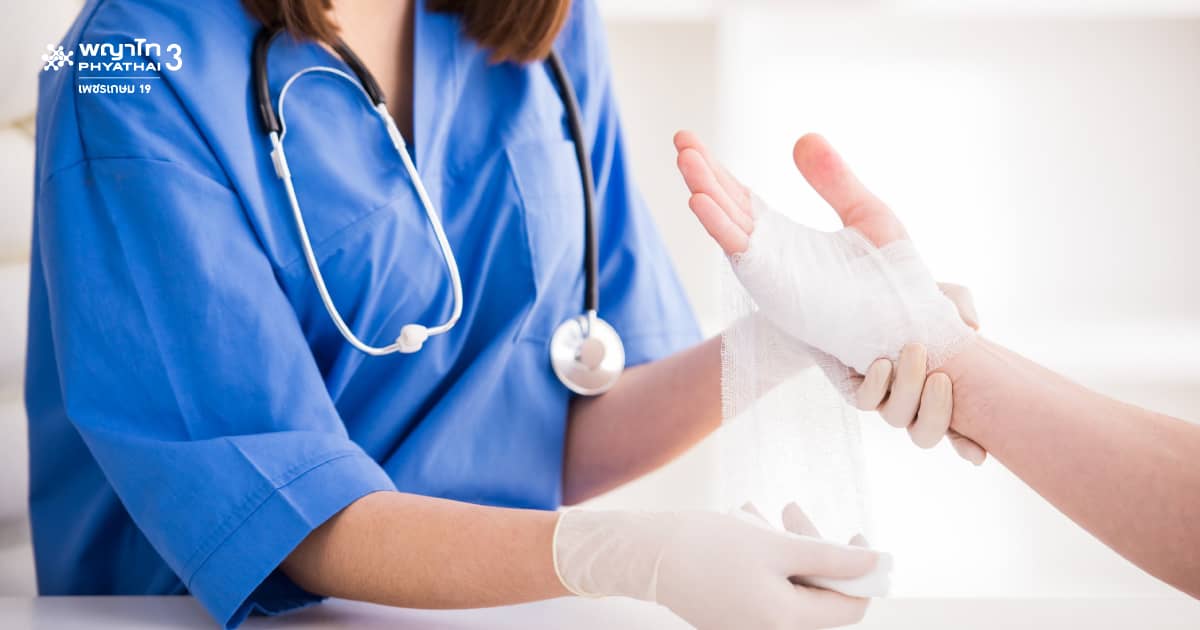
When there is a wound, often the fear caused by the wound is not just because the wound is large? Whether there is bleeding or not? Or how much bleeding there is? Because actually, in every mechanism from the occurrence of the wound until it heals, it can always cause problems for you if not properly cared for. Therefore, to help you understand the term wound better, understand why we need to pay attention when a wound occurs, and why a specialist doctor must take care of it, let’s start learning together.
What is a wound?
A wound is the tissue of the human body when injured, which can occur from various causes, whether from sharp objects, impact, extreme heat, or extreme cold, which may result from accidents or surgical treatment, causing tissue damage or tearing.
Wounds can be divided into 2 main types: open wounds and closed wounds
- Open wounds are wounds where the skin is broken, such as abrasions, cuts from sharp objects, burns, scalds, or puncture wounds from nails, knives, or splinters, etc.
- Closed wounds are wounds without skin breaks, involving tearing of the tissue beneath the skin, such as bruises or hematomas from falls or impacts with objects.
The mechanism from open wound occurrence to healing phase
Normally, when a wound occurs, the body has a natural repair mechanism (Phase of wound healing), which can be broken down into the following steps:
- When bleeding occurs, it must be stopped. Normally, the body can stop bleeding on its own, or the bleeding can be stopped by applying pressure. However, if the bleeding is heavy and pressure does not stop it, the wound may have damaged a blood vessel, requiring suturing or even vascular repair if the vessel is torn.
- The inflammation process: this phase is when the body repairs itself by increasing cells to the wound and destroying pathogens. We can observe swelling and redness, which is inflammation. Most wounds that do not heal, become infected, or have damaged tissue often have their healing process halted at this stage and cannot proceed further.
- Tissue formation: this is the process where the body creates new structures around the wound after damage, such as tissue, blood vessels, and collagen. At this stage, medical care is very important to control the overall wound environment, including moisture, cleanliness, and preventing infection.
Maintaining wound balance is a key factor that helps the body repair itself during tissue formation. Conversely, if the wound is too wet or too dry, the wound environment is unsuitable, and tissue formation will not occur.
- Collagen remodeling and scar formation: this is the final mechanism of the natural wound healing process. Sometimes, natural healing can affect daily life, such as burn wounds that heal with tight, raised scars, especially over joints, which can limit movement.
However, under medical care, there will be plans to manage the scars from various wounds to minimize scarring, speed up healing, and reduce impacts on the patient’s quality of life.
When a wound occurs, even though we know the body can naturally repair itself, this does not mean neglecting care or reducing awareness of the importance of treatment. Wounds that seem minor but are not properly cared for may become chronic, infected, spread deeper and wider, leading to serious dangers such as loss of organs or even death. Conversely, if wounds are well cared for from the start, they will heal quickly, not spread, and have minimal or no scarring, thanks to technology that suits your lifestyle and is good for wounds. Therefore, please pay attention to every detail of your health to maintain good health and quality of life every day.
—
Dr. Benjaporn Nantasanti
Surgeon, Advanced Surgical Technology Center, Phyathai 3 Hospital
For more information, Advanced Wound Care Center, Phyathai 3 Hospital
Tel. 02-467-1111 ext. 3100
