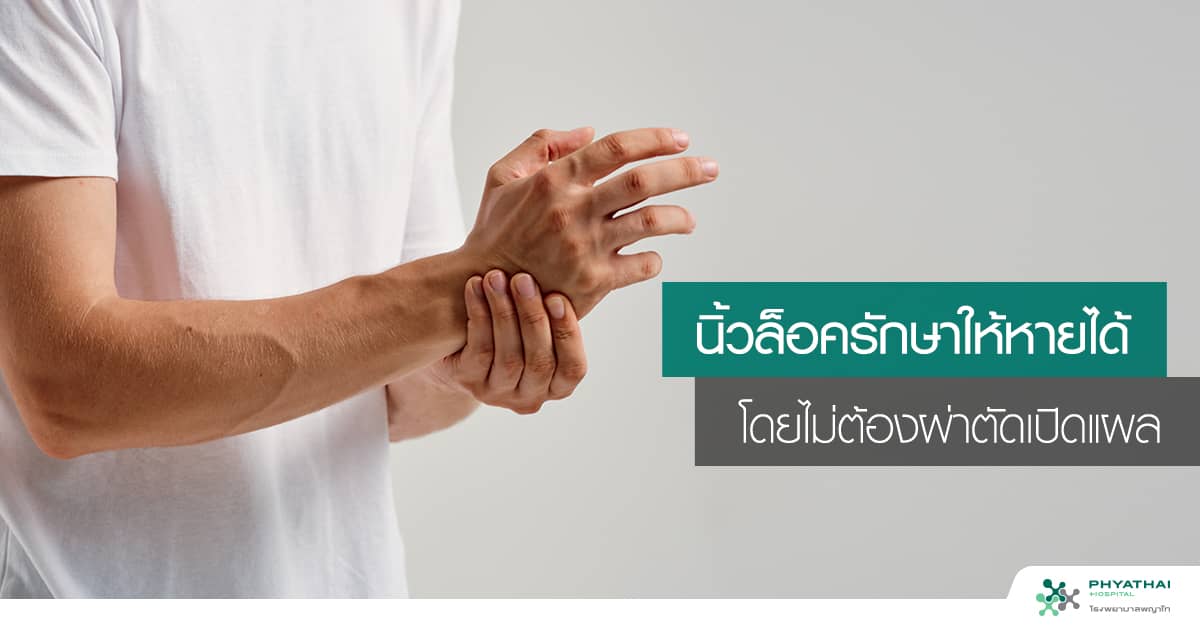
Trigger finger, a condition that many people are facing unknowingly, is caused by behaviors that use the fingers for long periods without rest, such as chatting on a smartphone, typing on a computer, regularly carrying heavy objects, or doing work that requires pressing force with the fingers. Additionally, trigger finger can also result from diseases that cause inflammation in the hand area, such as diabetes or rheumatoid arthritis. Symptoms usually occur in the morning or when the fingers are heavily used continuously.
What kind of pain indicates that it might be trigger finger?
There is pain at the base of the finger, spreading to the finger joints, making it difficult to fully bend or straighten the finger. In severe cases, the finger joint may become deformed because trigger finger is caused by inflammation and thickening of the tendon sheath in the finger, preventing the tendon inside from moving normally. It often occurs in the thumb, middle finger, and ring finger. Some people may have multiple fingers affected simultaneously or both hands affected at the same time.
What are the treatment options for trigger finger?
Treatment for trigger finger depends on the severity. In the early stage, it can be treated with medication, physical therapy, and steroid injections, which are effective within the first 4–6 months. However, it is necessary to avoid the same finger-using behaviors and frequently rest the fingers. If these treatments do not improve the symptoms, the doctor may consider surgical treatment.
Another treatment option for trigger finger… without surgery!
Dr. Nararit Luanjamroen, a specialist in rehabilitation medicine, explained that current treatment for trigger finger uses ultrasound guidance for precision during the procedure, as follows:
- The doctor will inject a local anesthetic into the hand.
- A needle is inserted into the base of the finger with trigger finger symptoms, guided by ultrasound for accuracy.
- The needle tip is used to release the tendon sheath by cutting the sheath that tightens the tendon, similar to conventional surgery.
This treatment takes only 5 minutes and the hand can be exposed to water normally after 24 hours, unlike traditional surgery which requires an open wound, takes about 1 hour, and the wound must not get wet for 10–14 days.
If you have trigger finger symptoms, do not leave it untreated until it becomes chronic, as it may cause permanent damage to the tendon sheath, and even surgery may not be as effective.
Dr. Nararit Luanjamroen
Specialist in Rehabilitation Medicine
Muscle, Bone, and Joint Center Phyathai Nawamin Hospital
