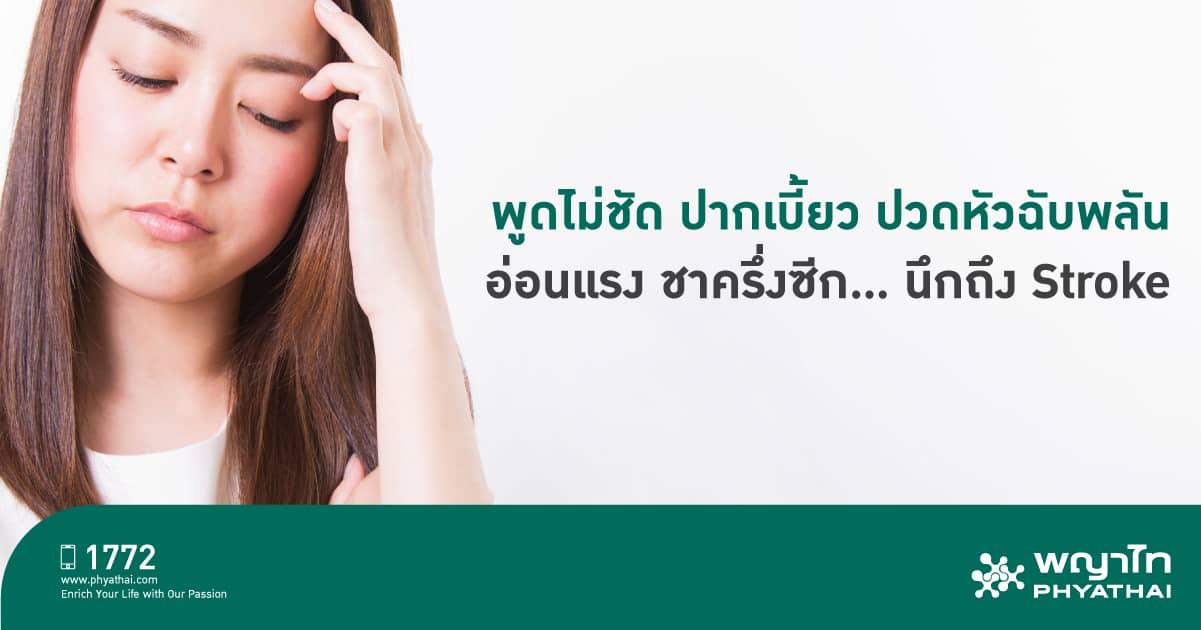
Nowadays, very few people… have never heard of “Stroke” or “Cerebrovascular Disease” because this disease is a leading cause of disability, bedridden conditions, and death…
Although this disease is common among the elderly due to age-related vascular degeneration, in fact..!! people of all genders and ages can also be affected, and it is increasingly found in younger people nowadays.
Therefore, we all should be well-informed about the disease and consistently take care of our own health and that of our close ones because if we miss even a fraction of a second! The severity of this disease can lead to many subsequent losses.
Get to know more about Cerebrovascular Disease (Stroke)
Cerebrovascular Disease (Stroke) occurs when a blood vessel in the brain suddenly becomes blocked or ruptures, causing blood flow to that part of the brain to stop. When the brain lacks blood, it results in brain tissue damage and loss of normal function, and that part of the brain tissue dies.
The symptoms vary in severity depending on the extent and location of the brain damage, but some observable signs include:
- Sudden numbness or weakness on one side of the face
- Slurred speech, crooked mouth, drooping corner of the mouth, drooling, difficulty swallowing
- Sudden numbness or weakness in one arm or leg, unsteady walking, loss of balance
- Blurred vision, double vision, loss of vision in one half or sudden blindness in one eye
- Sudden headache
These symptoms may occur alone or in combination, depending on the location of the brain function loss. Some cases may experience these abnormal symptoms temporarily and improve within 24 hours due to temporary brain ischemia (Mini Stroke).
However, regardless, if these symptoms occur, do not wait and observe. You should see a doctor as soon as possible for a specialist to conduct a thorough diagnosis and provide immediate treatment.
Stroke is treatable… reducing loss
Treatment of cerebrovascular disease depends on the cause and symptoms, whether it is ischemic stroke (blocked or narrowed blood vessels) or hemorrhagic stroke (ruptured blood vessels), each with different treatment approaches.
Ischemic or obstructed blood vessels
The treatment goal is to restore normal blood flow. Treatment options include clot-dissolving medication, and in some cases, treatment by expanding the blood vessels and removing clots by threading a catheter directly into the brain vessels. This has been found effective for patients showing symptoms of ischemic or obstructed stroke who arrive at the hospital quickly and receive treatment within 4.5 hours from symptom onset.
Ruptured or torn blood vessels
The treatment goal is to control bleeding and rapidly reduce brain pressure. In cases of significant brain bleeding, doctors may consider surgery to prevent and effectively reduce brain damage.
Every second… counts for stroke
The faster the patient is under medical care… the lower the rate of loss. Dr. Pranot Nipatsachak, Neurosurgery Specialist and Dr. Lalitpan Sudprasert, Neurology Specialist at Phyathai Nawamin Hospital therefore emphasize “Every second.. of every life”. With their experience and specialized expertise in treating this disease, both doctors are ready to provide advice, screening, diagnosis, and comprehensive care to restore a good quality of life for all patients.
…No one knows what “just a fraction of a second… can bring.” We should be cautious and not let “Stroke”
undermine our happiness and that of our loved ones…
Dr. Pranot Nipatsachak
Neurosurgery Specialist
Dr. Lalitpan Sudprasert
Neurology Specialist
Brain and Spine Center, Phyathai Nawamin Hospital
