It is well known that the COVID-19 virus primarily affects the respiratory system, and in some patients, it can cause pneumonia, resulting in the “lungs” not being able to function at full capacity as before. Even after recovery, inflammation may leave scars in the lungs such as fibrosis or wounds, reducing lung function.
How does COVID-19 damage the “lungs”?
The COVID-19 virus enters our body through the nose or mouth into the lungs, directly affecting the respiratory system.
In the early stage of infection, patients will have symptoms similar to a common viral infection, such as fever, fatigue, and body aches, but respiratory symptoms are not very prominent. After some time, around days 3-4 of infection, patients will start to experience coughing and shortness of breath gradually. If the patient undergoes a chest X-ray, abnormalities will begin to appear, showing white patches in the lungs on the X-ray film. This is concerning because if left untreated, the patient may develop hypoxemia caused by lung inflammation.
How severely does COVID-19 affect the “lungs”?
Generally, the characteristic of COVID-19 pneumonia is that it often affects more than one area and involves both lungs. If patients receive timely treatment with appropriate medications such as antiviral drugs, steroids, and others, the lungs will gradually recover. However, about 10% of patients develop severe pneumonia, and only 1% experience fatal outcomes.
Condition of the “lungs” after treatment
After recovering from COVID-19, severe inflammation caused by the virus can result in scars or fibrosis in the lung tissue, making the lungs less elastic and less efficient at oxygen exchange. Lung function tests will show that “lung capacity” is below normal. This may not be noticeable at rest, but during exercise or strenuous activities, patients will feel more easily fatigued than usual.
Two phases of lung recovery
The recovery of the lungs after COVID-19 can be divided into two phases:
- The first phase is the first 2 weeks after recovery. White patches can still be seen on the lung X-ray but in smaller amounts compared to the infection period, and
- The later phase is weeks 3-4 after recovery. The body has started to recover somewhat but patients may still feel fatigued, not refreshed, weak, and less energetic than before.
How should “lung capacity” be restored?
Patients who have just recovered from COVID-19 will still have abnormal respiratory function and lung capacity. However, it is possible to “restore lung capacity” by moving or exercising the lungs to gradually improve the elasticity of lung tissue and alveoli. Light exercise can also help patients return to their normal activities, as follows:
- Breathing exercises
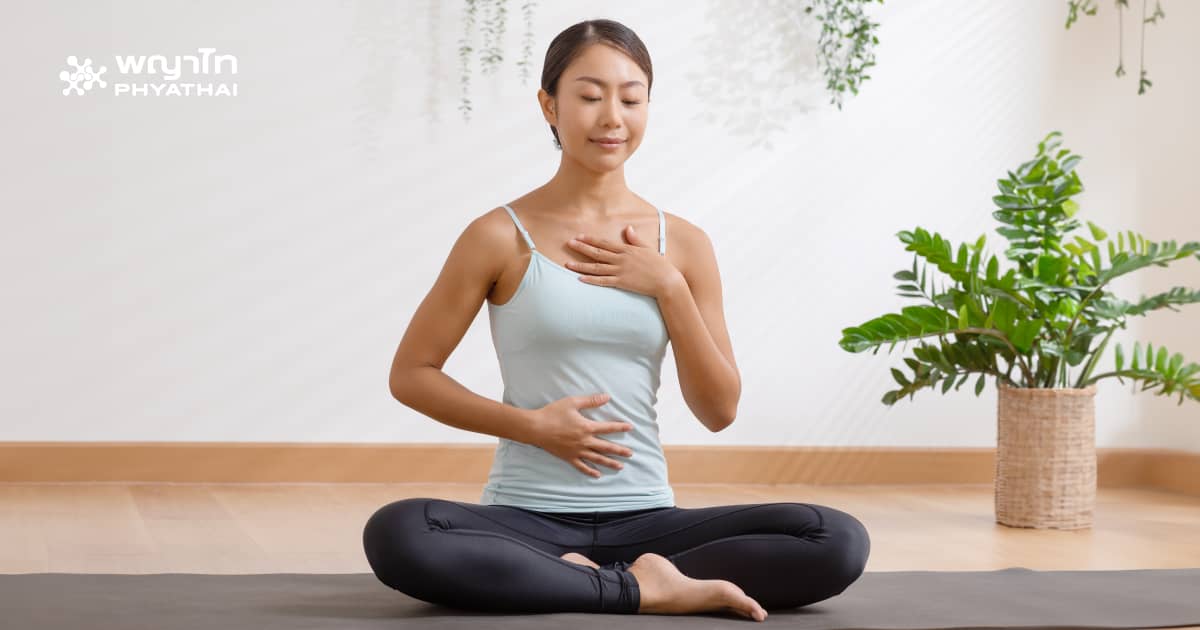
Breathing exercises are very important during the first 2 weeks after recovery. This can be done by inhaling deeply through the nose, then slowly exhaling through the mouth or by slowly saying the word “oo” until the lungs are empty, then inhaling deeply again and exhaling slowly as before. Because fibrosis makes lung tissue stiff, frequent movement of the stiff fibrosis will increase elasticity, gradually restoring lung tissue flexibility.
- Lung rehabilitation
This is also necessary during the first 2 weeks after recovery. It is an effective lung rehabilitation strategy using a medical device called Triflow. Patients inhale through the device to raise up to 3 ping-pong balls in 3 chambers. The number of balls that rise depends on the volume of air inhaled. The more air inhaled, the more balls rise. Using the Triflow device to inhale is a lung exercise technique that helps fully expand the lungs, increasing lung elasticity and aiding recovery.
- Light exercise
This can be done from weeks 3-4 onwards. During this period, the body may still feel fatigued, but the lungs may have started to recover. Therefore, exercise and increased physical activity are necessary, starting with light exercises such as frequent walking and avoiding prolonged inactivity. As the body adapts, the intensity can be gradually increased, such as walking faster or light jogging.
“Restoring lung capacity” involves not only breathing exercises, lung rehabilitation, and appropriate physical activity but also requires “consistent self-care”. This includes eating nutritious food, getting enough rest, and avoiding air pollution to help “our lungs” return to full function as quickly as possible.
