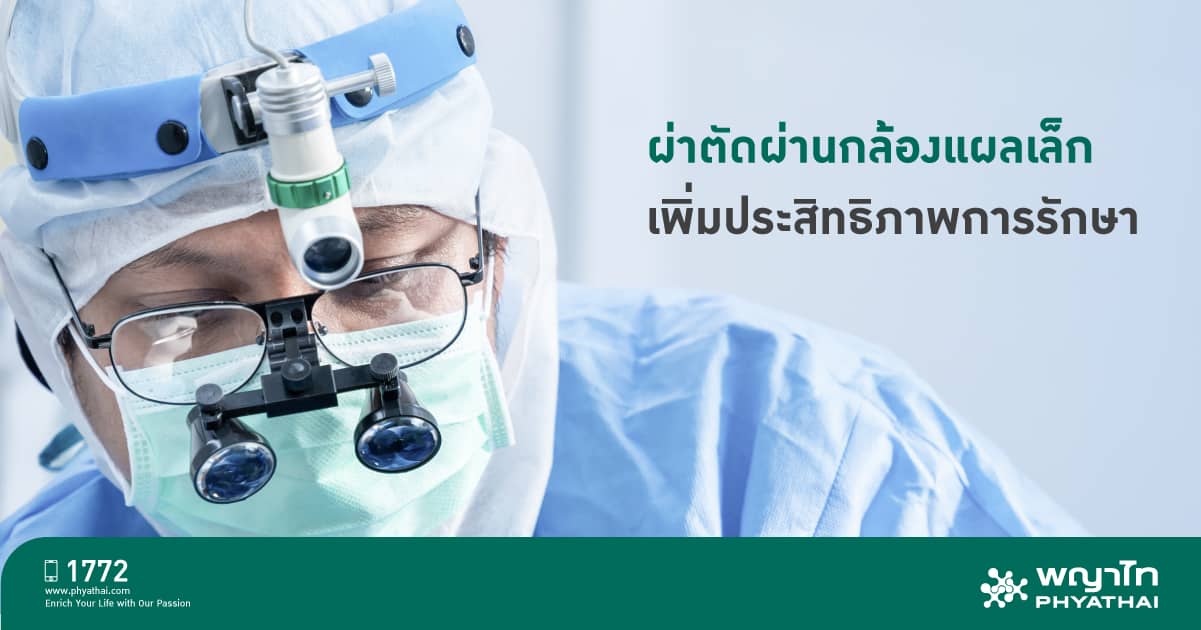
In addition to the anxiety about the illness they face, patients who need treatment by “surgery” also have many other concerns, such as the safety of the surgery, pain, scarring, and the recovery time before they can return to normal life, which can be long. However, nowadays there is “minimally invasive surgery (MIS)” that helps patients relieve these concerns.
What is Minimally Invasive Surgery (MIS)?
Minimally Invasive Surgery, or MIS, is a surgery performed through small incisions in the skin at the treatment site. A small, flexible tube-like camera and surgical instruments are inserted through these small holes, allowing doctors to see detailed images of the internal pathology clearly. This benefits the treatment or diagnosis of diseases, increasing the accuracy of treatment and diagnosis. Additionally, MIS is less invasive, reduces the risk of infection and complications, and patients usually recover quickly and can return to normal life soon.
“Minimally Invasive Surgery” – a good option that helps patients recover faster
The main goal of patient treatment is to cure or improve the condition safely and restore a good quality of life as close to normal as possible. In the past, surgeries requiring “operation” were mostly open surgeries with large incisions on the abdomen, resulting in slow recovery. However, with modern medical technology innovations and specialized surgical teams, MIS has become a good surgical option for suitable cases.
How is minimally invasive surgery “better” than open surgery?
- Smaller incisions – The surgical incisions are small, about 1-2 cm, unlike traditional surgery where incisions can be 12-20 cm (depending on the procedure), which helps patients feel more confident and less worried about surgical scars.
- Less pain – Because the incisions are smaller, there is less impact on tissues and internal organs, resulting in significantly less pain after surgery compared to traditional surgery.
- Safer and less blood loss – With advanced laparoscopic technology and expert surgeons, details can be seen clearly, increasing treatment accuracy and reducing the risk of errors.
- Faster discharge – Patients recover faster and can return to work or normal life happily sooner.
- Quicker recovery – Small incisions reduce the risk of infection, a common surgical complication, allowing recovery time to shorten from the usual 1-2 weeks to just 2-5 days.
Diseases that can be treated with “minimally invasive surgery”
Let’s look at which diseases “minimally invasive surgery” can treat. However, it depends on the physician’s judgment, who will diagnose and evaluate each patient to determine if laparoscopic surgery is appropriate.
- Laparoscopic surgery for colon and rectal diseases
- Laparoscopic surgery for excessive sweating (hyperhidrosis)
- Laparoscopic gynecological surgery
- Laparoscopic spinal surgery
- Laparoscopic stomach surgery
- Laparoscopic surgery for appendicitis or intestinal obstruction
- Laparoscopic surgery for gallstones
- Laparoscopic surgery for hernia
- Laparoscopic tumor removal surgery
The best outcome for patients is to recover their body to normal or near normal as quickly as possible… Therefore, “minimally invasive surgery” is another treatment method that helps patients experience less pain than open surgery, requires less recovery time, and allows them to return to normal life faster.
Choose the best to regain happiness and a good quality of life quickly
Pol. Maj. Dr. Warin Wachirapanyanukul
Senior Specialist Surgeon in Minimally Invasive Surgery
Surgical Center, Phyathai Nawamin Hospital
