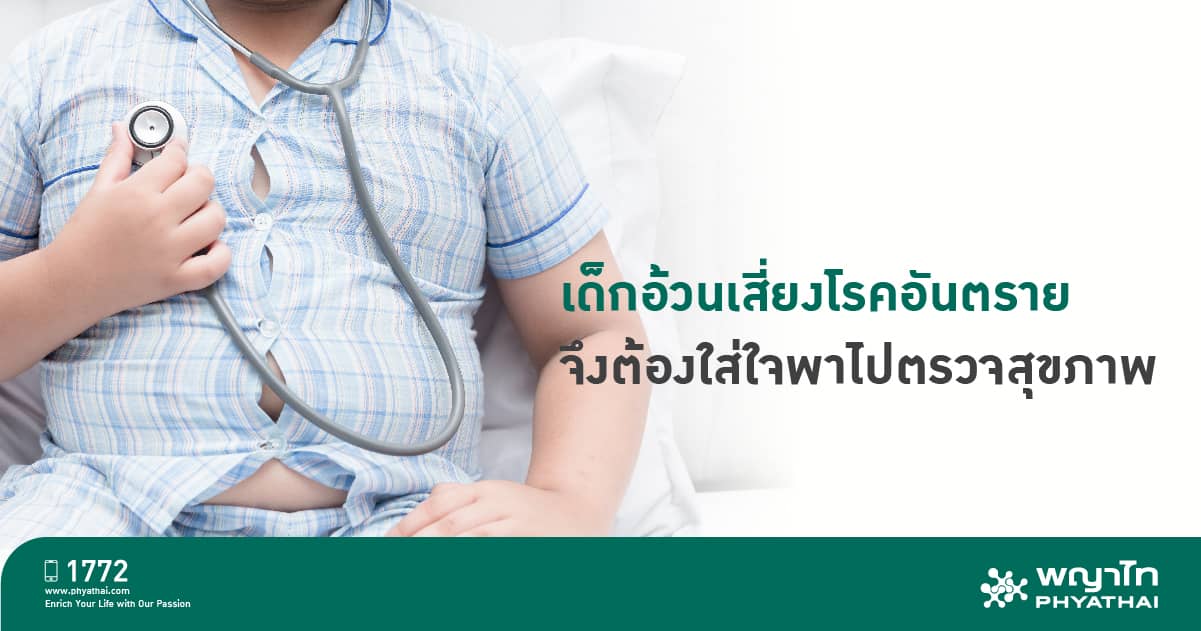
Most people often feel that chubby children are cute and cuddly, which is not wrong. However, the cuteness of ‘fat children’ often hides dangers because childhood obesity leads to health problems… for the children themselves. According to global statistics from 1980 to the present, the number of children classified as obese has increased more than threefold. Today, we want to explore what conditions or diseases obese children are at risk for and how to be cautious about ‘childhood obesity’.
How to know if a child is ‘obese’?
- Parents or guardians can observe by comparing the child’s body shape and weight with most children of the same age. If the child is found to be significantly overweight, a doctor should be consulted.
- Calculate the Body Mass Index (BMI) using the formula
-
- Weight (kilograms) divided by height (meters) squared
- For example, weight 40 kg, height 110 cm or 1.10 m.
- BMI equals 40 / (1.10×1.10) = 33.05 kg/m²
Then compare the BMI number with the percentile chart, separated by gender and age. If it is above the 85th percentile, it is considered overweight, which increases the risk of obesity.
Obese children often have health problems
Childhood obesity leads to many health problems, including risks of diabetes, high blood pressure, and high blood lipids. Many people mistakenly believe these diseases only occur in the elderly, but in reality, they can occur from childhood. Especially obese children have a higher chance of developing these diseases than children with normal weight. In cases where symptoms do not appear in childhood due to mild problems, they often manifest when the child grows into an adult.
Additionally, obesity may cause snoring and obstructive sleep apnea (OSA), which in some cases can be severe enough to cause death.
Mentally, obese children are often teased by friends, bullied at school, unable to keep up in sports due to lack of agility, or frequently ill. These factors cause children to lose self-confidence, damage their personality, and increase the risk of depression.
How should parents care for children who are obese or overweight?
1. Control the quantity and choose appropriate food for your child
Parents should ensure their child’s diet provides complete nutrition according to nutritional principles by encouraging more consumption of vegetables and less sweet fruit, focusing on high-fiber foods which benefit the digestive system. Prepare meals that are not too oily, sweet, salty, or strongly flavored. Especially avoid giving snacks too often or regularly taking the child to eat high-calorie fast food.
2. Encourage your child to engage in physical activities and exercise
Due to lifestyle changes nowadays with many conveniences, children tend to move less or exercise less. Therefore, family activities should be organized so everyone spends time together, focusing on age-appropriate physical activities such as playing various sports like swimming, playing games, gardening, or doing housework with parents.
3. Ensure your child goes to bed on time and gets enough rest
Getting enough sleep and going to bed early helps the body repair itself and benefits the metabolism system. Insufficient sleep or staying up late significantly reduces metabolic function, which is one cause of obesity.
4. Take your child to see a doctor and have regular health check-ups
Health check-ups for children are essential because they allow parents to identify problems early and receive advice from doctors. They also provide information about the child’s health and development at each stage, highlighting any special care needed. This can be applied to maximize benefits, affecting the child’s weight and growth.
Generally, ‘child health check-ups’ involve doctors performing all basic health examinations, including blood pressure, pulse, blood sugar levels, blood lipid levels, thyroid function, and others to screen for various diseases in children. BMI is also calculated from weight and height to see if they correlate. If a child is at risk of obesity or related diseases, prevention or treatment can be promptly provided.
It can be seen that ‘childhood obesity’ negatively affects the body, mind, emotions, and social aspects of children. Therefore, parents should give importance to this alongside regularly taking their child for health check-ups to ensure the child is healthy, develops appropriately for their age, and stays away from diseases.
