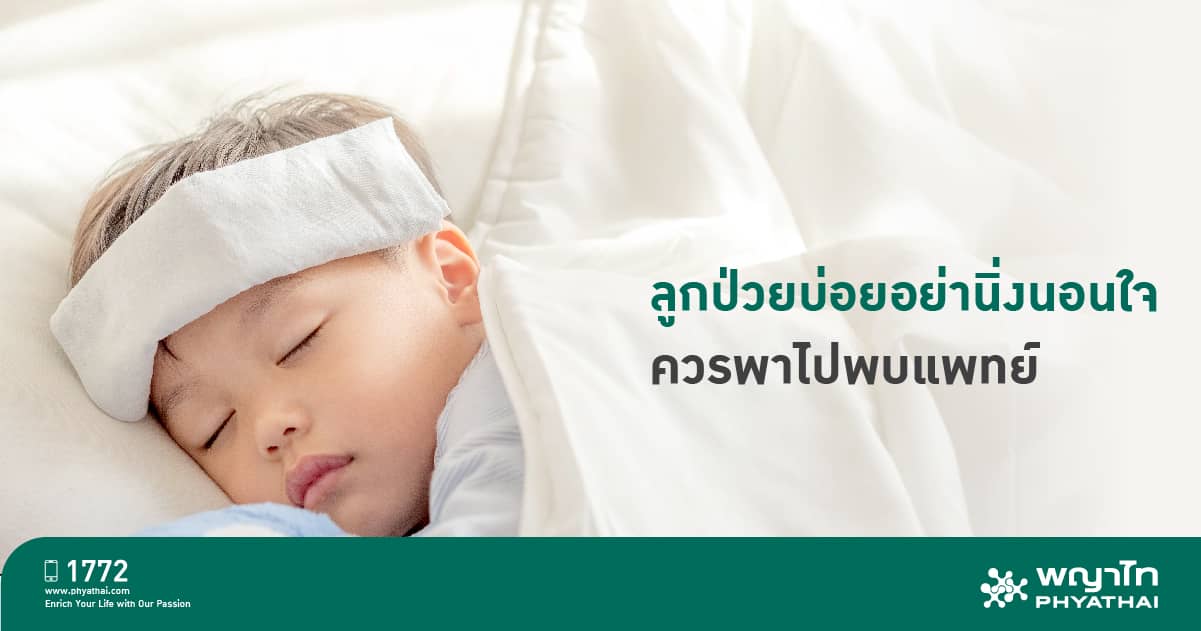
It is believed that every parent, when seeing their child sick, almost wants to be sick instead of the child. Sometimes, our little ones get sick often, which makes us worry whether our child is weak or has a poor immune system. Today, we will take a look at the possible causes of frequent illness in children, whether it is dangerous, how to care for them, and when it is necessary to see a doctor urgently.
What causes frequent illness or fever in children?
Frequent illness or fever in children can be caused by many factors, including the fact that children’s immune systems are not as strong as adults’, making them more susceptible to infections, especially viruses that often spread through the air. Additionally, children often play actively with friends and do not know how to properly maintain their hygiene, increasing their chances of infection. Children also have weaker resistance to frequent or rapid changes in weather conditions.
Signs that indicate your child is unwell?
Young children may not be able to communicate or tell us directly, but when you notice your child becoming irritable, crying continuously, or crying longer than usual, it may indicate that your child is unwell. If your child has a fever, feels hot, loses appetite or refuses to drink milk, has red eyes, or diarrhea, and shows these clear symptoms, it is safer to take your child to see a doctor immediately.
Basic care when your child has a fever
When your child is unwell, especially with a fever, parents can provide initial care before taking them to see a doctor as follows:
- Wipe the child’s body to reduce fever
The first thing to do is to wipe the child’s body to help reduce the fever or lower the child’s body temperature as quickly as possible because if the child has a high fever and is very hot, it may cause shock.
- Take fever-reducing medicine
If the child has no history of drug allergies and the temperature is above 37.5 degrees Celsius, you can give paracetamol according to the child’s weight before taking them to see a doctor.
- Adjust the room temperature appropriately
The room temperature should be adjusted to be comfortable for rest, not too hot or too cold.
- Arrange the sleeping position to help reduce nasal congestion
If the child has nasal congestion and difficulty breathing, parents should arrange the child to lie on their side with a high pillow to help them breathe more easily.
- Clean the nose with saline solution
If the child starts to have a runny nose, parents can try cleaning the child’s nose with 0.9% NSS saline solution to help reduce thick mucus.
- See a doctor as soon as possible
The above practices are only initial care for the child’s illness. If the symptoms do not improve over time or become concerning, you should take your child to see a doctor as soon as possible to find the cause and receive proper treatment.
- Get vaccinated to build immunity
Frequent illness in children may be due to low immunity because they have not yet received vaccinations against various diseases. Parents should take their children to get vaccinated as recommended by the doctor, which will help reduce frequent illnesses significantly.
Every time your child is sick, it is certainly not advisable to let it heal on its own. Parents should take them to see a doctor for examination and treatment by choosing a hospital that is well-equipped, such as Phyathai Nawamin Hospital, which has pediatricians available 24 hours a day.
Dr. Amornrat Aparnvichanop
Pediatric Specialist
Child and Adolescent Health Center, Phyathai Nawamin Hospital
