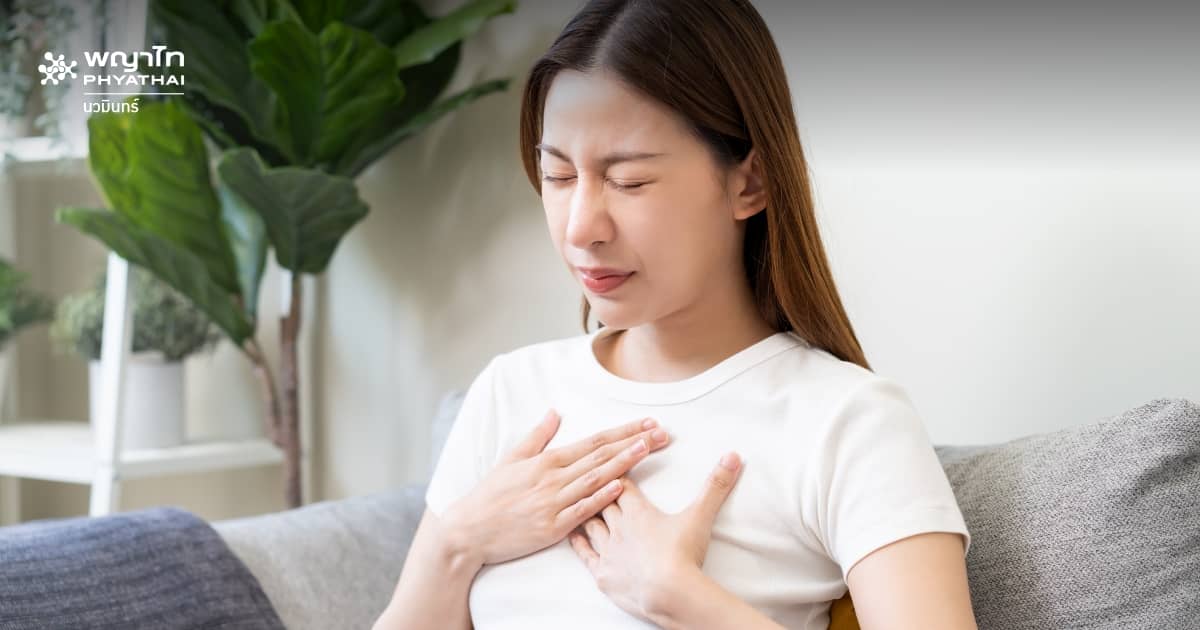
Chest pain often causes many people to panic. Some may jump to the conclusion that they have heart disease, while many others ignore the chest pain, thinking it’s nothing serious and probably not a heart condition. They may believe they are still young and healthy, and the pain is likely just acid reflux. Ignoring these symptoms can lead to discovering that you are at risk for heart disease too late. Therefore, recognizing chest pain symptoms is important and should not be overlooked.
Chest Pain: Warning Signs of Which Diseases?
- Coronary Artery Disease is not only a risk for the elderly. Nowadays, it is increasingly found in young people due to lifestyle changes. This disease is caused by the accumulation of fat in the blood vessels, which restricts blood flow to the heart. Symptoms include chest pain that feels like squeezing or burning, especially during exercise or stress.
- Muscle Inflammation If you have recently lifted heavy objects or exercised, chest pain may be due to muscle inflammation. This pain usually improves with rest, but if it persists, you should consult a doctor for treatment.
- Acid Reflux Disease Acid reflux causes a burning sensation in the chest and can sometimes be mistaken for heart disease symptoms. If you experience burning after eating, observe yourself carefully. If antacid medication does not relieve the symptoms, you should see a doctor immediately.
- Asthma Feeling short of breath, chest pain, and wheezing may be signs of asthma, which requires proper treatment.
- Pneumonia and Lung Infection Lung infections, such as pneumonia, can cause chest pain, difficulty breathing, and pain when breathing.
- Anxiety and Panic Disorders Stress and anxiety can cause chest pain, rapid breathing, and a fast heartbeat, which may be confused with heart disease symptoms. Relaxation and stress management are very important.
Heart Disease Warning Signs
Do not ignore these warning signs as they are all indicators of heart disease.
- Chest pain that feels like something is squeezing or pressing down
- Chest pain accompanied by sweating and coldness
- Chest pain accompanied by fainting
- Chest pain accompanied by inability to lie flat and feeling breathless
- Chest pain that radiates to the middle of the back, neck, jaw, or inner left arm
How to Differentiate Chest Pain Symptoms
- Heart-related chest pain usually feels like pressure or heaviness in the center of the chest, spreading to the left arm, neck, or jaw. It may be accompanied by sweating, nausea, or shortness of breath.
- Chest pain from other causes may be sharp pain that worsens with deep breathing or movement and usually does not spread to other parts of the body.
What to Do When Experiencing Chest Pain
- Stop what you are doing and sit or lie down to rest.
- Observe your symptoms. If the chest pain does not subside within a few minutes or if other symptoms occur, such as difficulty breathing or excessive sweating, seek help immediately.
- Call an ambulance. If you are alone, do not drive yourself to the hospital. If possible, call an ambulance to receive immediate care.
- Do not ignore mild symptoms. Even if the pain is not severe, if it occurs frequently, consult a doctor for proper diagnosis.
Heart disease can affect any age. Do not assume you are healthy just because you are young. Heart disease is not only a condition for the elderly. Complacency can put you at risk without realizing it. If you experience uncertain chest pain, see a doctor for diagnosis and consultation. Additionally, exercising, maintaining good health, and getting enough rest are important. Regular annual health check-ups are essential to give you confidence from within. Cars or machines undergo annual inspections, but the human body has no replaceable parts like machines. Maintaining good health and regular health check-ups are therefore very important. Phyathai Nawamin Hospital offers heart health check-up packages and care by cardiology specialists to help you live confidently without worry.
