“Did you know? Which patients should not drive?” Hmm..? On the recent Chinese Ghost Festival day, while listening to a radio program during a drive to pay respects at a shrine, I heard a question on the show asking
“Did you know? Which patients should not drive?”
Hmm.. The answer given by the radio program was heart disease. They reasoned that driving causes stress unconsciously, and if chest tightness occurs while driving, it is difficult for anyone to help in time.
Upon hearing the answer, I felt it was true! Because recently, a friend of mine passed away from heart disease while driving. When the symptoms worsened, my friend stopped the car and lost consciousness without turning off the engine. Witnesses tried CPR but could not save the life. It was very sad.
As a dietitian, I know there are many factors causing heart disease. One factor is diet, so I want to talk about “How to eat for a strong heart”. I think it will be useful for everyone. For those who do not have heart disease, it is recommended to consume a balanced diet from all 5 food groups, maintain a normal body weight, and regularly have annual health check-ups to monitor blood lipids and glucose levels. Also, control any existing non-communicable chronic diseases effectively, such as diabetes, hypertension, high cholesterol, and obesity.
You should eat healthy fats called unsaturated fatty acids, which help reduce bad cholesterol and increase good cholesterol. Unsaturated fats are found in many foods such as fish, especially sea fish. It is recommended to eat fish at least twice a week. Salmon, mackerel, and sardines contain omega-3 fats that help reduce inflammation in the arteries, which is an early sign of heart disease. Avoid saturated fats such as palm oil, animal fats, and repeatedly used frying oils, which can be transformed into trans fats, similar to fats found in butter and margarine used in the bakery industry.
- Consume oils from nuts and seeds high in alpha-linolenic acid such as walnuts, canola oil, and soybean oil, but do not consume excessively as they are high in calories and may cause weight gain.
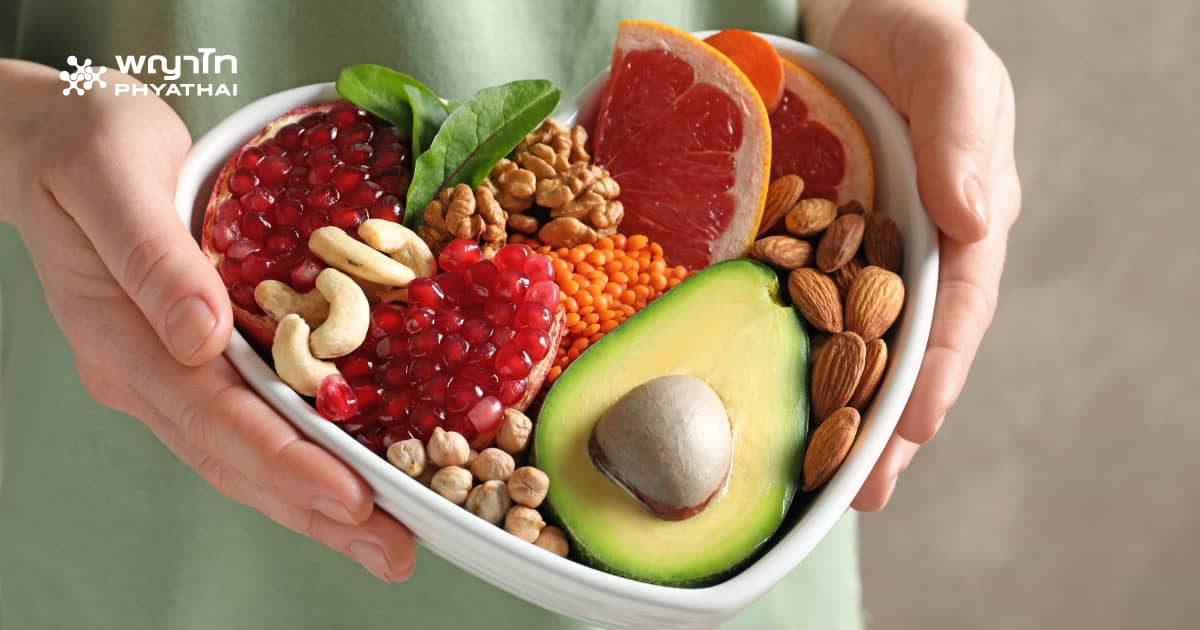
- Eat a variety of vegetables and fruits to get antioxidants that prevent artery inflammation and fiber that helps block fat absorption and supports digestion.
- Recommended fruits include avocado, which contains monounsaturated fatty acids and vitamin E, has higher protein than other fruits, and importantly, low carbohydrates, making it good for diabetics or those wanting to lose weight.
There are many other heart-friendly foods. If we focus on healthy eating, it will help reduce the risk of heart disease and improve overall health. We, the dietitians from Phyathai 3 Hospital, are happy to provide consultation and listen to all suggestions. If you want to talk with us, press 1772.
Phyathai 3 Hospital