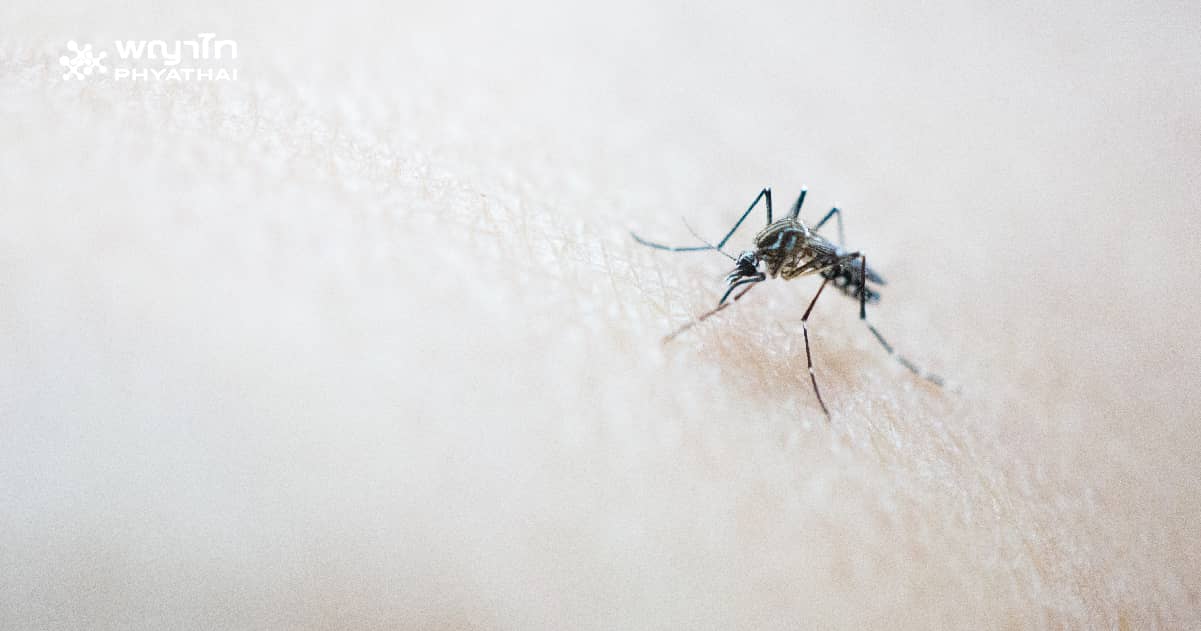
Dengue Fever Infections Remain High Every Year
Dengue fever is another serious disease that still sees a large number of infections and deaths every year. In some years, more than 20,000 cases are reported, most of which are young children. The outbreak tends to increase from May to September because it is the rainy season, which often causes stagnant water sources that serve as breeding grounds for Aedes mosquitoes, increasing their population beyond normal levels.
Dengue Fever Symptoms to Watch For
Dengue fever is caused by the dengue virus, transmitted by Aedes mosquitoes. Anyone bitten by these mosquitoes should monitor themselves for 5-8 days to see if they develop a sudden high fever of 38-40 degrees Celsius. If the fever lasts continuously for 3-7 days or more, accompanied by body aches, especially muscle pain in the back, tenderness in the right rib area, flushed face, red eyes, red spots on the body, arms, and legs, eye pain, abdominal pain, headache, loss of appetite, thirst, lethargy, restlessness, cold feet, bluish lips, or in some cases vomiting, these symptoms should raise suspicion of dengue fever. These symptoms differ from those of the common cold or other viral infections in that respiratory symptoms such as coughing, sneezing, sore throat, or runny nose are not present.
Dengue Fever Diagnosis
The initial symptoms of dengue fever in the first 1-3 days, although without cough, sneezing, sore throat, or runny nose, resemble general viral infections. Therefore, blood tests are necessary for differential diagnosis or tests for easy bleeding using a blood pressure cuff on the upper arm to check for petechiae. There are two rapid blood test methods to detect the dengue virus:
- Detecting proteins produced by the dengue virus, which can be found from day 1 to 5 of fever onset.
- PCR testing to detect the viral genome (genetic material) in the blood, which can be detected from day 1 to 3 of fever onset. Additionally, there are tests for
- Complete blood count (CBC), because this virus destroys platelets responsible for blood clotting, causing bleeding, which corresponds to the name “dengue fever.” This test also helps assess the severity of symptoms.
- In severe cases, doctors will test electrolytes, blood acidity, liver enzyme levels, and proteins to provide information for prognosis and treatment planning.
Dengue Fever and Disease Severity
Although most dengue fever patients recover on their own, close monitoring is essential because the virus causes inflammation in multiple organs and significant leakage of fluids outside blood vessels, reducing blood supply to organs. Patients with severe symptoms require immediate treatment, such as:
- Infection of the meninges (meningitis)
- Bleeding in various organs, such as the gastrointestinal tract and brain
- Shock due to insufficient blood supply to organs
- Respiratory failure from fluid leakage flooding the lungs
- Liver failure caused by viral inflammation and insufficient blood supply
Dengue Fever: More Severe Symptoms with Re-infection
The reason why dengue fever symptoms are more severe in re-infections than in the first infection is that the body produces immunity specific to the virus serotype encountered previously, which gradually decreases over time. When infected a second time with a different serotype, the remaining immunity becomes confused and cannot effectively or quickly eliminate the virus. In some cases, the immunity that once protected actually enhances the virus’s strength and spread, causing the second infection to be more severe.
Dengue Vaccine: The Answer to Prevention and Reducing Severity
Currently, there is no specific medication to treat dengue fever. Treatment focuses on supportive care based on symptoms and severity. Vaccination against dengue fever helps prevent infection and reduce disease severity. Thailand currently uses a dengue vaccine that protects against all four dengue virus serotypes, with the following effectiveness:
- 65.6% protection against infection
- 93.2% protection against severe disease
- 80.8% reduction in hospitalization rates
Who is the Dengue Vaccine Suitable For?
The dengue vaccine is suitable for individuals aged 9-45 years and is most effective for those who have previously been infected with dengue fever. According to epidemiological statistics, school-aged children between 5-14 years old often have prior infections. Most people over 15 years old in Bangkok have also been infected before, though they may have had mild or no symptoms and were unaware of their past infection. Therefore, if possible, consult a doctor for advice on dengue vaccination to prevent infection and reduce the risk of severe symptoms in case of re-infection.
Dengue fever is more dangerous than you think. Therefore, if you experience high fever, loss of appetite, flushed face, red spots on the skin, nausea, or vomiting with blood, or even if you have been diagnosed with dengue fever and are in the fever reduction phase, do not be complacent. If the patient becomes lethargic, cannot eat, or drinks insufficient fluids, they may enter shock. Close monitoring is necessary until full recovery is achieved.