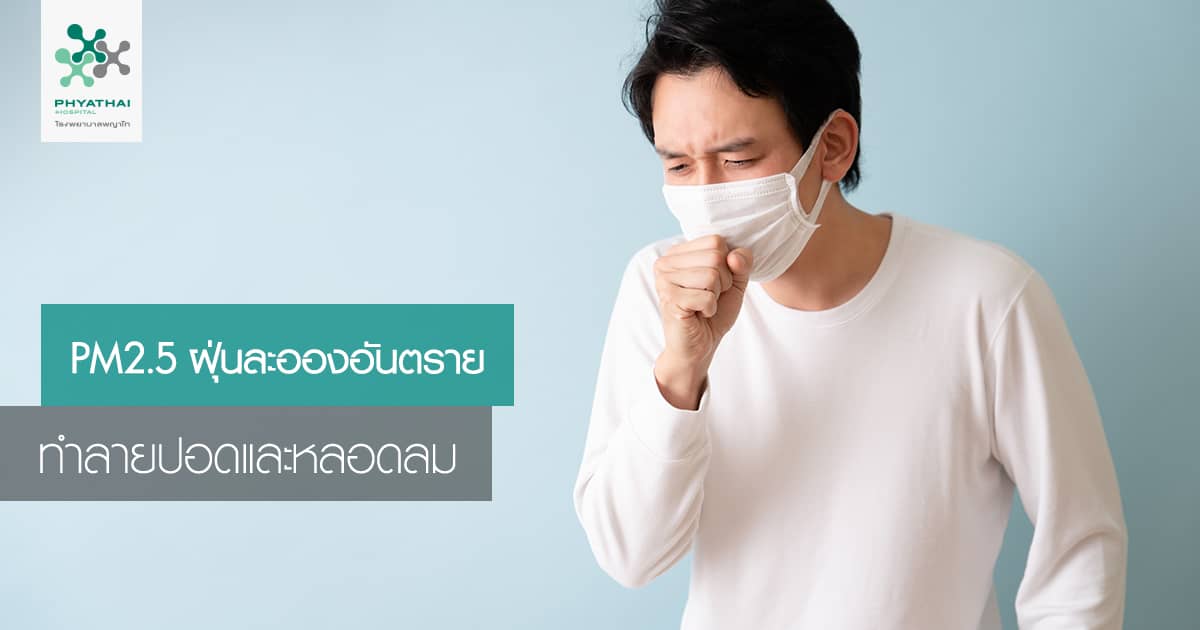
The weather in our country has clearly worsened, especially in the past 2-3 years. It can be seen that the problems of dust, smoke, and pollution affect the lives of people in Bangkok, its metropolitan area, and major cities. According to data from the Pollution Control Department, smoke dust caused by burning garbage, burning fields, burning agricultural materials outdoors, combined with toxic gases from traffic in big cities, broadly impacts the health of Thai people.
How does air pollution affect us?
The hazy air mass caused by pollution that we regularly see in recent times has caused concern for many people because it directly affects health in both the short and long term. This concern is not unfounded, as numerous surveys and research worldwide have found a connection.
In the past, it has been found that… “Air pollution is the cause of death for over four million people worldwide” and also leads to a significant increase in hospital admissions, such as more emergency patients, increased cases of stroke, premature death from heart disease, asthma, chronic obstructive pulmonary disease, lung cancer, and newborns in highly polluted areas having lower birth weights than normal. Pregnant women also have higher rates of premature births.
Other clear impacts include dust and air pollution causing respiratory infections in children and possibly affecting brain and nervous system development in children as well.
Who is at risk from this kind of pollution?
In fact, everyone is at increased risk of various diseases from pollution and air contamination, especially those who work or live outdoors for long periods each day. However, groups that need to be especially cautious include children, the elderly, pregnant women, as well as patients with respiratory diseases and cardiovascular diseases. Therefore, these groups should find ways to protect themselves by avoiding going outdoors, but if necessary, they should use masks to cover their mouth and nose as protection.
What pollutants are in the air?
In Thailand, the agency responsible for monitoring and reporting air pollution is the Pollution Control Department, which reports the Air Quality Index (AQI), a value easily understood by the general public. It indicates six types of air pollutants that are harmful to health, including:
- Particulate matter not exceeding 2.5 microns (PM2.5) is dust with a diameter not exceeding 2.5 microns, originating from combustion from vehicles, burning agricultural materials, forest fires, and industrial processes. It can reach the alveoli in the lungs, causing lung deterioration, bronchitis, and asthma symptoms.
- Particulate matter not exceeding 10 microns (PM10) is dust with a diameter not exceeding 10 microns, originating from fuel combustion, open burning, industrial processes, grinding, milling, or dust from construction. When inhaled, it can accumulate in the respiratory system and is harmful to health.
- Ozone gas (O3) is formed from reactions between nitrogen oxides and volatile organic compounds, causing irritation to the eyes, mucous membranes, and respiratory system. It reduces lung function and causes fatigue, especially in children, the elderly, and those with chronic lung diseases.
- Carbon monoxide gas (CO) is produced from incomplete fuel combustion. This gas competes with hemoglobin in the blood, reducing oxygen transport to body cells, causing fatigue and increased heart workload.
- Nitrogen dioxide gas (NO2) is produced from fuel combustion in industries. It affects vision and people with asthma or respiratory diseases.
- Sulfur dioxide gas (SO2) is produced from burning sulfur-containing fuels, causing irritation to the eyes, skin, and respiratory system. Long-term exposure can lead to chronic bronchitis.
In addition to air quality or air pollution directly affecting lung, heart, and blood vessel health, it also impacts the skin, causing premature aging and uneven skin tone.
Dr. Polinee Rattanasiriwilai
Dermatology and Laser Specialist
Anti-Aging Medicine Center, Phyathai 1 Hospital
