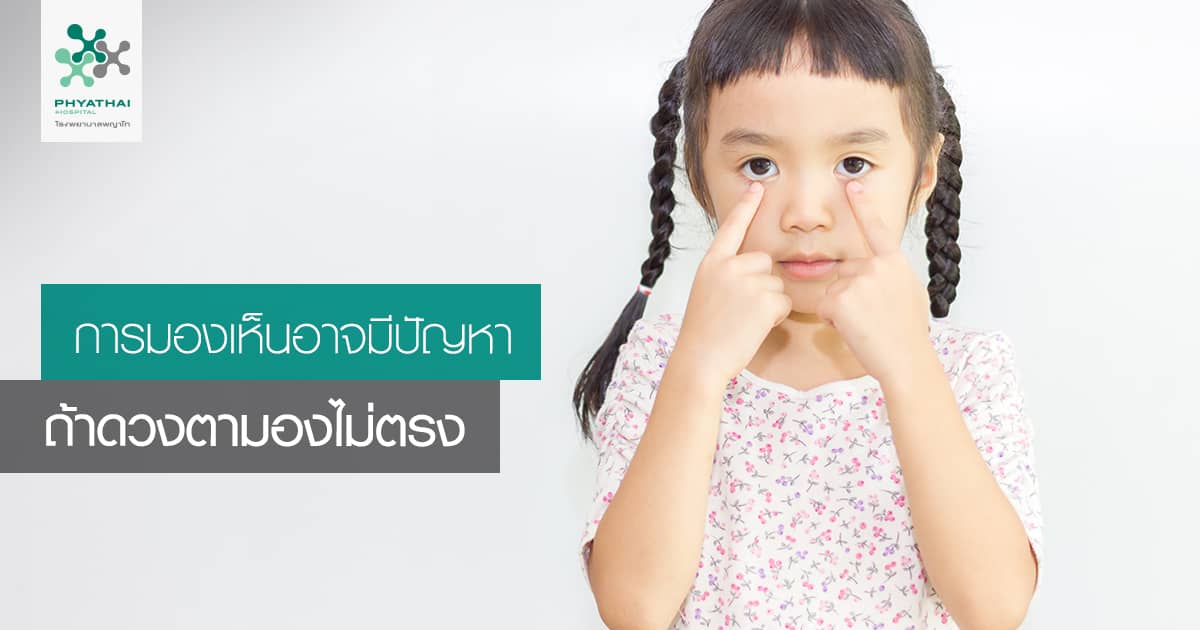
Blurred vision or unclear images, where one eye sees less clearly than the other, even though the blurry eye appears normal but does not cooperate with the other eye, is called “lazy eye”. This condition is commonly found in children. If treated early, it can be cured, and the chance of recurrence is low. The ideal time for treatment is before the age of 9, as this is the period of visual development. If left untreated, it may result in permanent vision loss.
Causes of “Lazy Eye”
- Strabismus (crossed or wandering eyes)
- Excessive nearsightedness, farsightedness, astigmatism, or unequal vision between the two eyes
- Eye diseases that cause blurred vision such as cataracts or drooping eyelids
How to Observe if Your Child Has Lazy Eye
Children with one crossed or wandering eye have a high chance of developing lazy eye. Also, if a child frequently squints, walks close to the TV, or tilts their head while watching TV, it indicates a visual problem. They should have their eyes examined by an ophthalmologist to diagnose whether lazy eye is present. For children born with cataracts or drooping eyelids, these conditions do not show obvious symptoms, and even the child may not realize their vision is blurry or unclear. Therefore, children over 3 years old should have their eyes checked at least once a year to monitor eye health.
Treating Lazy Eye in Your Child to Prevent Recurrence
- Surgery for children with strabismus, cataracts, or drooping eyelids, which cause lazy eye
- Wearing glasses for children with significant unequal nearsightedness or farsightedness in both eyes to help both eyes work and see clearly, preventing one eye from overworking
- Stimulating the lazy eye by forcing the brain to use it, such as patching the good eye or using eye drops to blur the good eye, allowing the lazy eye to regain function until it works normally and cooperates with the other eye to see a single image
Just Observing Your Little One at Home… Can Prevent Lazy Eye
- Observe the child’s eyes from birth to see if they are normal in size or if anything is covering the pupil
- At 2-3 months old, observe if the child can focus on you while feeding; if not, consult an ophthalmologist
- At 6 months old, the child should be able to follow objects with steady eyes; if not, consult an ophthalmologist
- Children’s vision becomes similar to adults around 3 years old, so vision tests using images of different sizes should be done, and regular visits to an ophthalmologist are recommended
