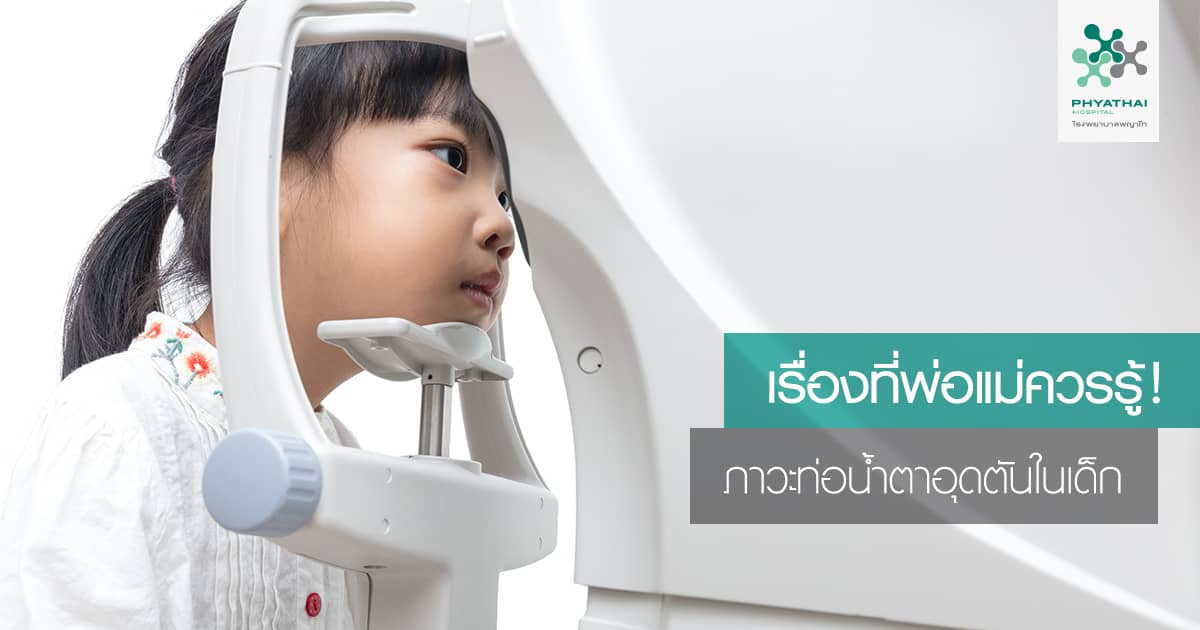
Generally, human tears are continuously produced by the lacrimal glands and spread to cover the outer surface of the eye. They then drain through the tear drainage openings located at the inner corner of the eye, both upper and lower, flowing through the tear ducts into the nose and then down the throat sequentially. Therefore, if there is a blockage in the tear drainage system, it can cause excessive tearing around the eyes.
Blocked Tear Ducts in Infants.. How to Observe
Generally, infants begin to produce tears around the first 2 weeks of life. If there is a blockage in the tear drainage system, parents may notice that their child has watery eyes on the affected side. In some cases, there may be secondary infections causing discharge mixed with mucus and pus.
What Causes Blocked Tear Ducts?
In infants, the cause is a membrane covering the opening of the tear duct where it connects to the nose. Usually, this membrane dissolves on its own when the infant is 4 to 6 weeks old. If the membrane does not dissolve in time, it will eventually cause excessive tearing.
Treatment for Blocked Tear Ducts in Children
The effective treatment is massaging the inner corner of the eye combined with antibiotic eye drops. Wash your hands thoroughly before massaging. For the massage, use your dominant finger to press on the inner corner of the eye, directing towards the bridge of the nose and downward. Massage 10 to 20 times per session, 2 to 3 sessions per day, applying moderate pressure. The best time to massage is while the child is feeding, as the pressure helps push the membrane open. Over 90% of cases respond well to massage and antibiotic drops, especially in children under 1 year old. However, if massage is ineffective, particularly in children older than 1 year and 6 months, probing to open the tear duct is recommended.
Blocked tear ducts in children are usually observed after 2 weeks of age. Symptoms include excessive tearing mixed with mucus in the affected eye. Effective treatment involves massaging the inner corner of the eye combined with antibiotic drops. Besides blocked tear ducts, other conditions can cause excessive tearing in children, such as conjunctivitis, foreign bodies in the eye, and pediatric glaucoma. Therefore, if your child shows these symptoms, they should be thoroughly examined and continuously treated by an ophthalmologist.
Dr. Warakorn Thiamthat
Ophthalmologist, Eye Center
Phyathai 2 Hospital
